A garage or shop, newly opened or growing
- Customers arrive through word of mouth and the map on their phones
- Sign, uniforms and repair slips are makeshift
- Do this first
- Settle the name and core identity, then make a clear sign and repair slip.

Customers buy a vehicle once, but return to the service workshop for years.
A vehicle is a large purchase, and trust is needed before, during and after the sale. Sinh Vũ helps your showroom, service workshop and products make the same promise.
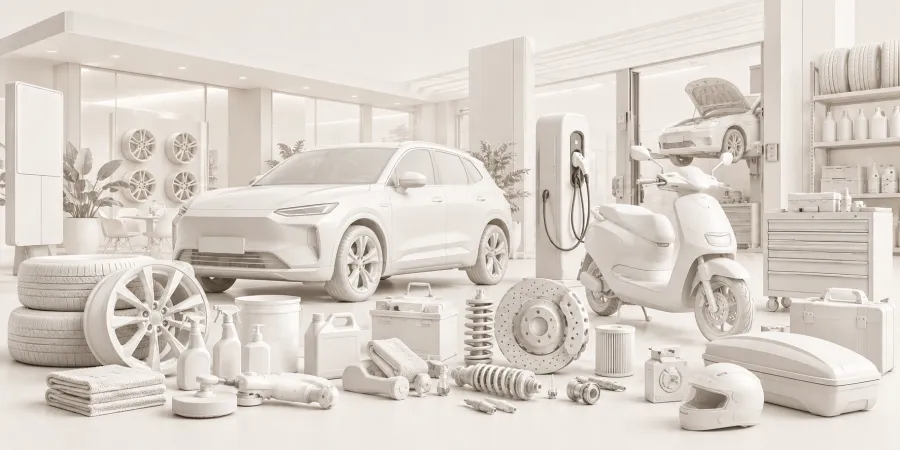
Vietnamese people are buying more vehicles and gradually shifting to electric. As choices widen, only the places to buy and repair with a clear reputation keep their customers.
cars sold in Vietnam in 2025 (the article says "over 600,400 vehicles"), according to VAMA, TC Group and VinFast data
Source: Diễn đàn Doanh nghiệp, 19 Jan 2026, compiling VAMA, TC Group and VinFast datamotorbikes sold in 2025 by the five VAMM member brands (Honda, Yamaha, Piaggio, Suzuki, SYM), down 1.5% on 2024; the whole motorbike market is estimated at 3,423,500 units, up 9.9%
Source: Diễn đàn Doanh nghiệp, 21 Jan 2026, citing VAMM and General Statistics Office dataVinFast cars sold in 2025, nearly 30% of all cars sold; four of the ten best-selling models are this brand's electric vehicles (one company's figure, not the whole industry)
Source: Diễn đàn Doanh nghiệp, 19 Jan 2026, compiling VAMA, TC Group and VinFast dataEach stage has its own brand problem. Once you know where you are, you know what to do first.
Design cannot replace the quality of a vehicle or a mechanic's skill. But it can fix the pain points that make customers hesitate even when you do good work.
Customers say they bought from the maker, not where they bought.
One brand for the dealer group, placed correctly beside the maker's identity.
Start from this problemCustomers ask again and again why a part must be replaced, afraid of being overcharged.
Shared quotation templates, inspection sheets and ways of explaining for every mechanic.
Start from this problemSigns, reception desks and uniforms do not match across outlets.
Standards for signage, space and uniforms at every outlet.
Start from this problemPackaging is easy to copy, and buyers cannot tell what is genuine.
A packaging system with its own authenticity marks and instructions for checking genuine goods.
Start from this problemCustomers ask about battery, charging and warranty, and the material has no answer.
Material and illustrations that explain battery, charging and warranty in plain words.
Start from this problemEveryone posts photos in their own style, and customers arrive to find something different.
Shared templates for vehicle photos, posts and short videos for the whole team.
Start from this problemCustomers pass through five stages, from research to returning to the workshop. Wherever the brand falls short, that is where you lose them.
Watch videos, read reviews and ask vehicle community groups.
Common mistakeScattered information, and customers do not know whom to trust.
Visit the showroom, take a test drive, listen to advice.
Common mistakeEvery advisor says something different, and the material is hard to follow.
Sign the contract, handle the paperwork, take the vehicle.
Common mistakeA rushed handover, and customers do not feel looked after.
Book a slot, bring the vehicle to the workshop, hear the quote.
Common mistakeA confusing quote, and customers suspect they are being overcharged.
Trade in, buy accessories, tell friends.
Common mistakeSilence after the sale, and customers forget where they bought.
Dealers sell peace of mind when customers spend a large sum, electric vehicles sell a new way of getting around, garages sell transparency, parts sell genuine goods, and rental sells punctuality. Each segment has its own page that goes deeper into the pain points and the work.
Trust signalsClear prices, honest advice, aftercare once the car is sold.
Trust signalsBattery, charging and warranty explained clearly.
Trust signalsTransparent quotes, doing exactly what was quoted.
Trust signalsGenuine goods you can verify, the right part for the right vehicle.
Trust signalsThe vehicle you receive matches the booking, with no surprise charges.
Sinh Vũ does not promise a number of vehicles sold. The job is for customers to remember exactly where they bought and had their vehicle serviced, and to have a reason to return.
Customers remember the maker and forget the dealer
Customers remember where they bought and had the vehicle serviced
Repair quotes make customers suspicious
Customers understand why the work is needed and feel safe leaving the vehicle
Every outlet in a different style
Every outlet is recognizably the same house
Genuine and fake goods mixed
Buyers know how to recognize your goods
Three roadmaps by stage. Every roadmap does the core first and the rest only when truly needed.
Suits: Garages, shops and rental services, newly opened or growing
What you receivePositioning, a name where needed, logo, color, type, sign, uniforms and customer paperwork templates.
Suits: Electric vehicle, parts and accessories brands
What you receivePositioning, identity, a packaging system, dealer material and product explainer videos.
Suits: Dealer groups and multi-outlet service workshop chains
What you receiveA review of every outlet, brand guidelines, showroom and workshop standards, social media content templates; monthly support when needed.
Sinh Vũ has not yet published a project for a vehicle maker, dealer or garage. The projects below are close in multi-line equipment, dealer points of sale and fleets on the road.
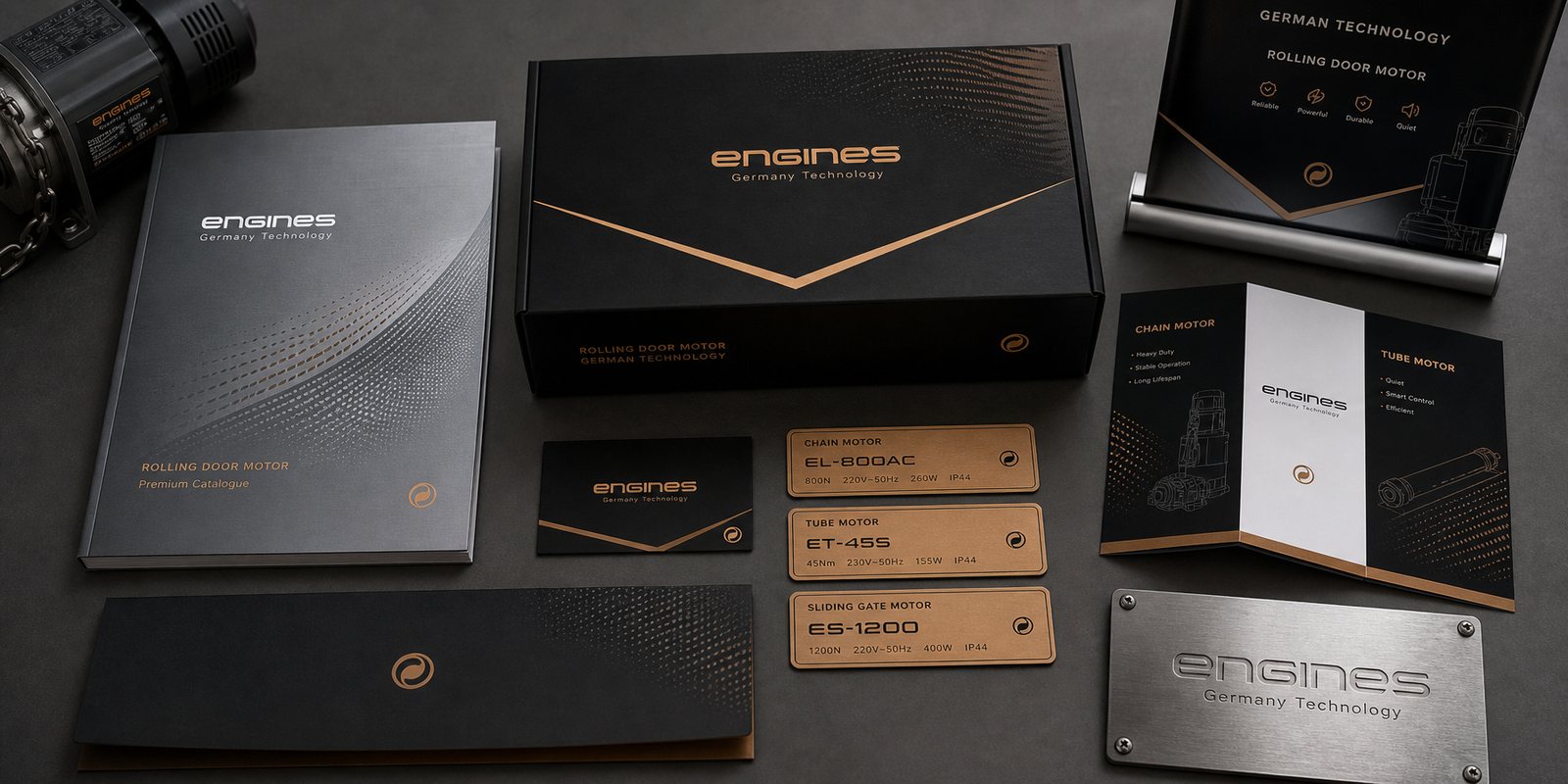
Engines, by Tân Phong, is a line of roller shutter motors built to German technical standards. Sinh Vũ built the logo, brand standards and a unified packaging system…
Eight motor lines brought into one identity and packaging system: close to a parts brand with many codes.
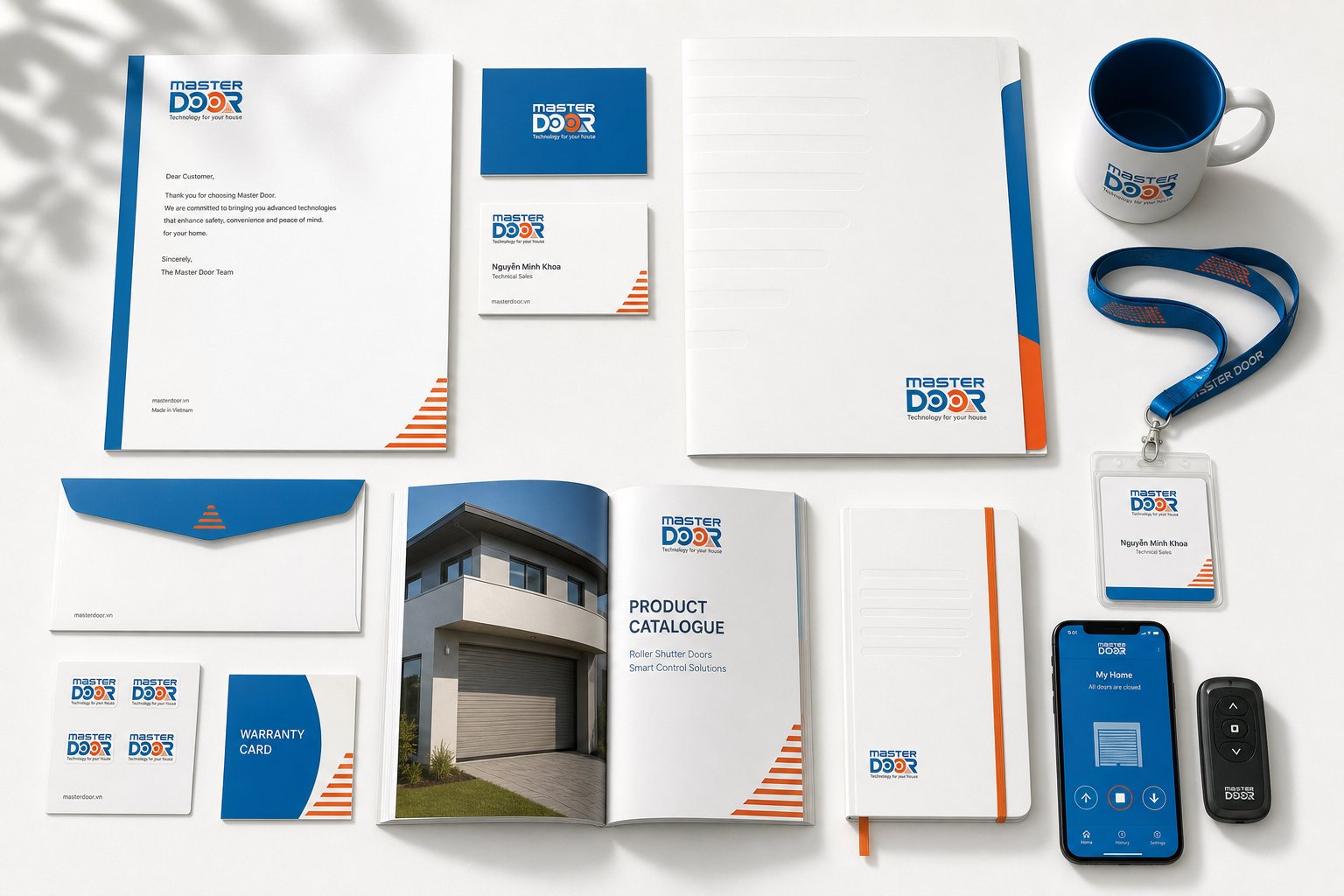
From a blank page in 2009, Sinh Vũ built MASTER DOOR into a rolling shutter technology brand that homeowners trust before they even ask the price.
Electromechanical equipment sold through dealers: close to the problem of points of sale and counterfeits.
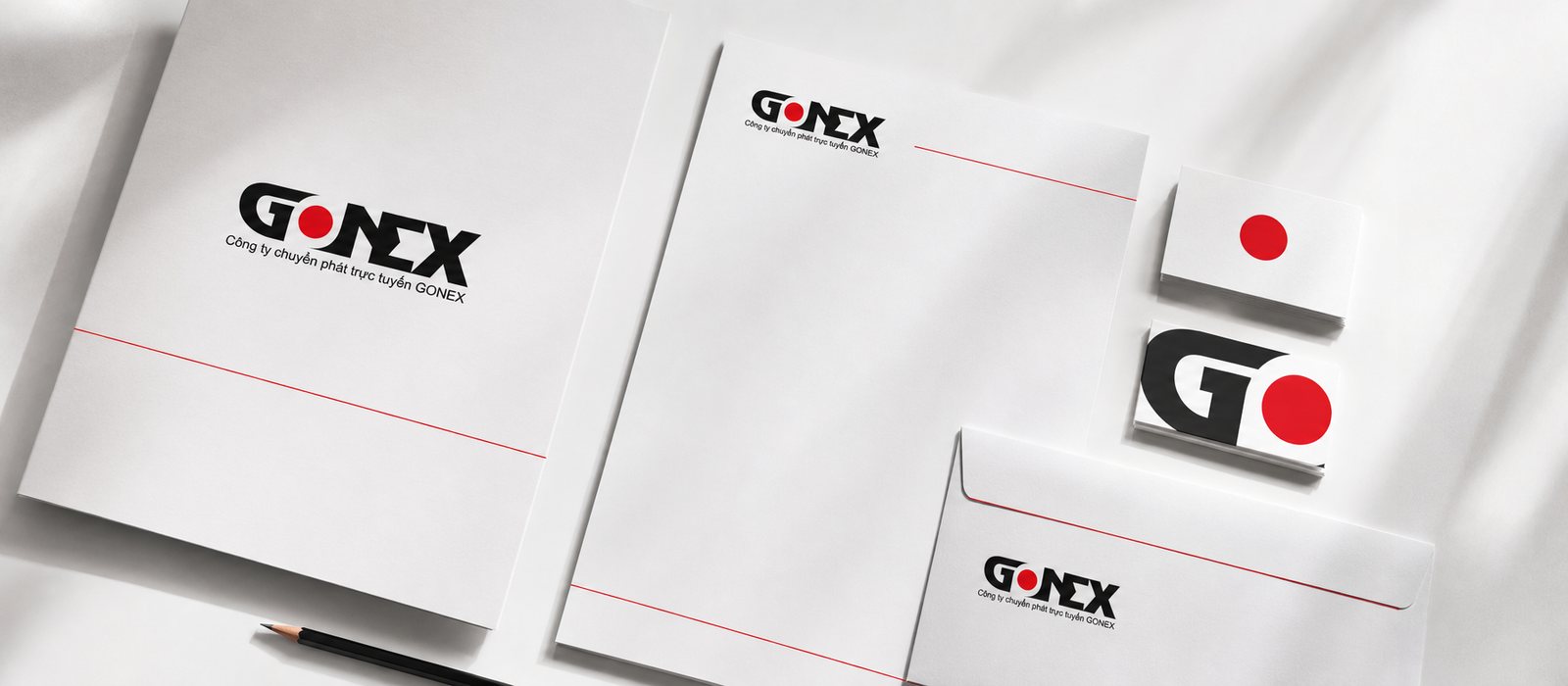
Gonext started out in 2005 in the express courier trade, running both domestic and international routes. Sinh Vũ built the identity…
A delivery fleet carrying one face of speed: close to mobility services.
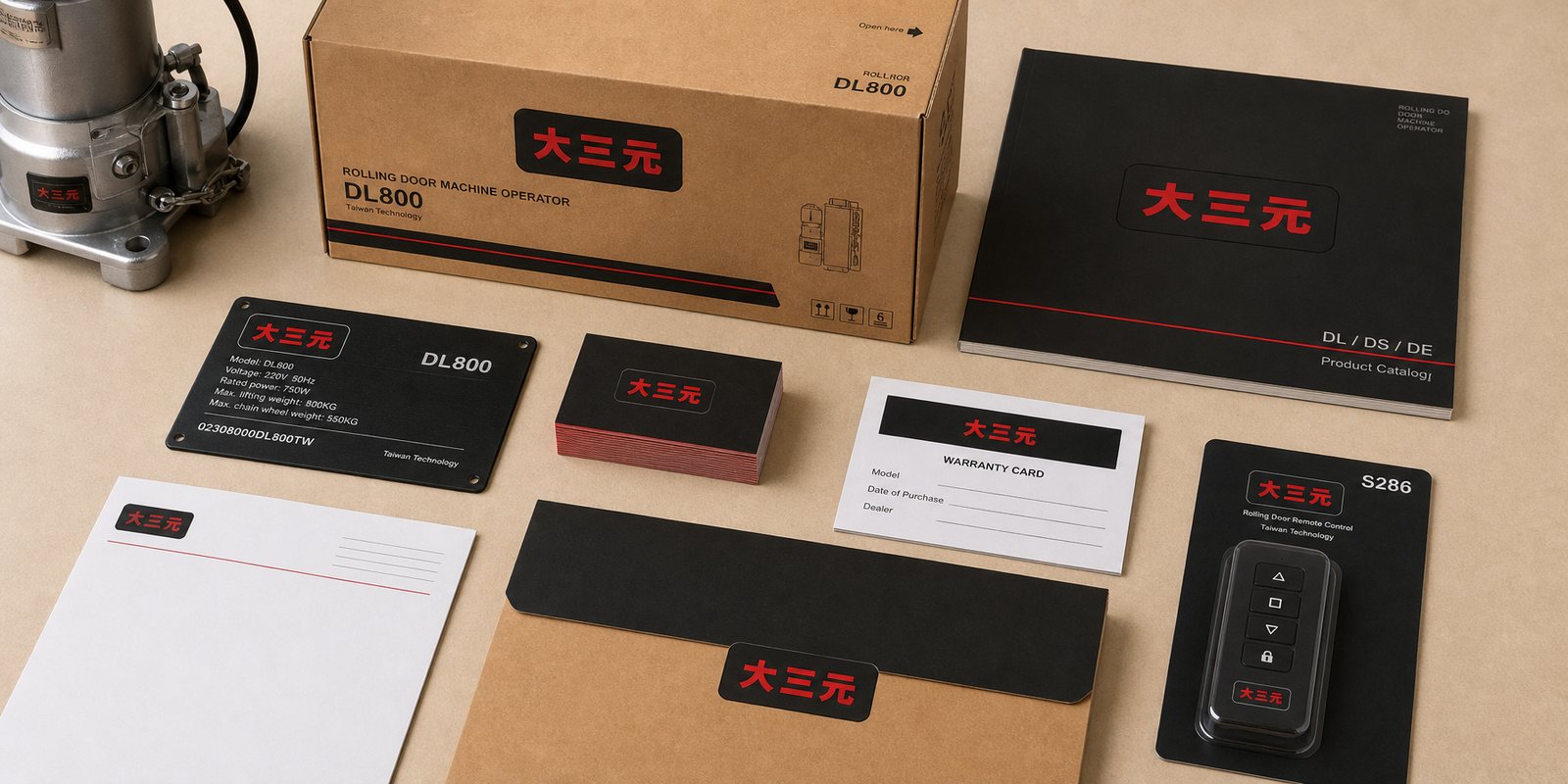
The red 大三元 seal keeps the entire Dasanyuan roller door motor range, three lines and dozens of models, recognised and trusted at once among a shelf full of look-alike brands.
Motors and electromechanical equipment in many lines: close to a brand for vehicle parts and components.
The principles behind it
An authorized dealer must follow the maker's identity standards in the showroom and in vehicle sales print. The dealer's own brand usually sits in the dealer group name, the service workshop, the loyalty program and social media, within what the maker's contract allows.
It needs a compact set: a name, logo, sign, uniforms and a clear quotation template. First-time customers usually decide from the sign, map reviews and the way the mechanic explains.
What customers are worried about: how long the battery lasts, where to charge, how the warranty works. A clear explanation that stays consistent at every point of sale builds trust faster than a slogan.
Design helps buyers recognize genuine goods: a distinctive mark, a seal, a lookup code and checking instructions printed clearly on the box. Design does not replace legal measures, but it makes fakes harder to pass off.
Sinh Vũ has not yet published a project for a vehicle maker, dealer or garage. The close ones are Engines and Dasanyuan (motors, equipment), MASTER DOOR (roller doors sold through dealers) and Gonext (a delivery fleet).
A few lines about your shop, product or service and what is holding you back is enough. Sinh Vũ reads carefully, then replies.
Every industry already has visual rules that buyers use to recognise the category. Three principles from the Sinh Vũ craft doctrine decide which of those rules to keep and where to differ.