Automotive and mobility

Packaging and identity design for vehicle parts, lubricants and accessories

Parts buyers pick up the box and ask themselves whether it is genuine.

Parts sell precision and authenticity. Sinh Vũ helps packaging, catalogs and points of sale carry a distinctive mark, so buyers choose the right code and recognize your goods.

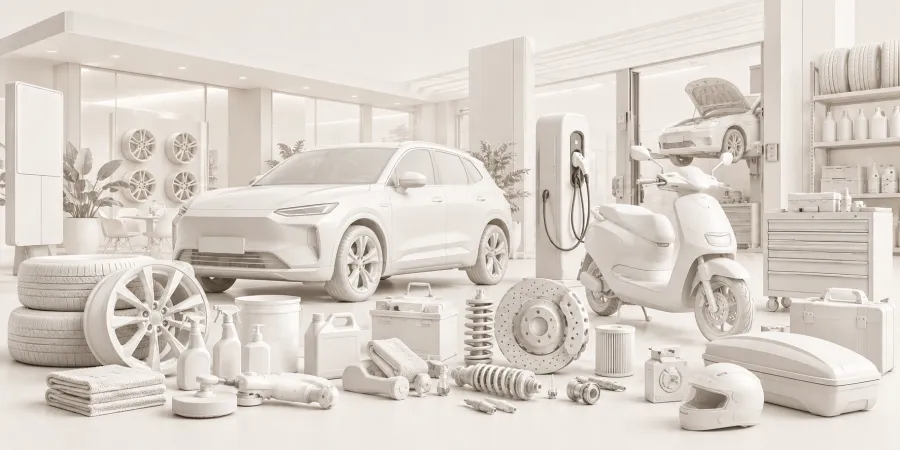
A sample object set for a parts brand: a parts box with an authenticity seal, a bottle of lubricant, a lookup catalog and a set of car accessories
Quick answer01

What does parts packaging need for customers to choose and buy correctly?

You need a distinctive mark that is hard to copy, clearly printed lookup information and an easy way to verify genuine goods. Packaging must first help customers choose the right vehicle, and only then look good.

  1. An authenticity mark

    A seal, color and print style of its own so fakes are hard to mistake, with short checking instructions.

  2. Clear lookup information

    Code, compatible vehicle lines and specifications printed where they are easy to read, with no guessing.

  3. A many-code range that reads as one house

    Hundreds of codes still look like the same brand, and each group can be told apart.

Business types02

Three kinds of parts brand, three problems

The buyers and the places they buy differ, so the packaging and material must say different things.

Replacement parts

Their customersMechanics, garages and owners looking for the right code for the right vehicle, usually on a mechanic's advice.

Brand challengeChoose the right code and recognize genuine goods; mechanics decide, so documentation must be made for mechanics.

Lubricants and car chemicals

Their customersOwners who buy repeatedly, choosing by a familiar brand and a mechanic's advice.

Brand challengePackaging must show the grade and suitable vehicles, and stand out on a crowded shelf.

Accessories

Their customersOwners who like to customize, buy on impulse and look at many photos and reviews.

Brand challengeA clear sense of style, product photos on real vehicles and packaging good enough to give as a gift.

Pain points03

Four pain points specific to parts and accessories

These are the places where good goods still sell with difficulty, or fakes eat the market.

Customer journey04

At which stage do parts brands lose the most customers?

At Research, when customers compare goods online and ask mechanics. Without a sign to recognize genuine goods, the decision falls to the lowest price.

Where customers are most often lostResearch
Do this now
  1. Put the authenticity mark and the way to check it where it is easiest to see on the packaging and the storefront.
  2. Make a set of material for mechanics: lookup, comparison and fitting notes, so mechanics advise correctly.
  3. Standardize product photos and descriptions across every marketplace and shop.
Touchpoints05

Five touchpoints to do first

Touchpoints are the places where buyers hold, look up and compare the product. The five below decide whether they choose your goods or someone else's.

  1. Product packaging

    The first thing held in the hand, and the shield against fakes.

  2. Lookup catalog

    Mechanics and owners use it to choose the right goods with little guessing.

  3. Shelving and points of sale

    Where your goods must stand out among hundreds of brands.

  4. Online storefront

    Where customers compare most carefully, so photos and descriptions must be consistent.

  5. Seal and checking instructions

    Give buyers a way to confirm genuine goods for themselves.

Roadmap06

Where Sinh Vũ suggests starting

Listed in the order to do them. A new brand can stop at step two or three; a brand with many codes and many dealers goes all the way.

  1. Brand Identity Design

    Name, mark, color and type that work on every kind of packaging.

  2. Product packaging design

    A packaging system with authenticity marks and space for lookup information.

  3. Sales and marketing collateral design

    Lookup catalogs and material for mechanics and dealers.

  4. POSM and event booth design

    Shelving, display boxes and signage for points of sale.

  5. Advertising campaign image design

    Shared product photo templates for marketplaces and shops.

Projects07

Related work for parts

Sinh Vũ has not yet published a vehicle parts or accessories project. The three projects below are close in equipment with many lines and codes sold through dealers.

FAQ09

Frequently asked questions

Design helps buyers recognize genuine goods: a distinctive mark, a seal, a lookup code, checking instructions. It does not replace legal measures, but it makes fakes harder to pass off.

Grade, suitable vehicles and purpose must be readable at once on the front. Detailed technical information goes on the back, supplied by the manufacturer.

Organize by vehicle line and system, print codes large and show the fitting position clearly. Mechanics use catalogs mid-job, so lookup must be fast with little text.

A box with a clear sense of style, photos of the product on a real car and a short message. Owners often buy for one another, so the packaging acts as the gift.

Use the same photo template, naming and descriptions as the real packaging, and state the compatible codes and how to check the goods. Customers trust more when every place says the same thing.

Tell Sinh Vũ about your product

A few lines about the product, where it is sold and what is holding you back is enough. Sinh Vũ reads carefully, then replies.