Architecture and interiors

Brand design for architecture and interiors

You make other people's homes beautiful, yet your own brand tends to be left for last.

Homeowners choose a designer with their eyes, before they ever meet. Sinh Vũ makes your taste and your building capability read as one, from the company profile to the finished project.

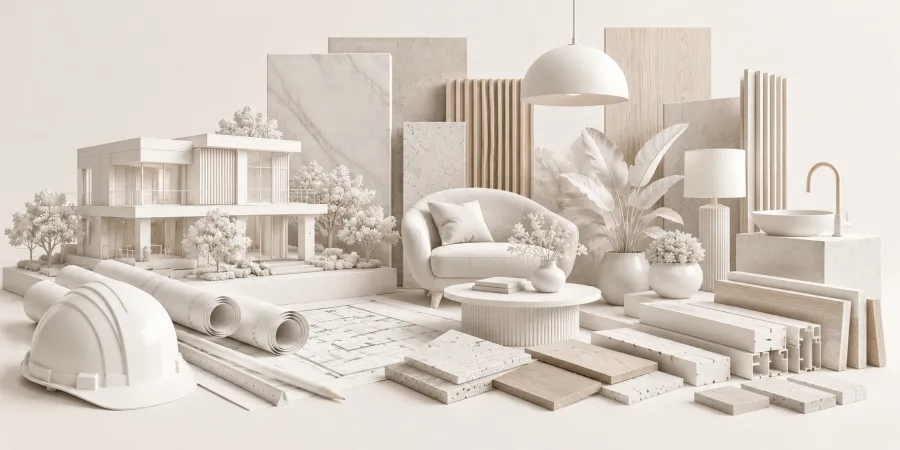
A set of sample objects for architecture and interiors: a house model, material swatches, a sofa, a lamp, drawings and a hard hat on a cream ground
Industry landscape01

Where do architecture and interiors stand in Vietnam?

The field is crowded, and clients compare closely before handing over a home. Firms with a clear project record and a recognizable taste get pulled into price wars less often.

USD 17.2 billion

export value of wood and wood products in 2025; wooden furniture alone reached about USD 9.4 billion in the first 11 months, nearly 61% of the total

Source: Nông nghiệp và Môi trường newspaper, 11 Jan 2026, citing Customs and Import-Export Department data
3 years

minimum experience in architectural services, plus an architecture degree and a passed assessment, are the conditions for an architectural practice certificate

Source: Law on Architecture No. 40/2019/QH14, Article 28

Advantages

  • The work is its own proofEvery finished project is a photograph and a story to keep telling.
  • Clients research with their eyesPeople save images, browse portfolios and follow pages before they get in touch.
  • Referrals carry weightOne happy homeowner brings relatives and neighbors.

Challenges

  • Everyone says they have tasteEvery site shows polished renders, and clients can't tell who actually builds.
  • Compared line by line on priceWhen taste can't be told apart, clients are left comparing unit prices.
  • Your own brand comes lastClient work comes first, while your own profile and site slowly age.
Profiles02

Which stage are you at?

Each stage has its own brand problem. Once you know yours, you know what to do first.

A new studio, or an architect who has just gone independent

  • Clients come mostly through people you know
  • No company profile yet, and the name is still a working one
Do this first
Settle the positioning and the name, then gather your best few projects into one tight profile.
A growing design and build company

  • Many build crews, many projects at once
  • Site signs, contracts and quotes differ from crew to crew
Do this first
Standardize every touchpoint clients see during construction.

A furniture or materials brand with a showroom

  • You run a workshop or import goods, selling through showrooms and dealers
  • Catalog, product photos and sales pages don't match
Do this first
Build a clear brand style, then produce the space photography and catalog to match.

An export workshop that wants to sell at home

  • Used to working from overseas buyers' samples
  • No brand of its own for Vietnamese buyers
Do this first
Find what your workshop does best, then name it and build a retail brand from there.
Pain points03

Six pain points design can fix

Brand design can't replace craft. But it can fix the pain points that make clients walk past even when your work is good.

06

A website that doesn't answer clients' questions

Lots of images, little information: which project types, what process, how to get in touch.

A site that groups projects by type and spells out the process and the way to book a meeting.

Start from this problem
Customer journey04

Where do homeowners choose a designer?

Homeowners go through five stages before handing their home to anyone. Wherever the brand falls short, that is where the client is lost.

  1. Looking for ideas

    Save images, scroll social media, visit friends' homes.

    Common mistakeThey love the photo but don't know who made it.

  2. Building a shortlist

    Filter a few firms, browse websites, profiles and past projects.

    Common mistakeA generic profile that doesn't say which kind of home the firm suits.

  3. Meeting and hearing the proposal

    Book a meeting, hear the ideas, receive a quote.

    Common mistakeA beautiful proposal, a confusing quote, and the client only compares numbers.

  4. Construction

    Follow progress, visit the site, talk to the crew.

    Common mistakeThe site doesn't look like what was promised at signing.

  5. Handover and referral

    Take handover, move in, tell people they know.

    Common mistakeSilence after handover, and nobody asks to photograph the finished project.

Segments05

Five segments, five ways to get chosen

Architects sell thinking, interior companies sell completeness, showrooms and materials sell a lifestyle, and landscape sells a garden that grows better with the years. Each segment has its own page going deeper into pain points and methods.

What changes06

What changes with Sinh Vũ alongside you?

Sinh Vũ doesn't promise a number of contracts. Its job is to let your taste and capability be seen for what they are, before the first meeting.

Clients compare unit prices line by line

Clients arrive because they already like how you work

A thick profile that says nothing

A few signature projects that state your capability clearly

Every crew on site does it differently

Clients see one brand from drawings to handover

A lovely showroom, and clients forget the name

Clients remember the name and come back

Roadmaps07

The right services for each stage

Three roadmaps, one per stage. Every roadmap does the core first, and the rest only when it is really needed.

Projects08

Projects closest to the industry

Sinh Vũ has not published a project for an architecture firm or an interior company. The four projects below sit close in materials, home equipment and in-apartment services.

Further reading09

More on architecture and interiors

FAQ10

Frequently asked questions

Good buildings are the foundation, but clients who don't know you only see you through your profile, website and photos. A brand makes those speak with one taste, so the work is seen for its true value.

A few signature projects by home type, each with the problem, the solution and real photos; the working process; the team; the warranty policy. Less but clear beats more but cluttered.

Renders show the idea, real photos show the ability to deliver. Clients need both, and you should label which is a render and which is a delivered project.

A personal name suits a studio built around one person that wants to stay that way. If you plan to grow the team or hand over the practice, an independent name lasts longer. Decide early, because renaming later is costly.

The core identity comes first, then the company profile and project photo set. Timing for each item is on the matching service page.

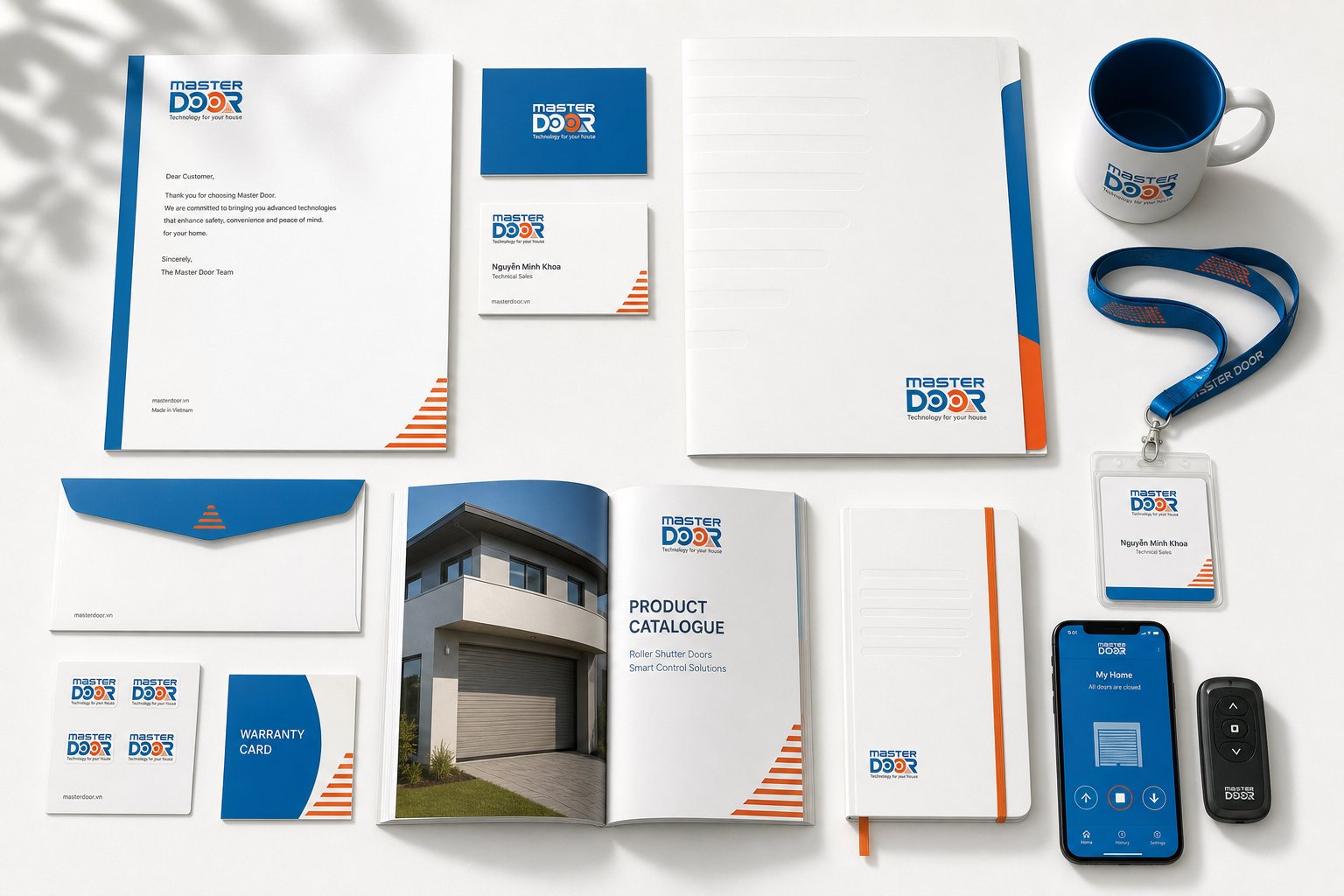
Sinh Vũ has not published a project for an architecture firm or an interior company. The close ones are MASTER DOOR (roller shutters), KOVA (paint), DDIC (construction investment) and kythuat.work (apartment technical services).

Tell Sinh Vũ about your projects

A few lines about your studio or company and what is holding you back is enough. Sinh Vũ will read it and reply.