An online shop that wants to become a brand
- You sell, but clients call you "the shop" and don't say your name
- You buy stock or order made-to-sample
- Do this first
- Pick one world of your own to tell, and only then make the logo, labels and photos.

Clients don't buy a shirt. They buy a version of themselves.
Any design gets copied. What can't be copied is the feeling clients get when they wear your pieces. Sinh Vũ gives that feeling a shape and a name.

Vietnam sews for the whole world, yet few people remember the name of a Vietnamese fashion brand. Young clients buy mostly online, so a brand has to hold on to them when trends shift.
Vietnam's textile and garment export value in 2025 (estimate by the Vietnam Textile and Apparel Association, up 5.6% on 2024): plenty of sewing for the world, few brands of its own
Source: Vietnam+, Textile and garment exports in 2025 estimated at USD 46 billion (27 Nov 2025)share of fashion and accessories in total transaction value across the four platforms Shopee, TikTok Shop, Lazada and Tiki in 2025, the largest category (a figure for the four platforms, not the whole market)
Source: YouNet ECI, Vietnam E-commerce Revenue and Consumption Report 2025 (11 Mar 2026)Each stage has its own brand problem. Once you know which one is yours, you know what to do first.
Brand design can't replace a beautiful garment. But it can fix the pain points that make clients buy once and forget your name.
Clients finish buying and can't remember where they bought.
Build a world with a name, a voice and an image that clients want to belong to.
Start from this problemThe new collection is beautiful, but longtime clients don't recognize it.
Separate the core (logo, type, labels) from the seasonal layer (color, photos, campaigns).
Start from this problemEvery photo set is lovely, yet next to another label's they look alike.
One photographic style of your own: lighting, setting, model posture, framing.
Start from this problemSales happen only during promotions, and nobody buys at full price.
Let labels, bags, boxes and photos all say why this piece is worth it.
Start from this problemClients arrive at the store to find a messy display and feel let down.
Set standards for the storefront, display, fitting room, bags and hang tags.
Start from this problemOrders arrive in a plastic bag, and clients don't photograph or show them off.
Bags, boxes, thank-you cards and wrapping paper good enough that clients want to post them.
Start from this problemClients pass through five stages before becoming fans. Wherever the brand falls short, that is where it loses them.
Scroll through photos and videos, see other people wearing it.
Common mistakeBeautiful photos, but no one can tell which label they belong to.
Visit the page, look through the collection, check the size chart.
Common mistakeEach channel has a different tone, and size and material details are thin.
Try on, order, pay.
Common mistakeNo reason to pay full price.
Open the bag or box, try the piece on.
Common mistakeNothing worth photographing when it opens.
Wait for the next collection, show it off, bring friends.
Common mistakeWhen the season ends, there is no story left to tell.
Womenswear sells taste, streetwear sells attitude, activewear sells energy, and uniforms sell the polish of an organization. Each segment has its own page going deeper into pain points and how to work.
Trust signalsA consistent sense of taste, season after season.
Trust signalsClean, solid, dependable.
Trust signalsAttitude and a community of wearers.
Trust signalsMaterials and methods that can be told and verified.
Trust signalsVisible function, visible spirit of movement.
Trust signalsA good shape, comfortable on the foot, a shoe box worth keeping.
Trust signalsFine detailing and packaging worthy of the price.
Trust signalsConsistent and true to the client's identity standards.
Trust signalsPick it up and you want to use it, or give it as a gift.
Sinh Vũ doesn't promise revenue figures. The job is to give your garments a world of their own, so clients remember your name and come back.
Clients call you "the shop"
Clients call you by your brand name
When the season ends, the story ends
Each season is a new chapter of the same story
Sells well only on discount
Clients pay full price because they see the value
The physical store falls short of the online one
Stepping into the store means stepping into the world they already saw
Three roadmaps by scale. Every roadmap does the core first, and the rest only when truly needed.
Suits: Online shops, workshops building their own brand
What you receivePositioning, a name and logo where needed, color, type, clothing labels, bags and boxes.
Suits: Local brands with regular clients
What you receiveKeep the core, add a brand voice, a photographic style of your own, a seasonal campaign template and a website.
Suits: Chains of stores
What you receiveBrand guidelines, storefront and display standards, and monthly support whenever a collection launches.
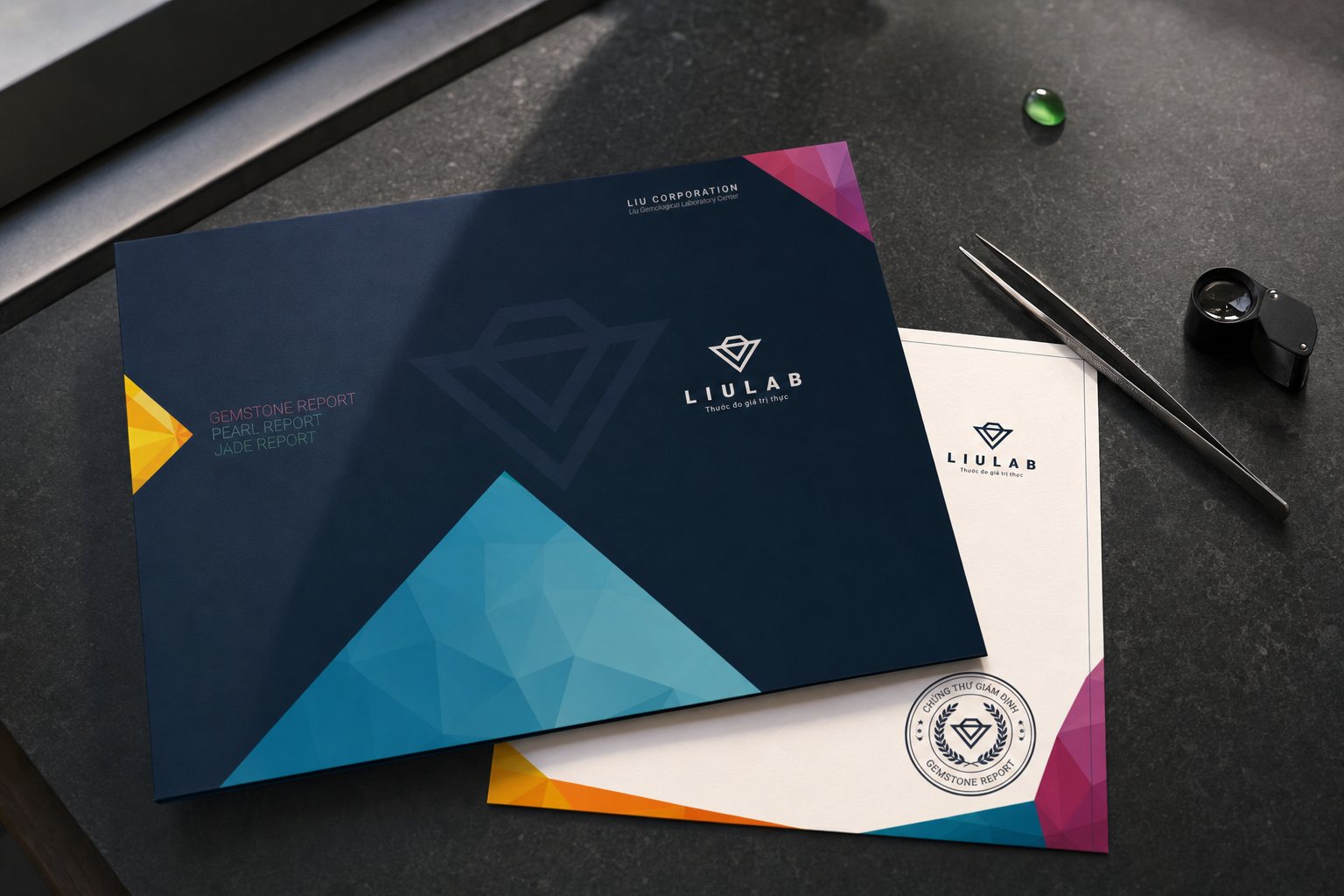
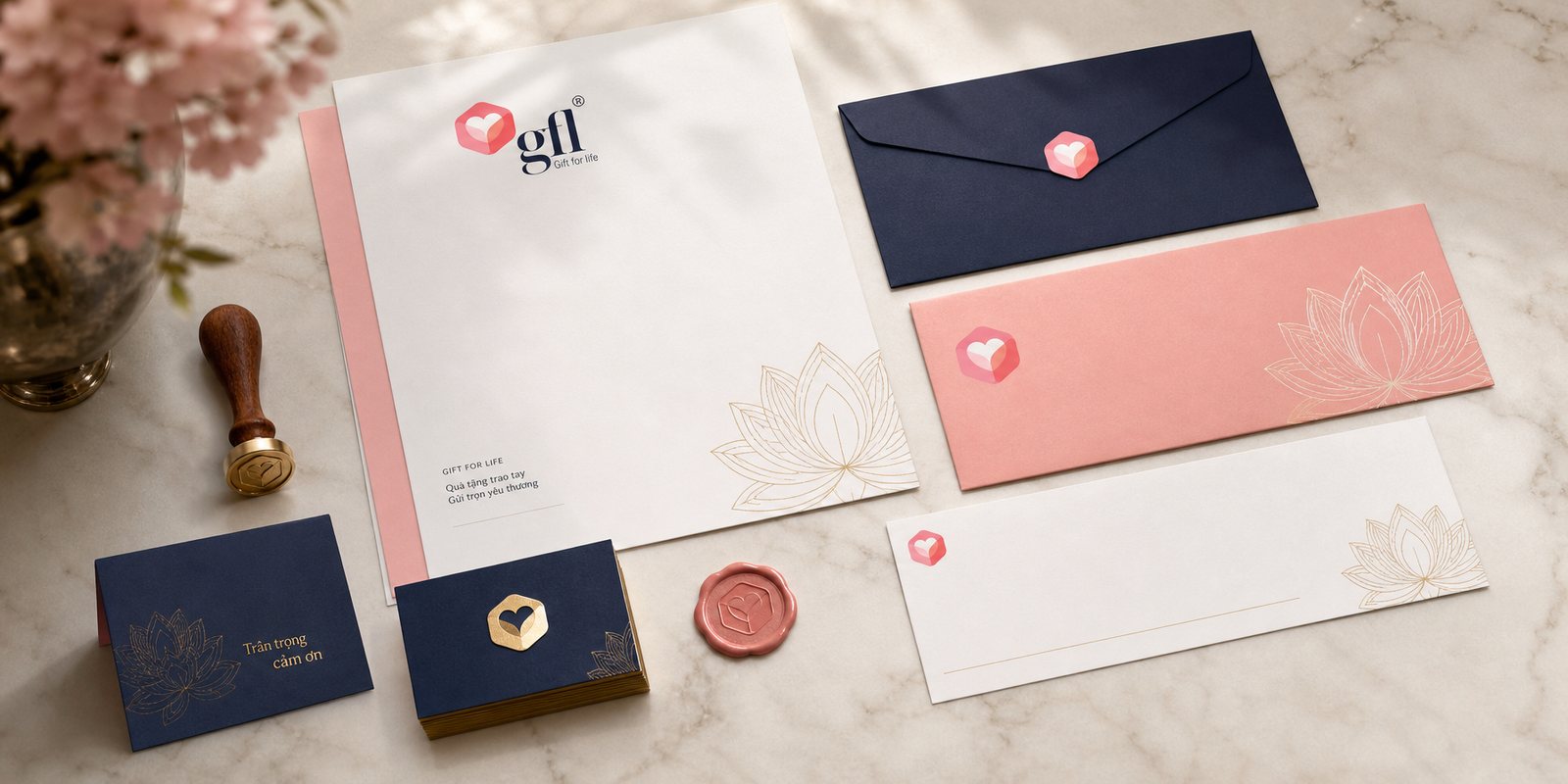
Sinh Vũ has built brands for menswear, gemstone jewelry and gemstone appraisal. The shared problem is a distinct face among a lot of similar goods. Gift for Life is an adjacent industry: corporate gifting, with the same problem of aesthetics that have to sell.
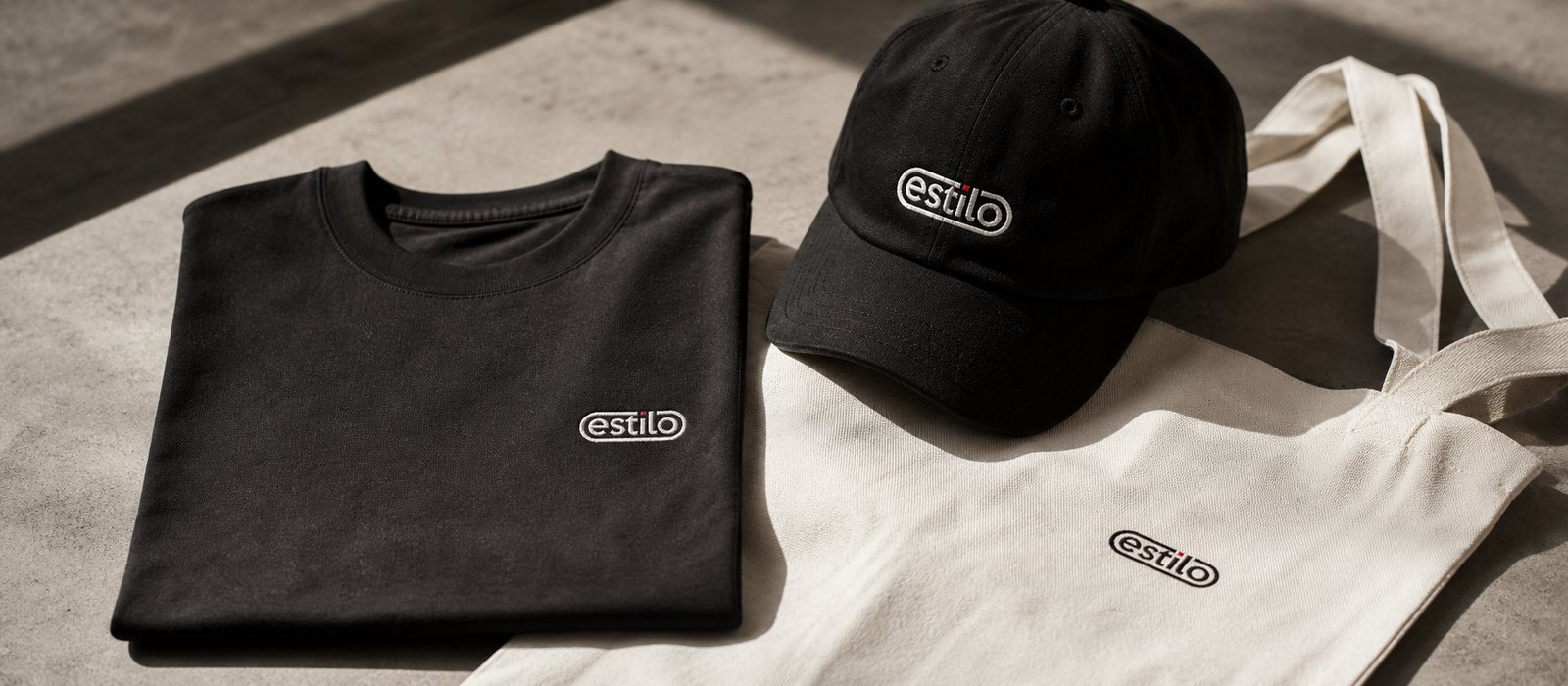
The founder of estilo left a large corporation to open a premium menswear brand, and needed a mark that held its shape whether printed, embroidered or stamped onto material.
A mark that lives on fabric, not just on paper.
 2009
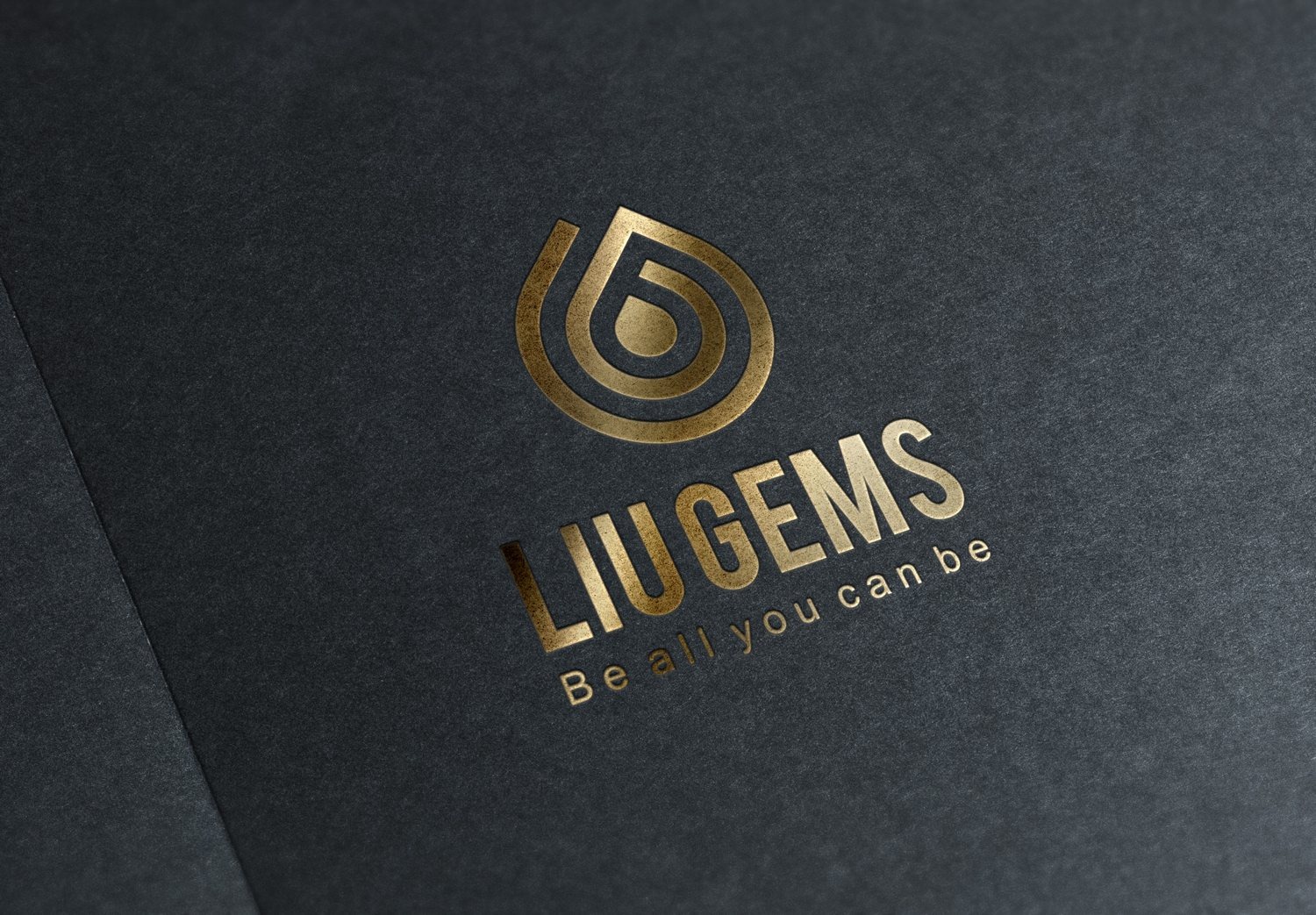
LiuGems sells natural-stone jewellery to people who believe minerals carry energy, a trade where beauty tends to arrive improvised and promises tend to run ahead of proof…
Eight product lines, one shared face.
The principles behind it
At a minimum: positioning, logo, color, type, and the things clients hold in their hands: clothing labels, hang tags, bags and boxes. If you have a store, add standards for the storefront and display.
Settle positioning and the logo first. Photos change with the season, while the logo, type and labels stay fixed, so they must come first for every photo set to follow.
The label must be in Vietnamese and, at a minimum, carry the product name, the name and address of the responsible organization or individual, and the origin (Decree 43/2017/ND-CP, amended by Decree 111/2021/ND-CP). Textiles also have separate rules on composition and on usage and care instructions. You should check the original text when printing labels.
A garment is easy to copy, while a brand world is much harder. Register your trademark early, and build the part that is yours alone in how you tell the story, how you shoot, and how you wrap an order.
The core identity usually takes a few weeks, depending on whether you need naming and strategy first. The duration of each item is listed on the matching service page.
estilo (menswear), LiuGems (natural gemstone jewelry), LIULAB (gemstone appraisal), GIFT for LIFE (corporate gifts).
A few lines about your products and what is holding you back is enough. Sinh Vũ reads it and replies within one working day.
Every industry already has visual rules that buyers use to recognise the category. Three principles from the Sinh Vũ craft doctrine decide which of those rules to keep and where to differ.