
LIULAB, a certificate that speaks for the expert
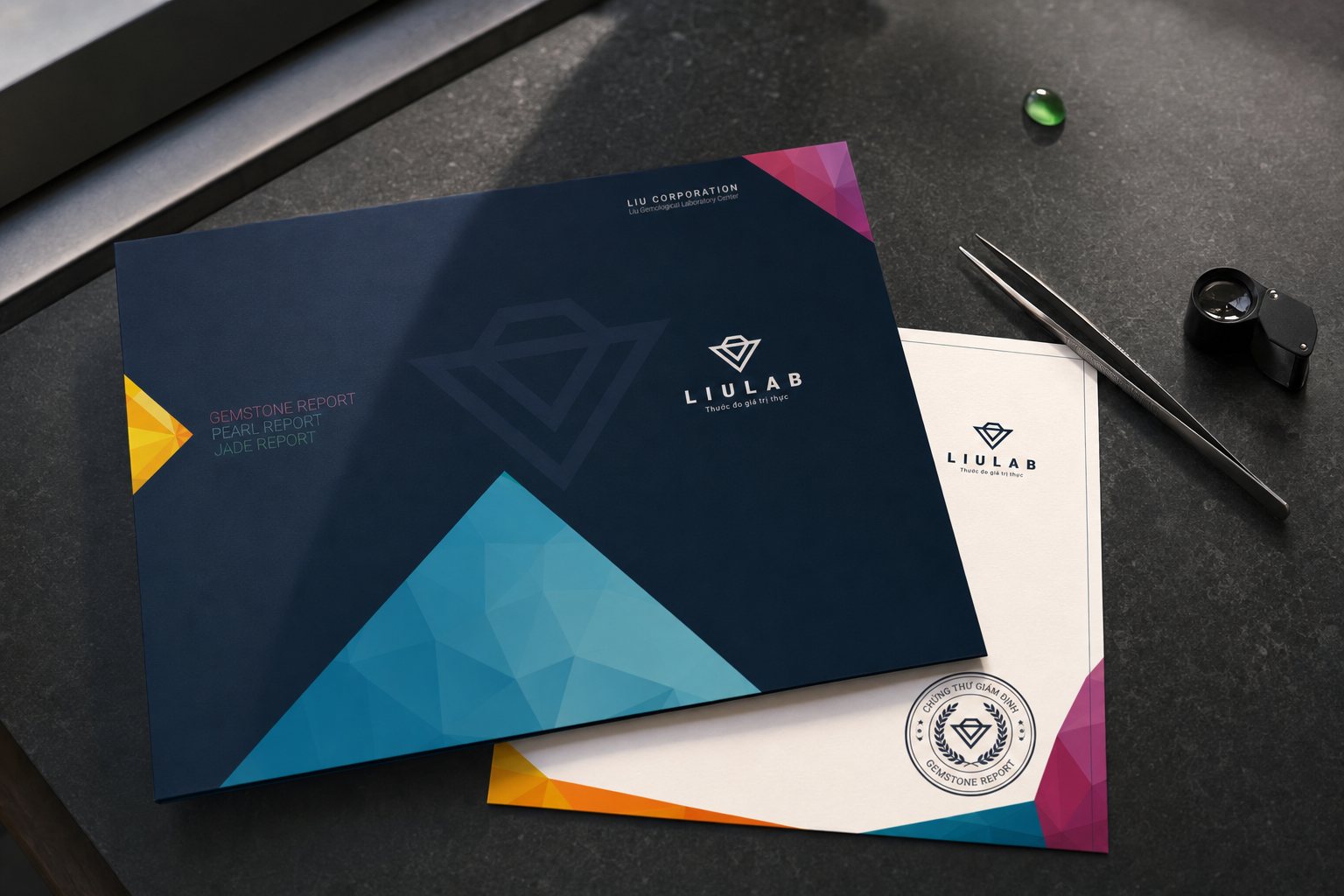
A client sets a piece of jade on the counter and asks one question: is it real, and what is it worth. LIULAB answers with instruments and trained judgement, but what goes home with the stone is a sheet of paper. Sinh Vũ built the identity, the certificate system and the tamper seal so that paper could stand on its own.
The problem
The gemstone trade runs on trust, and trust is exactly what an untrained eye cannot verify. A buyer holding a jade cabochon has no way of knowing whether it is untreated or dyed, and a loose certificate can be printed by anyone. LIULAB opened as an independent laboratory with analytical instruments and properly trained gemologists, but that capability stays inside the lab. What walks out of the door with the client is a sheet of paper.
So the paper has to carry three jobs at once, and those three jobs pull against each other. It must hold enough technical data for the trade to read, signal official standing so a layperson trusts it on sight, and be hard enough to copy that forging it is not worth the trouble. Load it with figures and it turns into noise; dress it up and the information thins out; lock it down and nobody can read it. Sinh Vũ took the brief there, before LIULAB opened its doors.
The work
The first decision was verbal, because words arrive before form. Any laboratory can call itself the most trusted, and precisely because anyone can say it, the claim carries nothing. LIULAB needed a line that stated the nature of the work rather than decorating it.
We settled on Thước đo giá trị thực, the measure of true value. A ruler favours neither the seller nor the buyer; it only measures, and everyone understands that instantly. The role fits an independent laboratory exactly, and it holds up under any comparison that follows, including against competitors with louder advertising.
The mark reduces to the most familiar shape in the trade: a faceted stone seen edge-on, a triangle tapering to its point. The line is thin and doubled, tracing the path of light entering a facet and bouncing back. A jeweller reads it immediately; everyone else reads a sharp, clean sign. Colour splits the duties: near-black ink navy carries official standing, used on seals and documents, while warm amber carries the human side, used across brand and communication pieces.
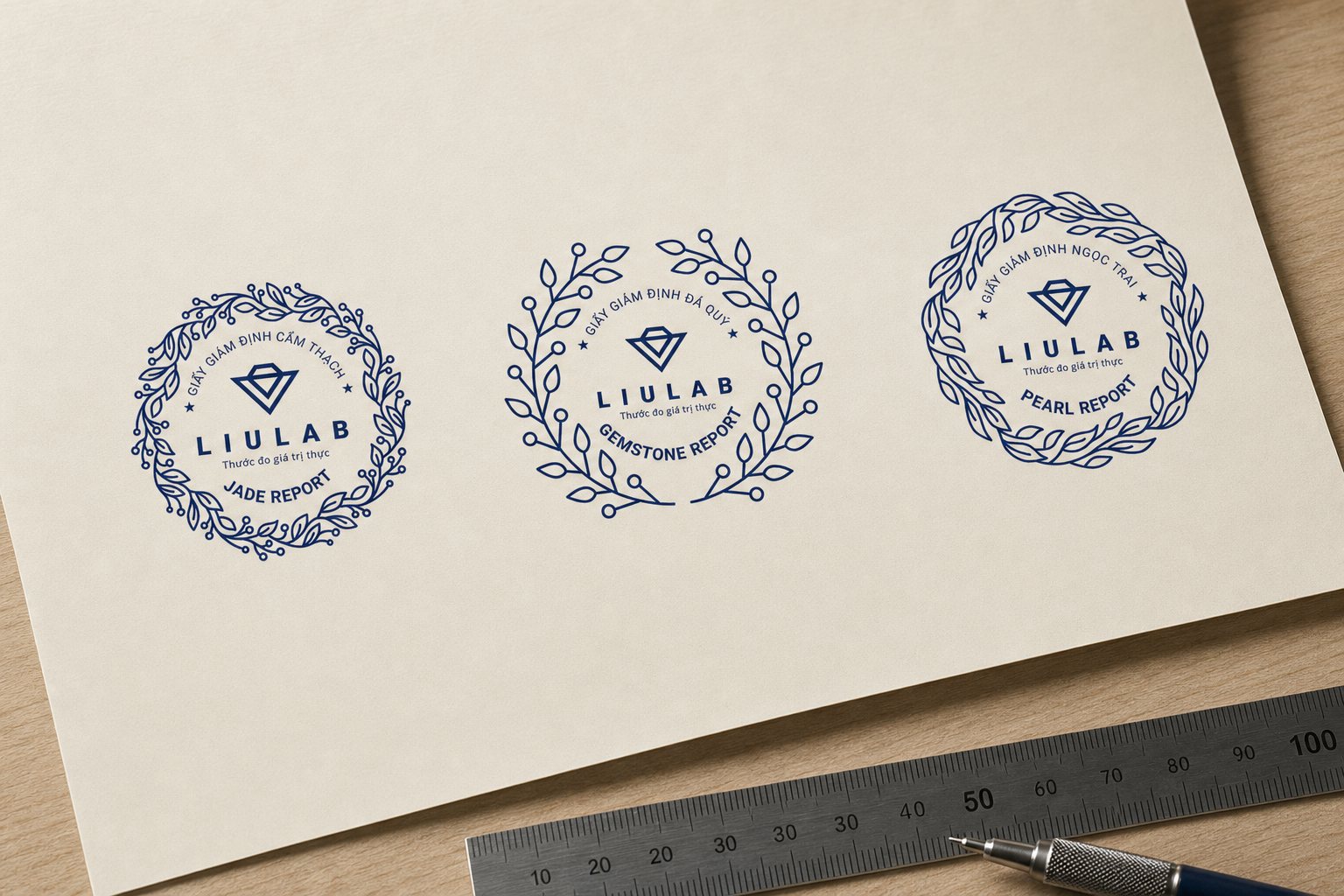
Then came the part most laboratories treat casually: the certification seal. Instead of one generic stamp for every stone, we built a family of three seals for the three grading lines, jade, coloured stone and pearl. The laurel wreath and the mark stay identical so the three read as one household; only the arc of text above and the report name below change. Someone in the trade glances at the seal and knows which certificate is in their hand before reading a single line.
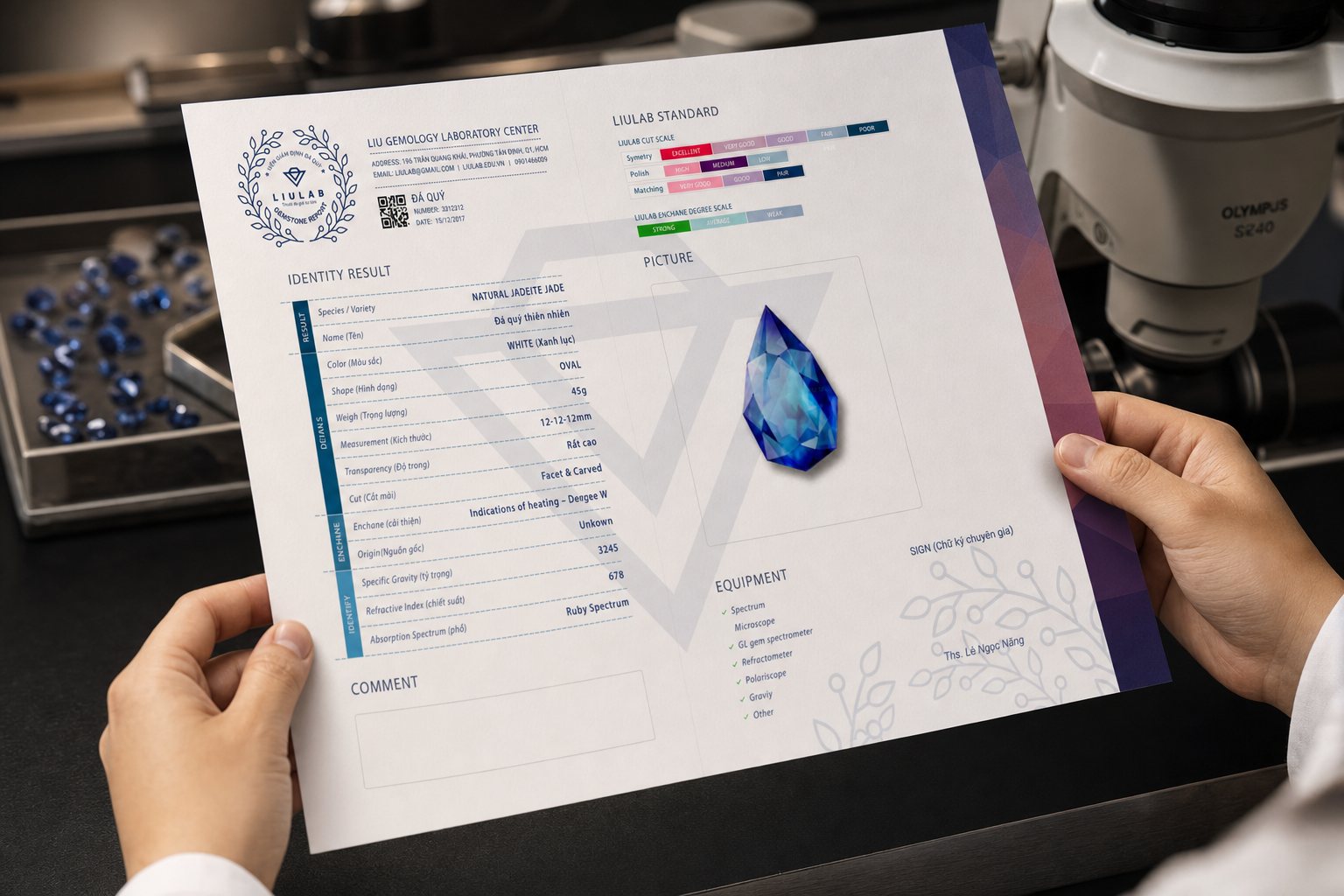
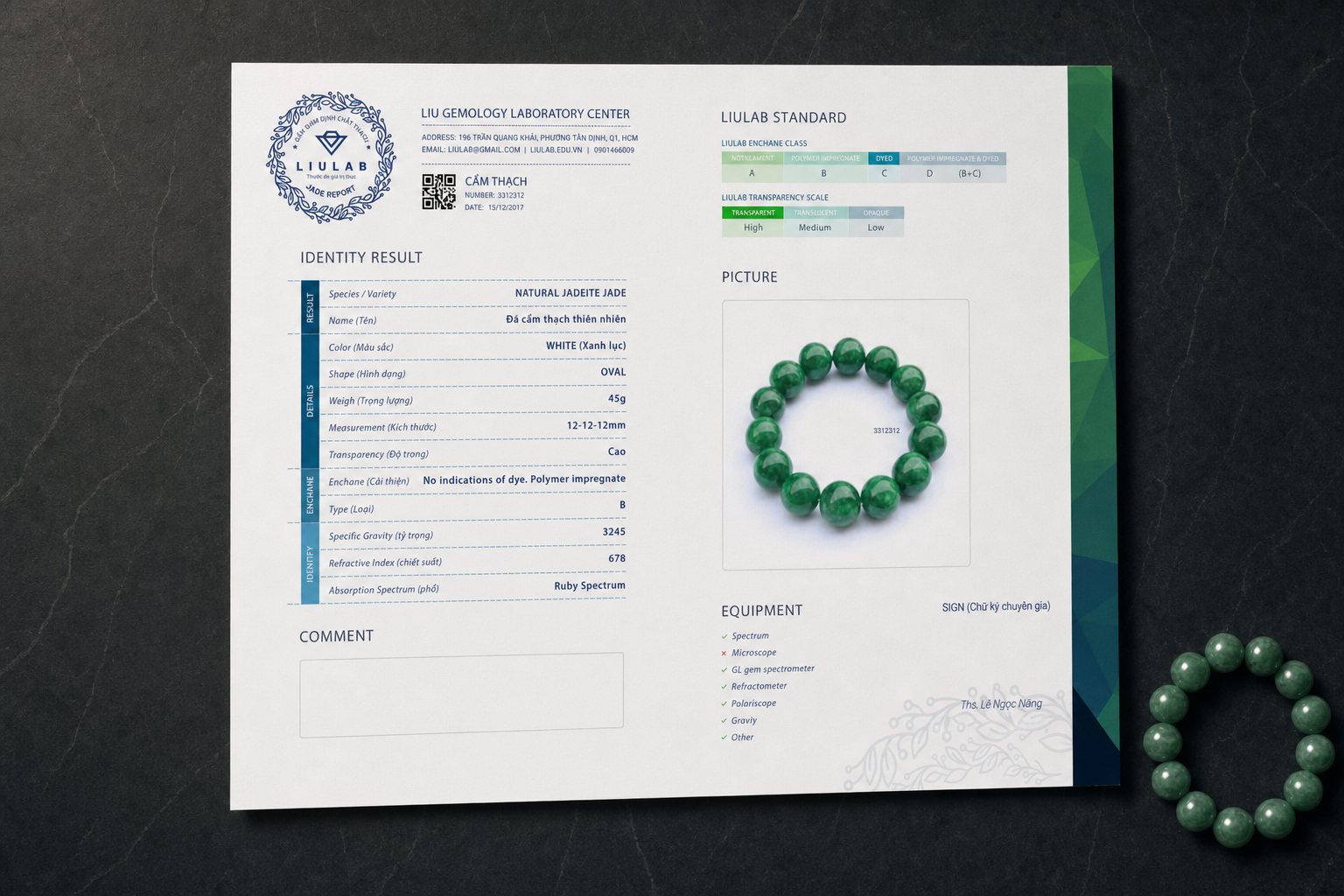
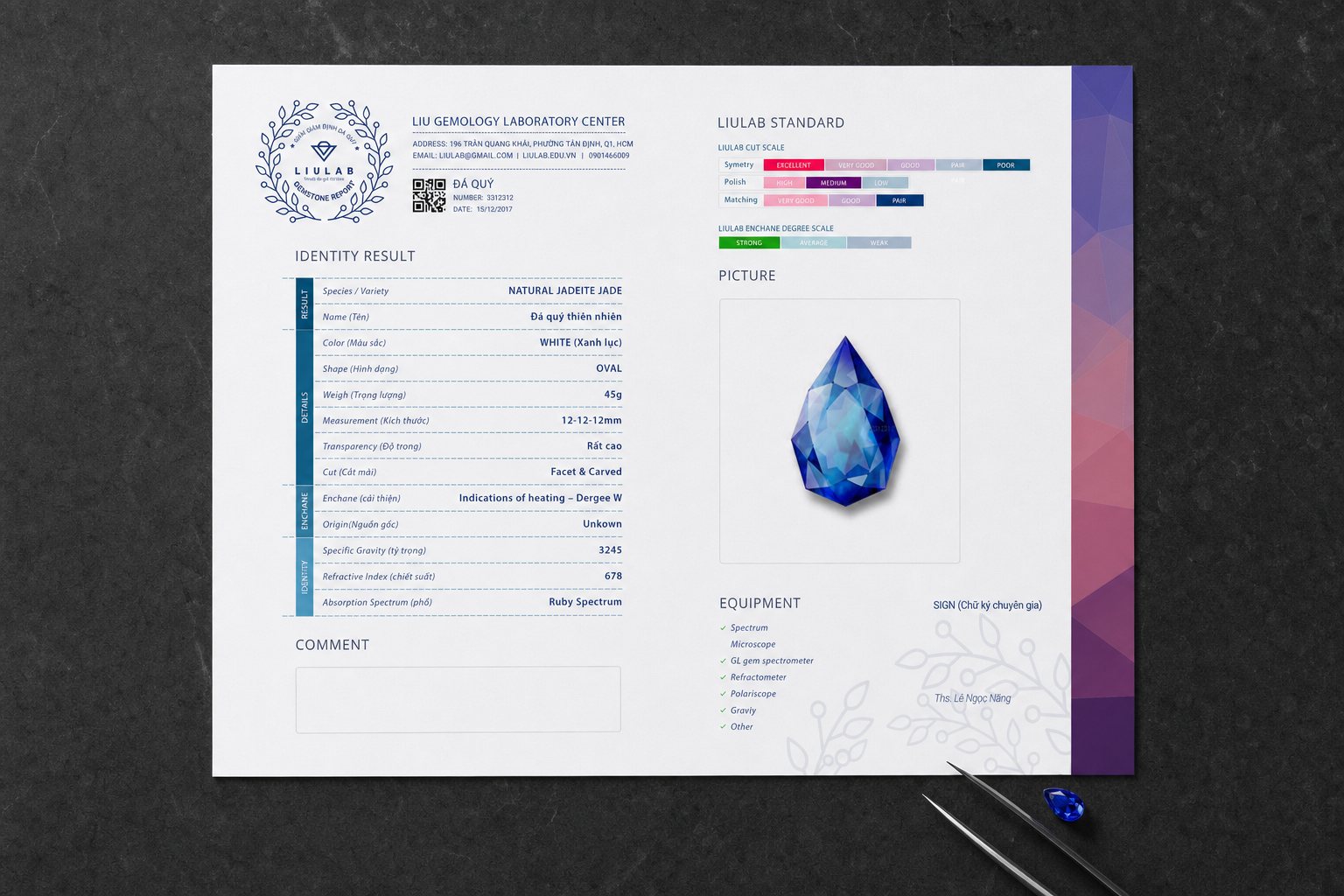
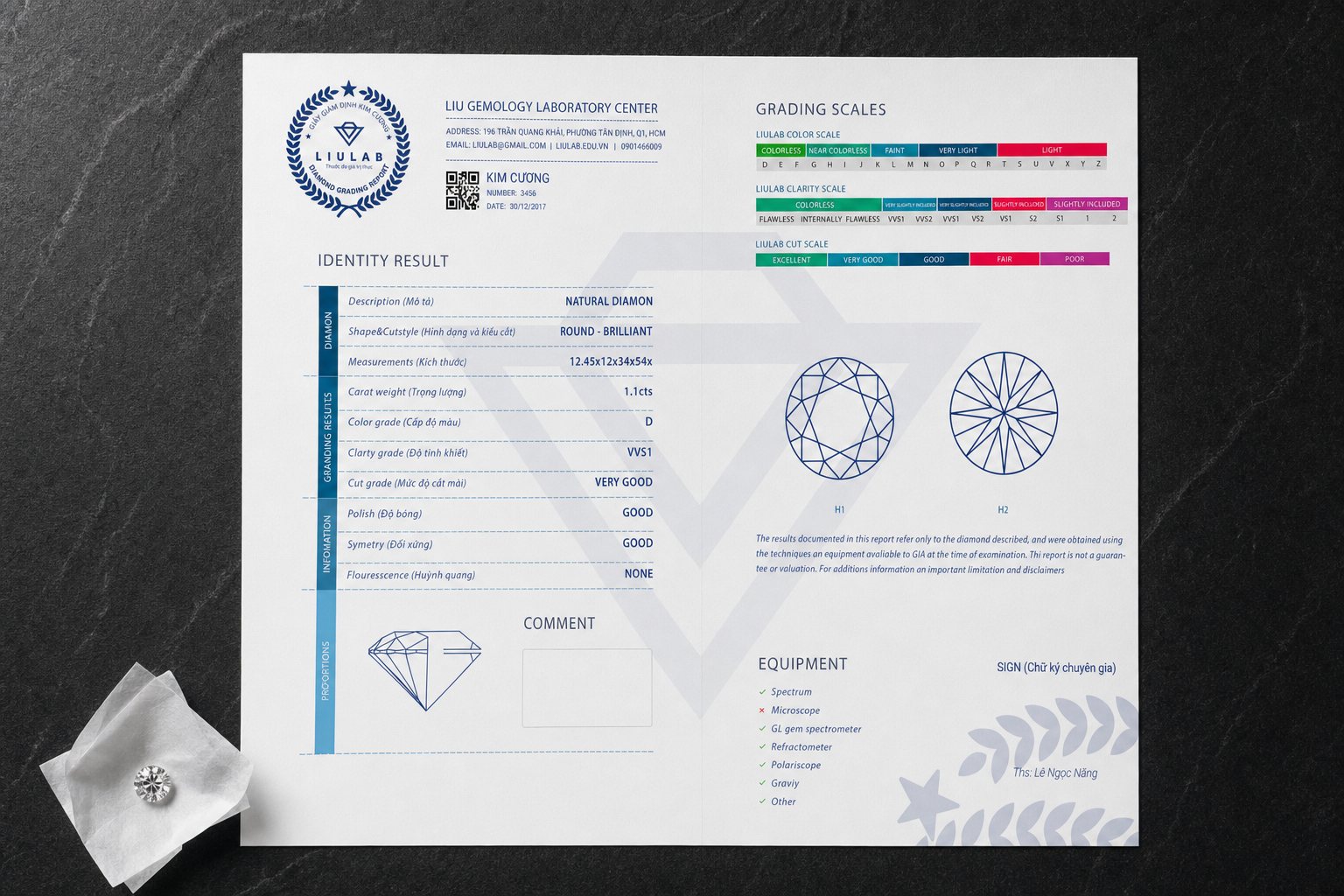
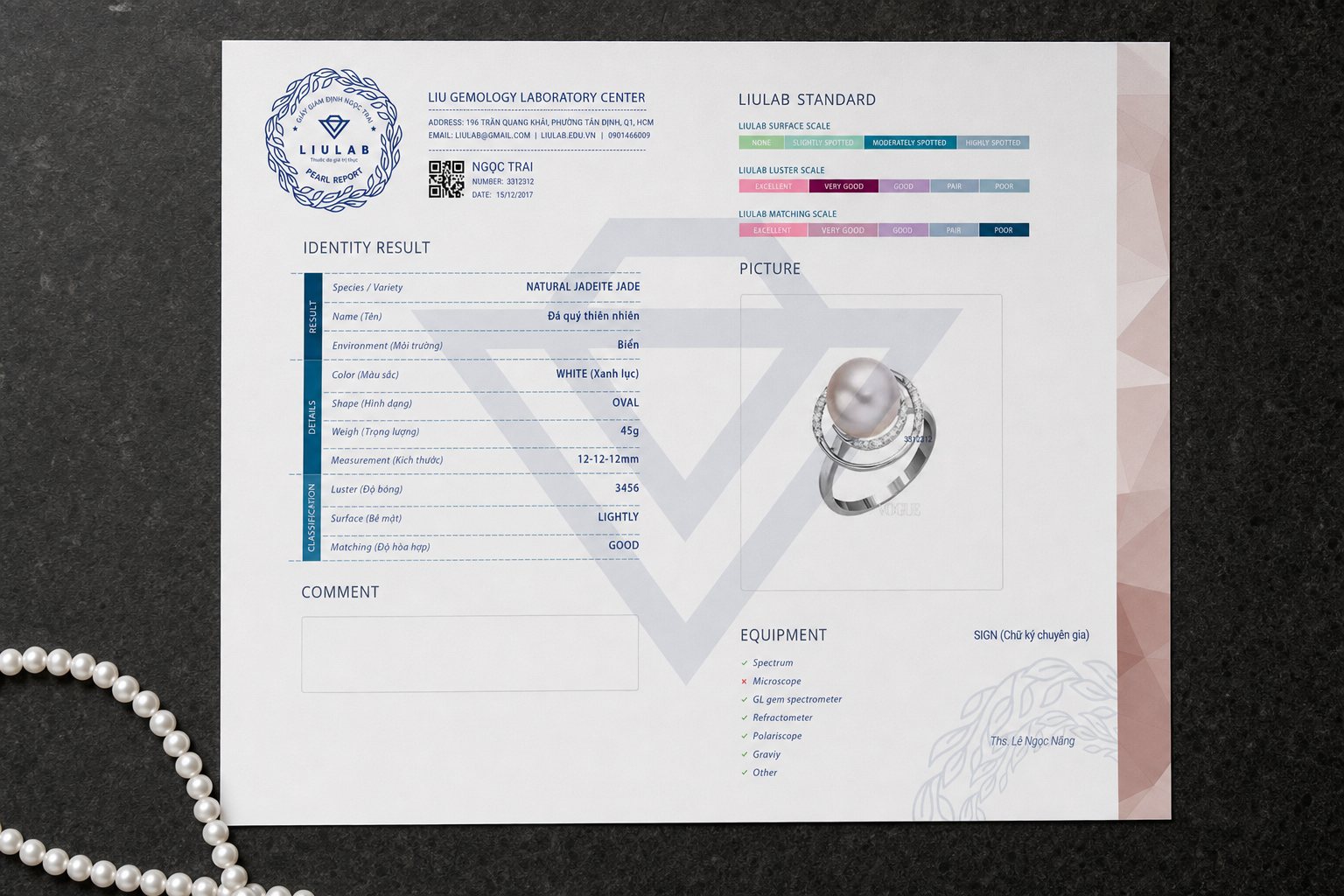
Four stone types became four certificates, and all four share one frame so they read as a system rather than four loose sheets. Identity data sits on the left, the LIULAB grading scale reads as colour bands on the right, the stone photograph sits in the middle, and beneath it run the instrument list, the comment field and the signature. A reader follows the same path on all four, so the second certificate already feels familiar.
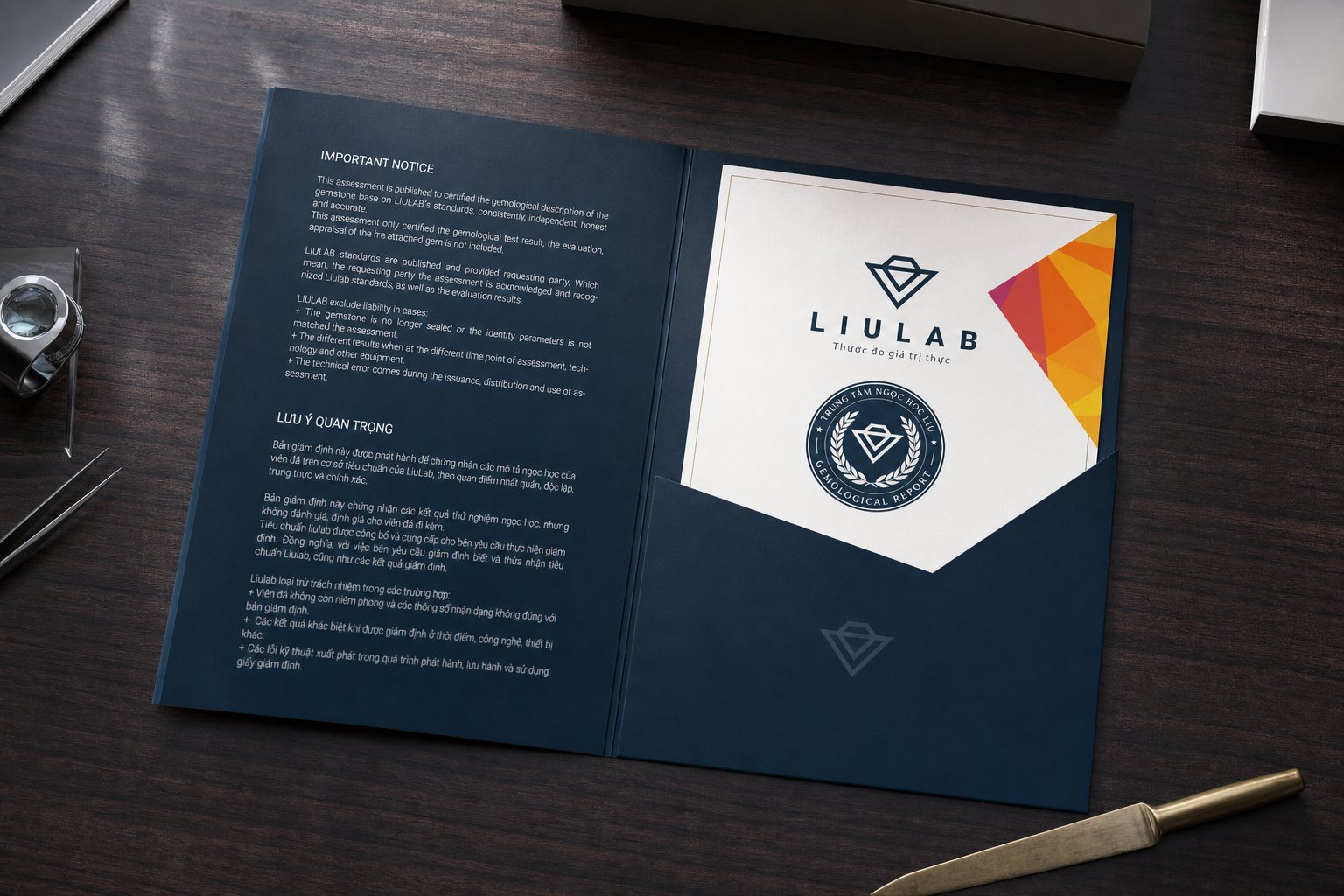
Anti-counterfeiting here is not about hiding things but about putting the genuine article out of easy reach. A faceted pattern sits low in the ground, the mark prints large and pale across the sheet, the colour scale only resolves correctly under proper press conditions, and the lookup code sits beside the seal. The colour band running down the right edge does a second job as well: one hue per stone line, so a stack of files can be told apart by their edges alone. The matching folder takes deep navy with triangular planes breaking across it like light through a stone, and prints in full, on the reverse, the legal notice the profession requires.
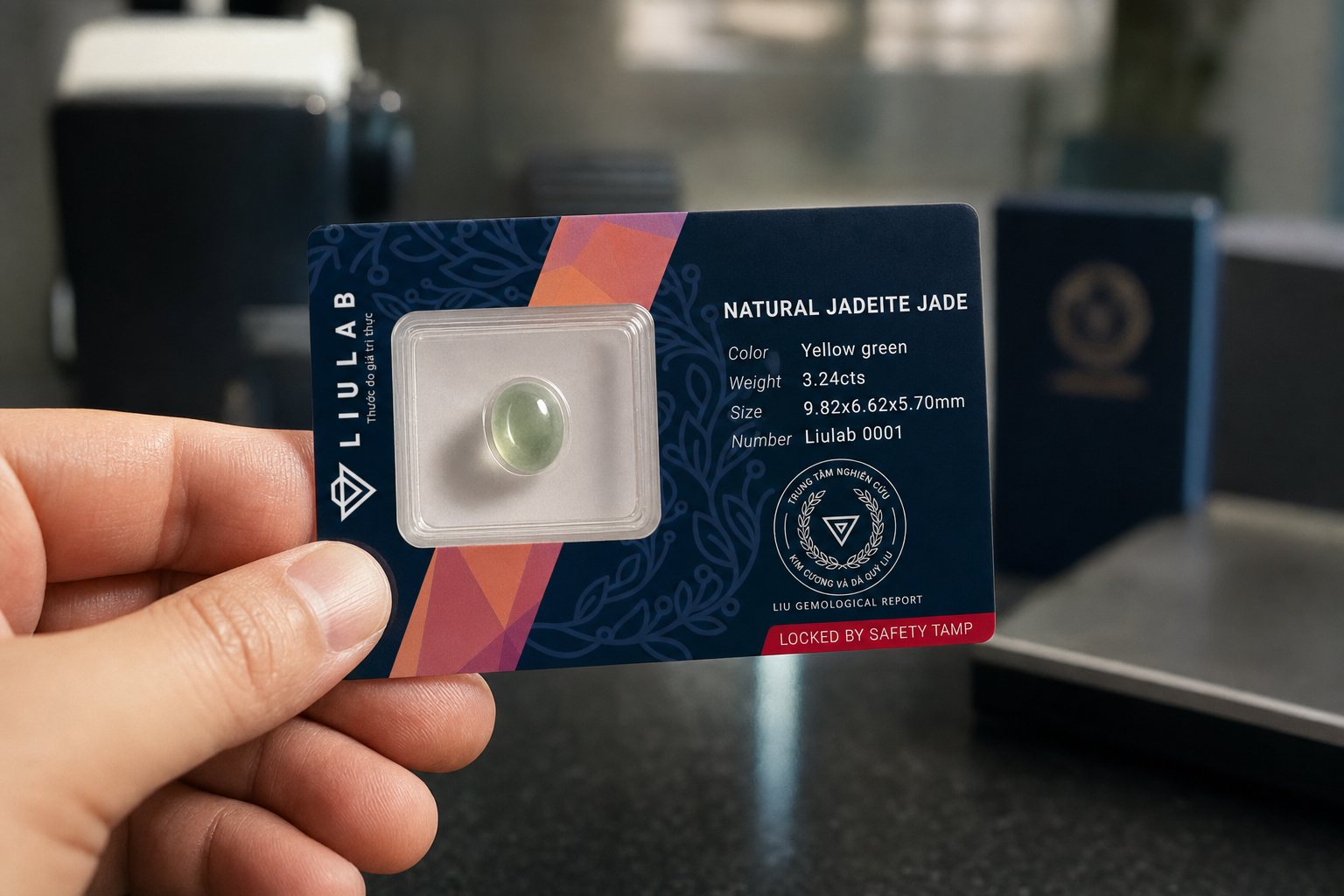
A correct conclusion means nothing if the stone is swapped afterwards. So the final piece is the tamper seal: the stone sits behind a clear window, its data printed alongside, the lookup code on the reverse, and the red warning line placed low enough that it is read before anyone thinks of opening anything.
The design here is not there to look good but to keep two things from ever parting: the stone and the verdict on it. Break the pack and the seal is gone; lose the seal and the certificate lapses, and all of that is visible in the hand. That is the moment the identity stops decorating and starts working.
The outcome
LIULAB received its first client in May 2017 with the identity already waiting on the desk. From opening day, every stone leaving the lab carried a certificate and a seal speaking in one voice, with one mark, one information order and one stamp. There was none of the patchwork that comes from building the brand while the queue is already forming.
What LIULAB gained was not a logo but the ability to send an expert conclusion far from the lab without losing its weight. A gemologist can only sit in one place, while the certificate travels with the stone through buyers, sellers, jewellers and heirs, and at every stop it has to prove itself alone. In a trade that sells trust, that is infrastructure, not decoration.
Four stone lines, one way of reading
Jade, coloured stone, diamond and pearl share one frame and differ only in the colour band down the right edge.
Does your problem look like LIULAB?
Tell Sinh Vũ what is on your mind about your brand. We will point to the part worth doing first.