Retail and e-commerce

Identity design for convenience stores and grocery chains

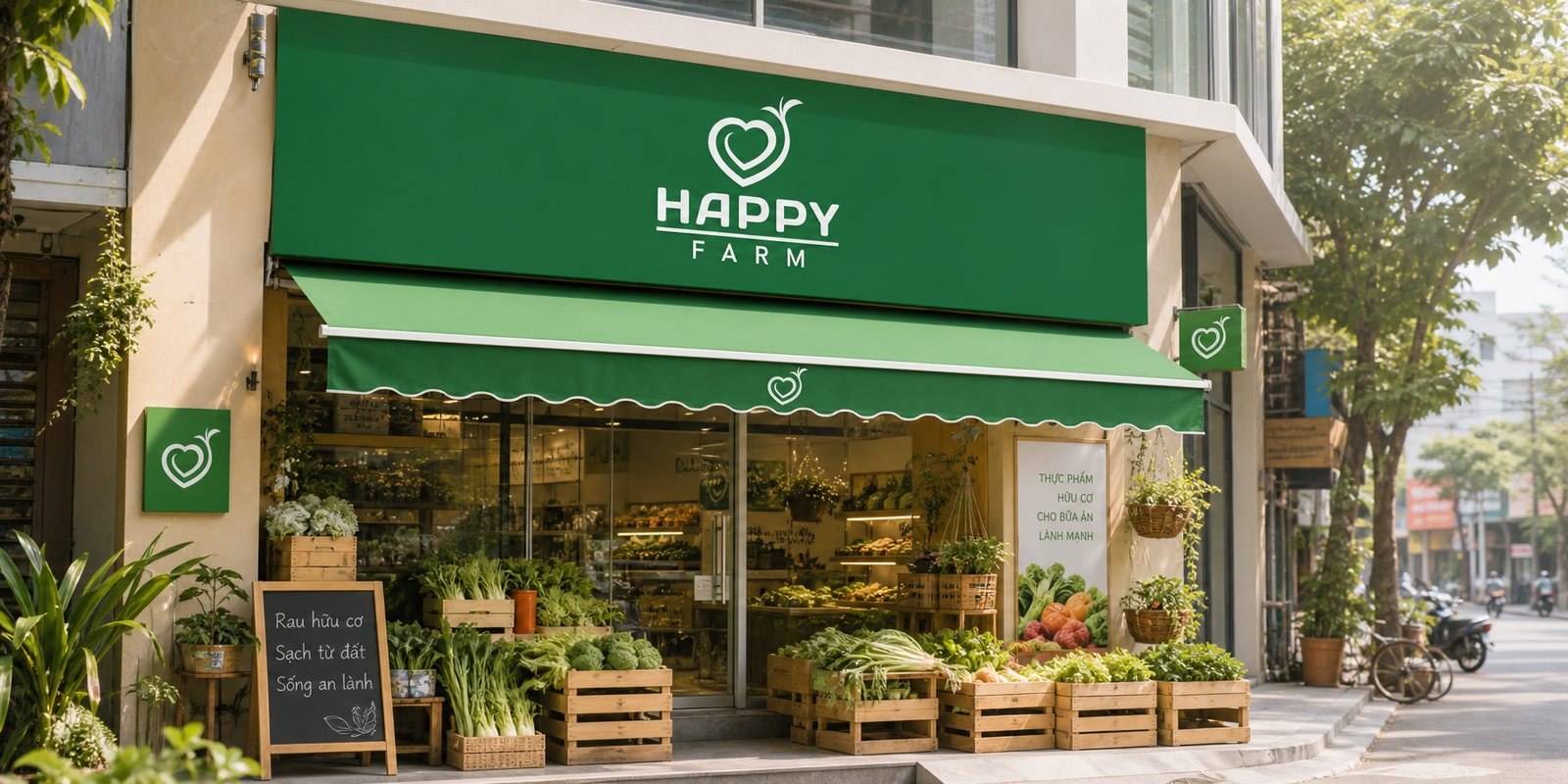
Customers step in because the store looks familiar, not only because it is close to home.

Convenience stores win on consistency: whichever new location opens, customers find the same thing they already know. Sinh Vũ builds the identity and brand standards so the tenth store looks like the first.

A sample print set for a convenience store chain: storefront sign, shelves and price signs, shopping bag and uniform
Quick answer01

What does a convenience store chain identity need?

Three things: a mark that reads from across the street, a set of standards for shelves, price signs and the counter, and one distinctive thing for customers to remember beyond location. Together they keep a newly opened store feeling like a familiar one.

  1. A mark that reads from a distance

    Clear on a lightbox sign at street distance, and still recognizable when shrunk onto a bag or a label.

  2. Standards for shelves, prices and the counter

    Say how large the price signs are, how shelves are arranged and what goes on the counter, so staff at every location do it the same way.

  3. One distinctive thing

    Something the store does clearly better, said in one short line on the sign and the counter, so customers have a reason to remember.

Business types02

Three kinds of store, three problems

All of them sell everyday essentials, but each kind of store competes on something different.

Convenience stores

Their customersOffice workers and students stopping by quickly, many of them in the evening, who need to find the right item at once.

Brand challengeLook clean, bright and well stocked from outside, and let people find things inside without thinking.

Mini supermarkets

Their customersNeighborhood families doing the weekly shop: vegetables, meat, dry goods.

Brand challengeStanding next to the traditional market and the large chains, the store needs a reason to be chosen: tidiness, clarity, trustworthy goods.

Grocery chains

Their customersHouseholds and small eateries buying every day, who know the seller by face.

Brand challengeKeep the familiarity of a corner grocery while staying as tidy and consistent as a chain, even when the people minding the store change.

Pain points03

Four pain points specific to store chains

These are the places where a chain loses customers even when the goods are not lacking.

02

Every store drifts a little

Signs of different sizes, self-printed price boards, a different uniform color at each place; a customer visiting two locations sees two different stores.

A short set of standards with sample photos for signs, shelves, price boards and counters, enough for people at a new location to get it right on their own.

Start from this problem
Customer journey04

At which stage do store chains lose the most customers?

At the Notice stage. Customers decide whether to step in within a few seconds of walking past, so an unclear sign and storefront lose the customer right at the door.

Where customers are most often lostNotice
Do this now
  1. Test the sign at night and from across the street, not only on the drawing.
  2. Keep one block of color and one mark on the storefront at every location so customers recognize it from afar.
  3. Put a line right by the entrance saying what is worth stopping for, such as opening hours or ready-to-eat food.
Touchpoints05

Five touchpoints to do first

Touchpoints are the places where customers see, touch or hear about the store. These five decide most of the impression, so do them before opening any new location.

  1. Sign and storefront

    Passers-by decide in a few seconds.

  2. Shelves and price signs

    Where customers spend the longest and can easily see whether the store is well kept.

  3. Checkout counter

    The last place customers meet, so it leaves the last impression.

  4. Own bags and product labels

    They follow customers home and remind them of the store's name on later visits.

  5. Uniforms

    The person at the counter is the face of the chain, so what they wear must be consistent everywhere.

Roadmap06

Where Sinh Vũ suggests you start

Listed in the order to do them. With only one or two stores, stopping at step two or three is enough; a chain that is expanding goes all the way.

  1. Logo and Brand Identity Design

    Name, mark, color and type: the base for the sign and everything after.

  2. POSM and event booth design

    Sign, shelves, price signs and counter built as a real model, tested before being multiplied.

  3. Product packaging design

    Shopping bags, labels and own-label packaging.

  4. Brand guidelines handbook

    Standards so a new location gets it right without having to ask.

  5. Outsourced brand operations

    Monthly support when the chain opens fast and needs someone to hold the brand.

Projects07

Projects closest to store chains

Sinh Vũ has not published a convenience store project. The two below are the closest: a clean-food store chain and a retail jewelry brand, both carrying the identity from the sign to wherever customers touch it.

Further reading08

More on convenience and grocery chains

Free toolTouchpoint map for this business modelSee the five stages customers pass through, where they drop off most, then rate the five touchpoints to fix first.Open the tool Free toolTest designs at real sizePackaging in a marketplace grid and on a shelf two meters away; a logo at avatar size and as a browser tab icon.Open the tool
FAQ09

Frequently asked questions

A simple mark that reads from far away and still works shrunk onto a bag or a label. Sinh Vũ tests the logo on a lightbox sign and at its smallest size before settling it.

Large type, strong contrast, few colors, and a test at night, because many customers stop in during the evening. The sign needs only one mark and one line, not a list of goods.

Standards for logo, color and type; standards for signs, shelves, price boards and counters; and ready-made price board, label and bag templates so a store only changes the text.

Don't try to look like the big chain. Pick one thing the big chain finds hard to do, such as familiarity with the neighborhood or a hand-picked range, then say it consistently from the sign to the greeting.

Write what made the first store work into brand standards, then build one model store. New locations follow the model instead of memory.

Tell Sinh Vũ about your stores

A few lines about how many stores you have, where they are and what is holding you back is enough. Sinh Vũ reads and replies within one working day.