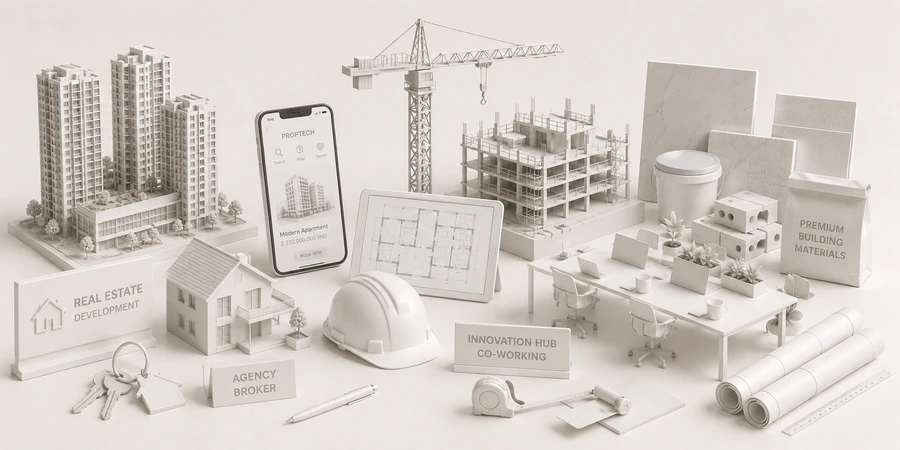
Real estate and construction

Brand design for building contractors and interior fit-out firms

A contractor sells what clients can't take home with them, so the profile and the sign have to speak for the work.

Developers and homeowners choose a contractor before the work begins. Sinh Vũ helps the projects you have already built get told properly, from the company profile and project photos to the sign at the gate.

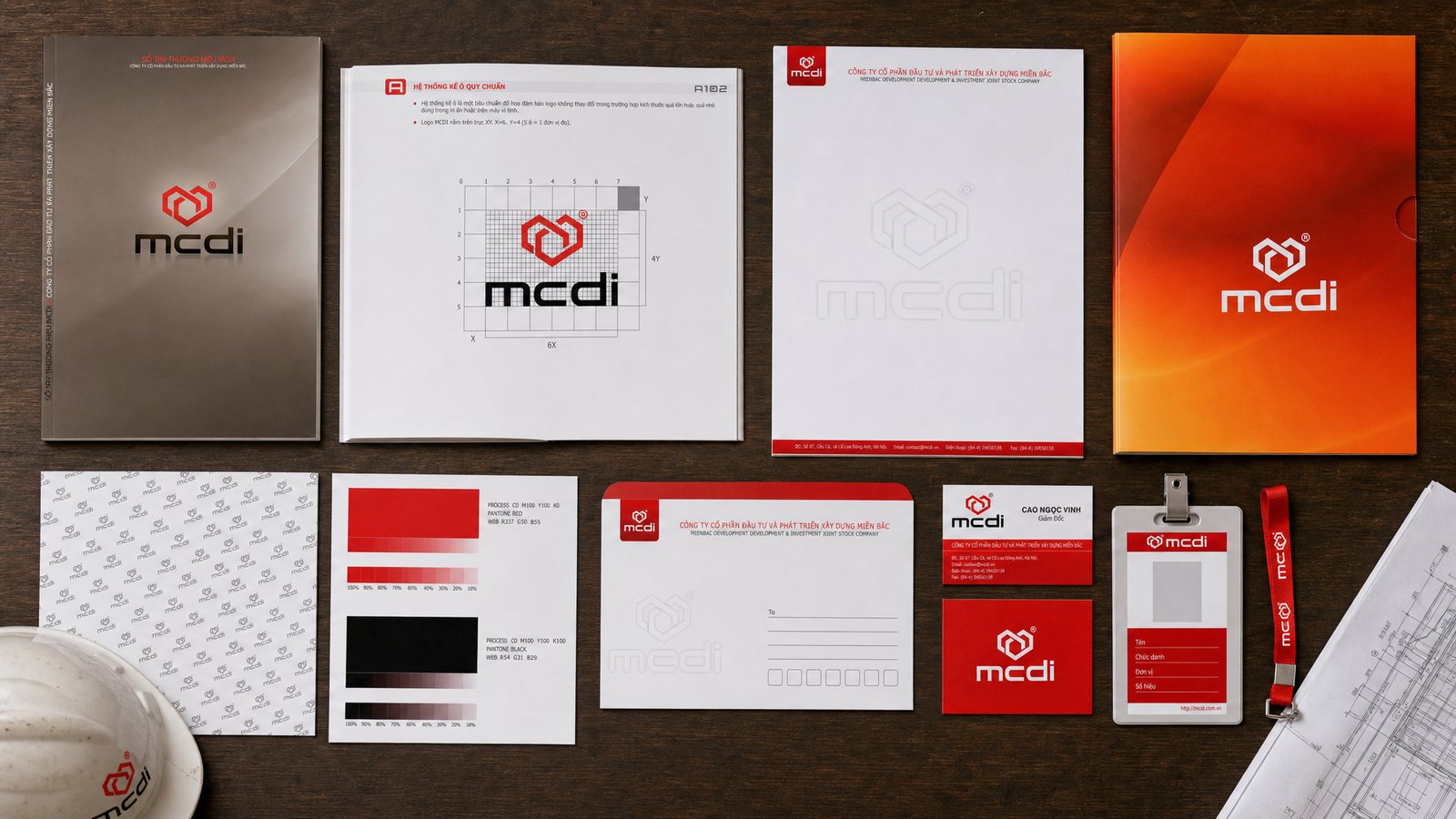
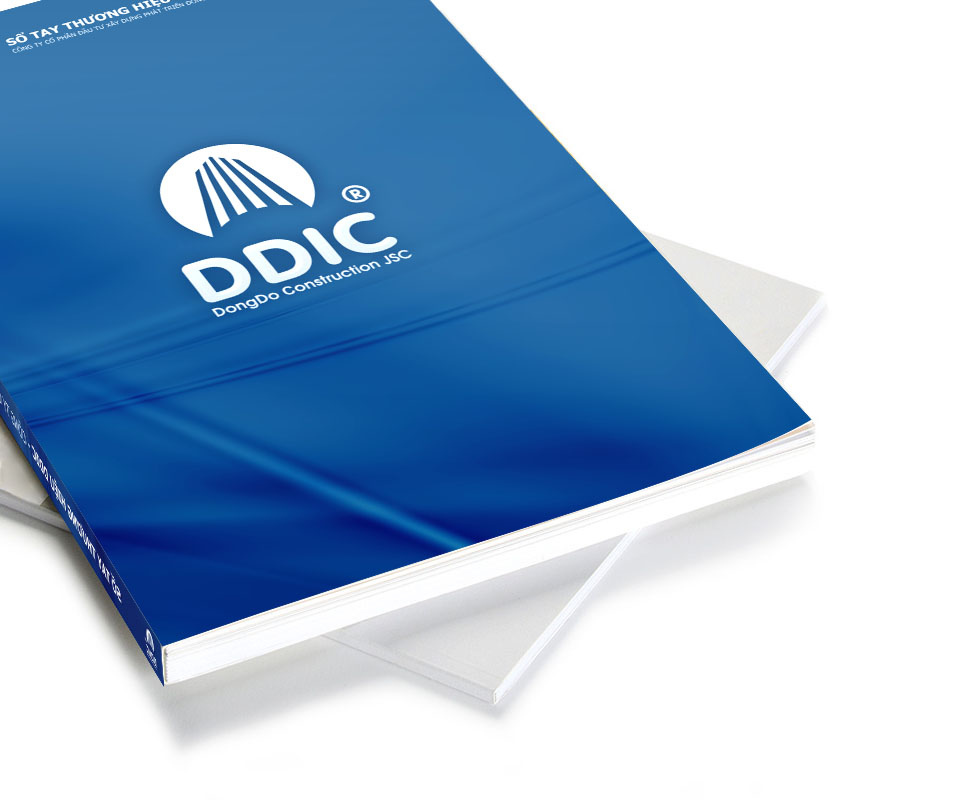
A sample collateral set for a contractor: a company profile, project photos, a site hoarding and uniforms under one identity
Quick answer01

What does a contractor brand need?

Three things: a company profile that tells its story through a few signature projects, a set of project photos shot the right way, and site hoardings and uniforms that follow one standard. Those three are the evidence a contractor brings to the negotiating table.

  1. A company profile that tells its story through projects

    A few signature projects grouped by type, with role, scale and handover year, so the reviewer can see similar work at once.

  2. Project photos done right

    Shot at handover, with the same method and the same light, so each project appears at its true stature.

  3. Signs and uniforms to a standard

    Hoardings, project nameplates, helmets and shirts with one mark, recognizable on every site.

Business types02

Three kinds of contractor, three problems

The people who choose a contractor in these three kinds care about three different things.

Building contractors

Their customersDevelopers, project management boards and general contractors, who review the company profile and past projects.

Brand challengeThe profile has to be readable in a few minutes and prove capability through real projects.

Interior design and fit-out

Their customersHomeowners, shop owners and businesses, who look at project photos first and talk afterward.

Brand challengeThe photos and the way the process is told have to show viewers what working with you will be like.

Renovation, finishing

Their customersHomeowners already living in the home or about to receive it, who need a refresh or finishing and usually worry about dust and time.

Brand challengeTell clients in advance who they will meet, what will be done, in what order and how acceptance works.

Pain points03

Four pain points specific to contractors

These are the places where a contractor does good work and still loses at the profile round or the first meeting.

01

Project photos taken in a rush

Shot on a phone when the job finished, with uneven light and tools still strewn about; the project is beautiful in person and ordinary in the photo.

Reshoot at handover with a fixed frame; add photos in batches so the set always has the same voice.

Start from this problem
03

Homeowners don't know the construction process

Clients renovating or fitting out a home worry about who will do the work, in what order and when it will be accepted, so they ask everything at once.

A short process page: each step, the person in charge, acceptance milestones and how to give feedback; used on the website and in the folder sent to clients.

Start from this problem
Customer journey04

At which stage do contractors lose the most clients?

At the Research stage. Developers or homeowners look at project photos, the website and the profile, then pick a few firms to meet. With identical profiles and rushed photos, a contractor doesn't make that list.

Where customers are most often lostResearch
Do this now
  1. Choose three to five signature projects, grouped by type, with role, scale and handover year.
  2. State clearly which part the contractor built and which part another firm did, so viewers trust it.
  3. Use one photo frame and one shooting method for every project in the profile and on the website.
Touchpoints05

Five touchpoints to do first

Touchpoints are the places where developers and homeowners see the contractor. You don't need to do everything at once. These five show whether a contractor is organized.

  1. Company profile

    A tender review room often has only a few minutes, and the profile has to speak for itself when nobody is presenting alongside it.

  2. Project photos

    Visible evidence, used in the profile, on the website and in posts.

  3. Site hoarding and project nameplate

    Passersby can read the contractor's name from the street, and it stands there for the whole construction period.

  4. Website

    Homeowners check here before they call.

  5. Office stationery and uniforms

    The folder passed across the meeting table is the first sample of workmanship a partner holds in hand.

Roadmap06

Where Sinh Vũ suggests you start

Listed in the order to do them. A small contractor can stop at step two or three; a contractor with several branches goes all the way.

  1. Logo and Brand Identity Design

    Name, mark, color and type: the foundation for the profile, signs and uniforms.

  2. Corporate capability profile design

    A company profile assembled from a template, with signature projects leading.

  3. Product and brand photography

    A set of project photos shot one way, usable in every profile.

  4. Brand website design

    A website with projects by type and a process page.

  5. POSM and event booth design

    Site hoardings, uniforms, helmets and shirts to a standard.

Projects07

Projects closest to contractors

Sinh Vũ has built the brand for two construction contractors and an apartment refresh services platform. Sinh Vũ has not published an interior design and fit-out project.

Further reading08

More on design and build contractors

Free toolTouchpoint map for this business modelSee the five stages customers pass through, where they drop off most, then rate the five touchpoints to fix first.Open the tool Free toolTest designs at real sizePackaging in a marketplace grid and on a shelf two meters away; a logo at avatar size and as a browser tab icon.Open the tool
FAQ09

Frequently asked questions

A few signature projects with role, scale and handover year; the capability of its people and equipment; certifications. Lead with what is asked most often, and don't list everything.

It leans toward project photos and the process of working with homeowners. The legal and technical capability sections are kept short, so the photos and the way the projects are told lead.

Shoot at handover, clear away tools, and use the same time of day for light and the same method for every project. The photos are real, never staged to mislead, and they state clearly which part the contractor did.

The project name, the developer's name and the contractor's name readable from afar, using the contractor's shared mark and color. It has to be buildable in printed vinyl or painted lettering at each site, so the design accounts for that in advance.

Yes, but a compact one: name, mark, color, a proposal template, uniforms and one process page. The rest comes when the company grows.

Write a set of standards for the mark, color, signs, profile and uniforms, so every branch follows them without asking head office again.

Tell Sinh Vũ about your company

A few lines about the company, the projects you have built and what is holding you back is enough. Sinh Vũ will read it and reply within one working day.