F&B, food and beverages

Packaging design for export food and Halal

Overseas buyers ask for your documents before they ask for a price.

They can't read a story written in Vietnamese, so your packaging and documents have to speak to them on their own. Sinh Vũ makes your packaging, profile and booth read at once: clear source, clear certifications, clear standards.

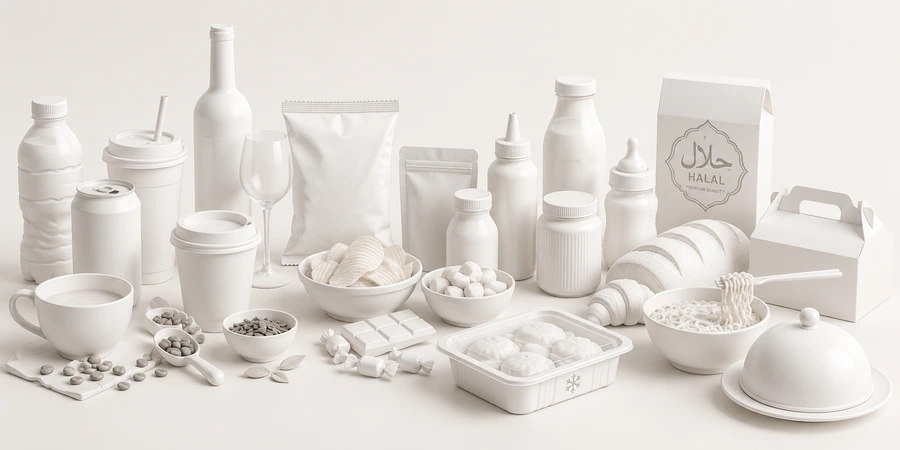
A sample print set for export food: bilingual packaging, a spec sheet, a company profile and a trade fair booth
Quick answer01

What does export food need?

Three things: bilingual packaging with space ready for target-market information, a company profile with clear certifications, and a shared set of visuals for trade fairs. Halal is the food standard under Islamic rules, so the mark and the related information must be placed to specification.

  1. Bilingual packaging with space ready

    The target market's mandatory information gets room from the design frame onward.

  2. A company profile with clear certifications

    Buyers can read the factory, the certifications and the output at once.

  3. A shared set of visuals for trade fairs

    Booth, catalog and spec sheet share one face.

Business types02

Three kinds of export product, three problems

Agricultural goods, Halal canned food and processed food reach buyers by different routes.

Rice and agricultural exports

Their customersImporters and distributors in the target market, who judge by documents and samples.

Brand challengeGive agricultural goods a brand face of their own instead of selling them as unnamed goods.

Halal canned food

Their customersBuyers and consumers in markets with Halal requirements, who pay close attention to the certification mark.

Brand challengePlace the certification mark and information to specification while keeping the packaging attractive and clear.

Processed food for export

Their customersDistributors and retail chains abroad, who compare many suppliers.

Brand challengeOne packaging and document system for the whole range, so buyers remember the supplier.

Pain points03

Four pain points specific to export food

These are the places export food loses customers that quality can't rescue.

02

A wrong label detail gets a shipment held

One line missing or wrong against the target market's requirements can get a shipment held.

Leave room for the mandatory information from the design frame onward; confirm the exact content with the importer and the certifying body.

Start from this problem
03

Buyers ask for documents before they ask for a price

You send scattered catalogs with certifications spread around, and buyers struggle to trust you from the start.

One ordered company profile: factory, process, certifications, product range.

Start from this problem
Customer journey04

At which stage do exporters lose the most buyers?

At the Check stage. Buyers read the documents, the spec sheets and the certifications before they trust you and order samples.

Where customers are most often lostCheck
Do this now
  1. Gather certifications, the factory and the range into one ordered profile.
  2. Make a bilingual spec sheet, short enough to read in a few minutes.
  3. Check every mandatory item with the importer before printing.
Touchpoints05

Five touchpoints to do first

Touchpoints are the places where buyers see, touch or read about a supplier. These five decide whether they ask further.

  1. Bilingual packaging

    What buyers hold in their hands when they look at samples.

  2. Company profile

    What buyers read first, even before they ask for a price.

  3. Trade fair booth

    Where you meet many buyers within a few days.

  4. Spec sheets

    They help buyers compare suppliers quickly.

  5. Foreign-language introduction page

    Buyers research here before they get in touch.

Roadmap06

Where Sinh Vũ suggests you start

In the order Sinh Vũ suggests doing them. A new exporter can stop at step two and be ready to meet buyers.

  1. Logo and Brand Identity Design

    Name, mark, colors and type that work in many markets.

  2. Product packaging design

    Bilingual packaging with space ready for the target market's information.

  3. Corporate capability profile design

    Company profile, catalog and spec sheets.

  4. POSM and event booth design

    Booth and items for trade fairs.

  5. Brand guidelines handbook

    Once you serve many markets: guidelines so every market follows the frame.

Projects07

Related work for export food

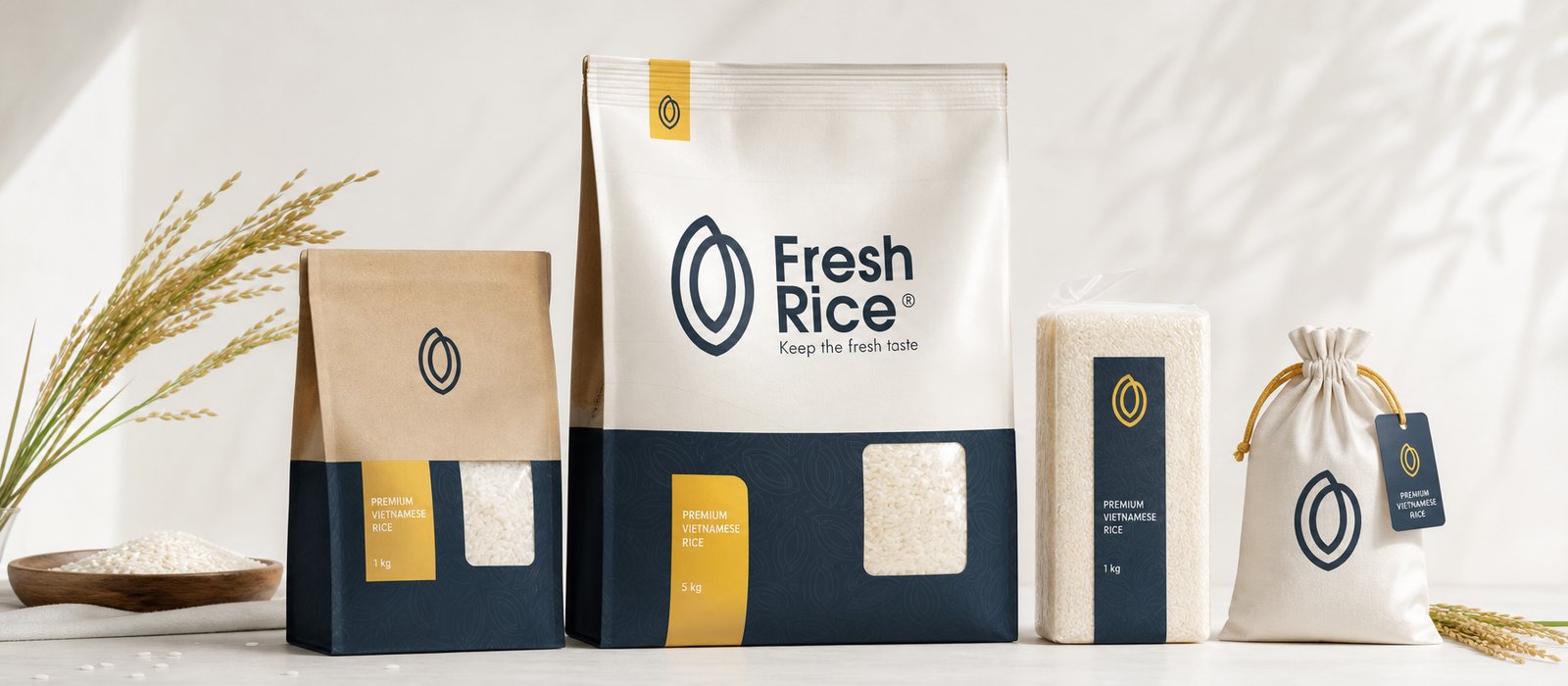
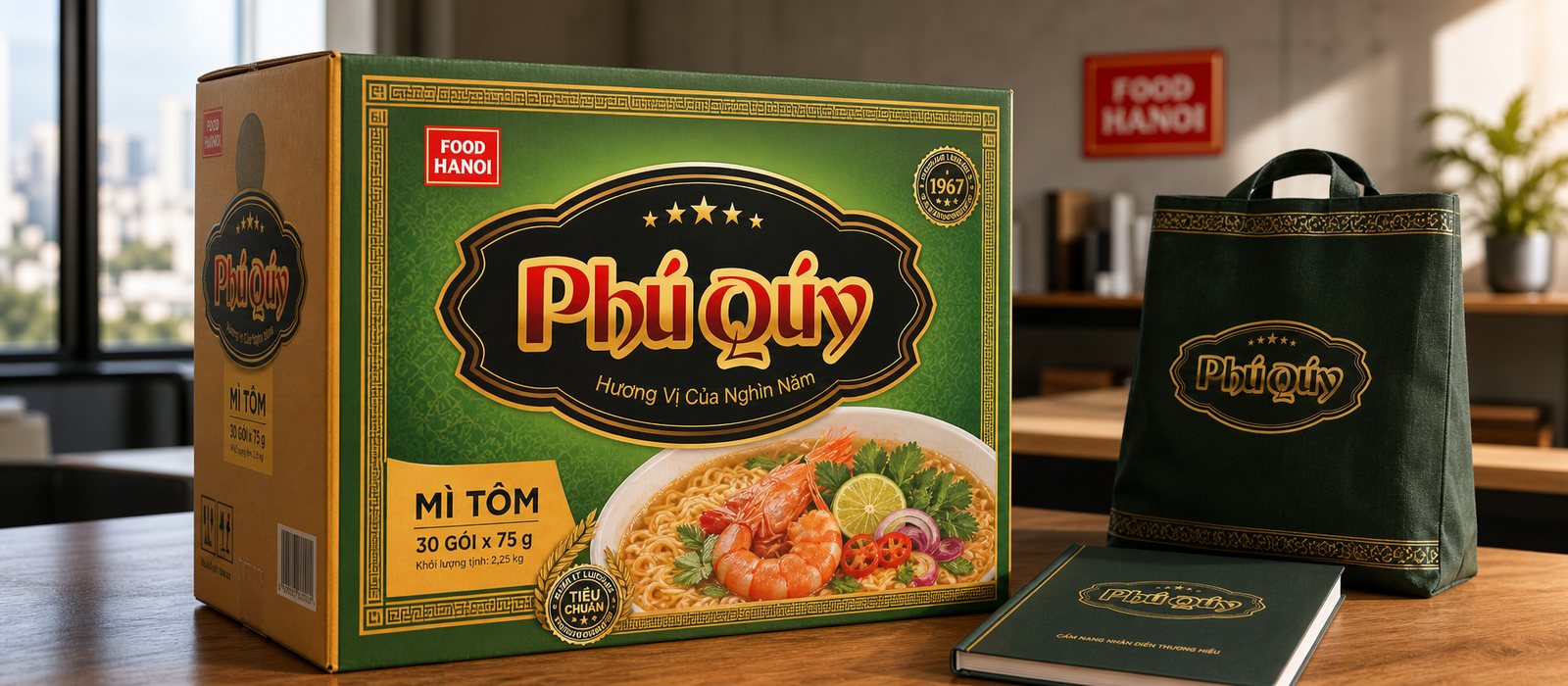
Sinh Vũ has not published an export food or Halal project. The two below are the closest: packaged rice holding its own on the shelf, and a packaging system for many food lines.

Further reading08

More on export and halal food

Free toolTouchpoint map for this business modelSee the five stages customers pass through, where they drop off most, then rate the five touchpoints to fix first.Open the tool Free toolMandatory label check (Vietnam)Choose a product type, paste the label text or drop a photo of the label, and see which mandatory items under Vietnamese law are not found.Open the tool
FAQ09

Frequently asked questions

Leave room for the target market's mandatory information from the design frame onward. The exact content must be confirmed with the importer before printing.

The exact content and marks are set by the certifying body and the importer, so you need them before the design frame is built. Sinh Vũ leaves room and places the mark to the specification that body issues.

It should include the factory, the process, certifications and the product range, in order. Once buyers have read it, they should know at once what you can do and where the evidence is.

Rewrite it in the manner of the target market, not word for word. For the mandatory text, use exactly the wording the target market requires.

A shared set of visuals for the booth, catalog and spec sheet, plus real packaging samples. Buyers remember the more consistent booth.

Tell Sinh Vũ about your product

A few lines about the product, where you sell it and what is holding you back is enough. Sinh Vũ reads it and replies within one working day.