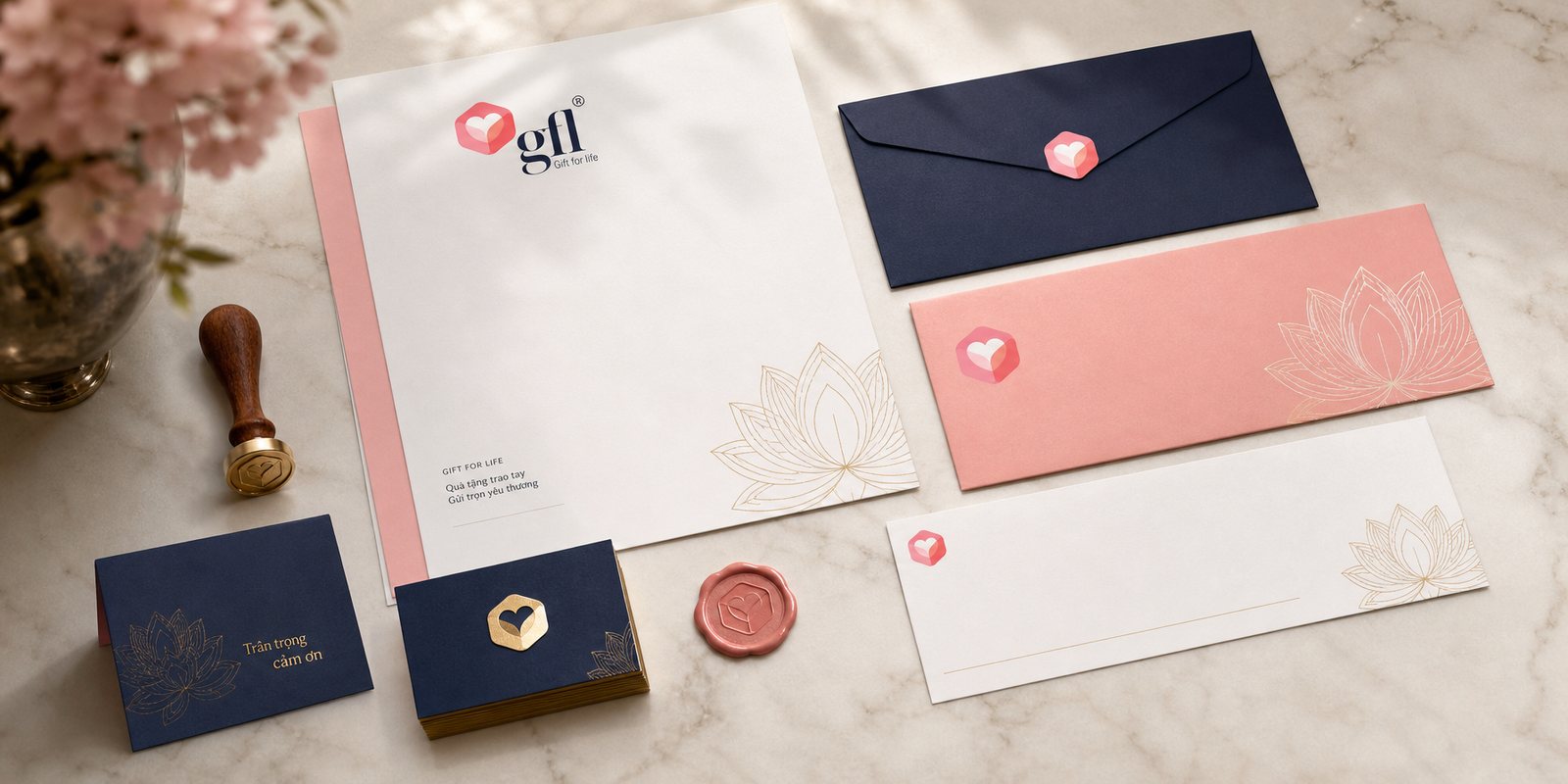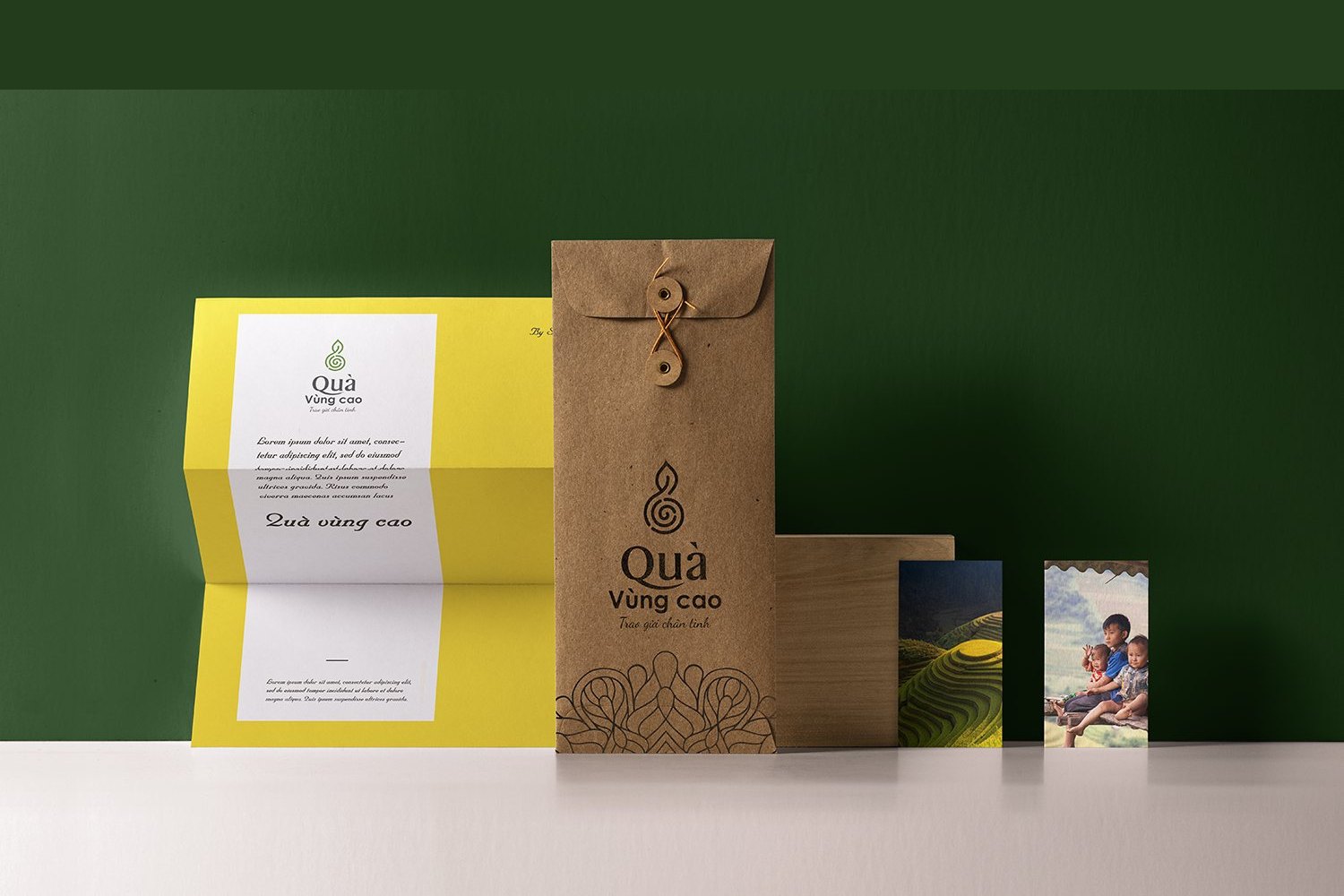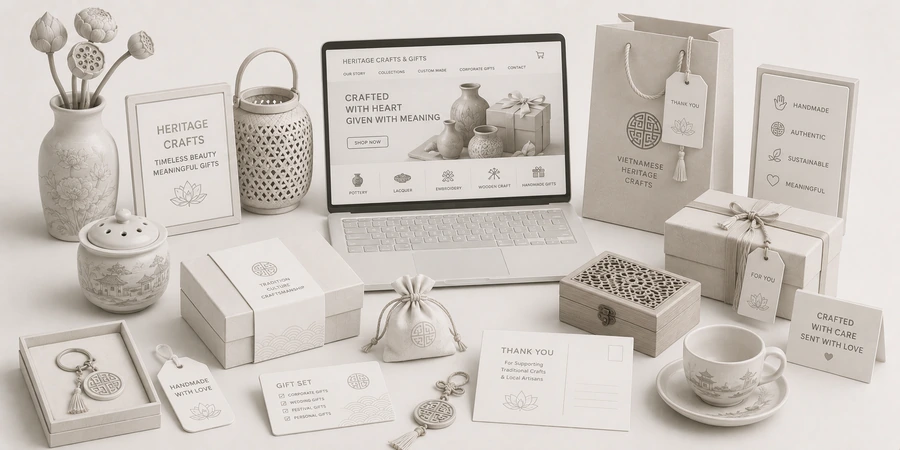
Handicrafts and gifts

Logo and brand design for handmade ceramics

A customer picks up a cup, and the first question is who made it.

Ceramics have glaze, form and a kiln, yet they often lose their name once they leave the workshop. Sinh Vũ gives a pottery workshop a mark, a box and a story card, so customers recognize its pieces among hundreds of look-alikes.

A set of sample pieces for a pottery workshop: a box with a holding tray, a kiln story card, a base stamp and a glaze close-up
Quick answer01

What does a handmade ceramics brand need?

Three things first: a kiln mark that works on the base and on the box, a set of close-up photos of glaze and form, and a box that gets the piece to the recipient intact. Those three let customers tell a workshop's pieces from mass-made goods.

  1. A kiln mark

    Simple enough to stamp or print on the base, and still legible when shrunk onto a card.

  2. Close-ups of glaze and form

    Same light, same backdrop, so customers see the glaze that screens tend to flatten.

  3. A box that keeps the piece intact

    A tray cut to the shape of the piece, handsome and still able to survive the journey.

Business types02

Three kinds of ceramics, three problems

All are glazed fired clay, but household, decorative and gift ceramics are bought for three different reasons.

Household ceramics

Their customersFamilies, cafés and restaurants buying bowls, plates and tea sets for everyday use.

Brand challengeShow customers how this piece differs from factory goods, so they choose it for the daily meal.

Decorative ceramics

Their customersPeople choosing vases, plates and figures for homes, cafés and hotels, who look closely at form and glaze.

Brand challengeLet the form, the glaze and the maker's name come through, so the piece is seen as a work and not just a filler.

Gift ceramics

Their customersBuyers looking for gifts, wedding presents, and gifts for foreign guests.

Brand challengeThe box and card have to do the seller's talking: say where the gift comes from, and keep it intact until it reaches the recipient.

Pain points03

Four pain points specific to pottery workshops

These are the places where a pottery workshop loses customers and craftsmanship alone can't save it.

02

Your pieces blend in with other goods in the craft village

A pottery market mixes imported and mass-made goods, and a customer walking one round can't tell them apart.

Give the workshop's pieces a mark that is recognized at a glance, with a label and card saying where each piece is shaped, painted and fired.

Start from this problem
03

A box that can't survive the journey

Ceramics shipped far or carried on trains and buses crack easily; a sturdy box is ugly and a handsome one is thin.

A box designed to the exact shape of the piece, with a holding tray, still carrying the workshop's look; sample it through a real shipping route before printing.

Start from this problem
Customer journey04

At which stage does a pottery workshop lose the most customers?

At Buy. The customer likes the piece, but sees a thin box and no card telling the craft, so they hesitate to buy it as a gift or to ship it far.

Where customers are most often lostBuy
Do this now
  1. Make a box with a tray cut to the shape of your best-selling pieces.
  2. Put a card in the box: workshop name, glaze type, how to use and care for it.
  3. Photograph the piece already inside the box, so customers trust that shipping far is safe.
Touchpoints05

Five touchpoints to do first

Touchpoints are the places where customers see, touch or hear about the workshop. You don't need to do everything at once. These five touchpoints decide most of a customer's impression.

  1. The mark on the base

    It is the first place a customer turns the piece over to see who made it.

  2. Shatter-proof box

    It decides whether the piece reaches the recipient intact.

  3. Kiln story card

    It speaks for the seller: who made it, what glaze, where it was fired.

  4. Glaze close-ups

    It is what customers study most closely when buying on a screen.

  5. Shop, display space

    How the pieces are arranged decides whether customers see a workshop or a pile of goods.

Roadmap06

Where Sinh Vũ suggests starting

Listed in the order to do them. A small workshop can stop at step two or three; one selling to restaurants and hotels goes on to the end.

  1. Logo and Brand Identity Design

    Name, kiln mark, color and type: the base for everything after.

  2. Product packaging design

    A box with a tray, a label and a card that go with every piece.

  3. Product and brand photography

    A set of glaze close-ups, forms and potters at work, usable all year.

  4. Building brand voice

    The words on the card and the sales page: telling the craft briefly, accurately and without cliché.

  5. Sales and marketing collateral design

    A tight catalog for restaurants, hotels and cafés ordering ceramics in quantity.

Projects07

Projects closest to ceramics

Sinh Vũ has not published a ceramics project. The two below solve the two closest problems: a box system that holds a gift, and a storytelling page that travels with the product.

Further reading08

More on ceramics

Free toolTouchpoint map for this business modelSee the five stages customers pass through, where they drop off most, then rate the five touchpoints to fix first.Open the tool Free toolBox dieline makerEnter the inside length, width and height to draw a reverse tuck end or two-piece box dieline with cut and fold lines, ready to download as SVG and PDF for a mock-up.Open the tool
FAQ09

Frequently asked questions

Avoid vases, cups or hands shaping clay, because so many workshops already use them. Sinh Vũ looks for a detail unique to the workshop, such as a pattern, a glaze shade or a kiln mark, and tries it as a small stamp on the base before settling.

The box should follow the exact shape of the piece and have a holding tray. Send a real sample through a real shipping route before printing a full run.

It should have one, and a very short one: workshop name, glaze type, how to use and care for it. For gift ceramics, the card tells the recipient where the gift comes from.

Speak in what can be seen: hand-painted strokes, the small variations in each piece, glaze close-ups, photos of the maker. There is no need to run down other goods.

Not yet. The minimum is a name, a kiln mark, color, one kind of box and one card. The rest comes when the workshop grows.

Tell Sinh Vũ about your pottery workshop

A few lines about the workshop, the line of ceramics and what is holding you back is enough. Sinh Vũ will read it and reply within one working day.