
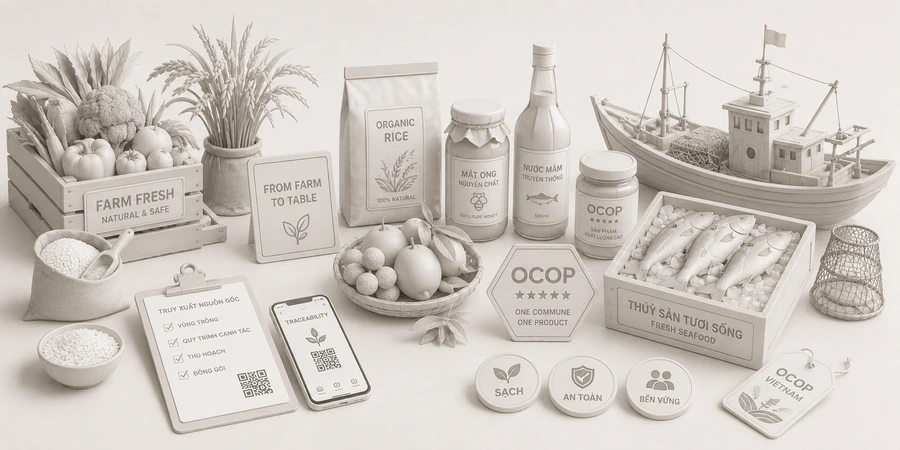
Agriculture, aquaculture, and OCOP

Packaging and brand design for export seafood

Seafood buyers read packaging the way they read a declaration form.

For frozen goods, packaging is both image and the paperwork that travels with the shipment. Sinh Vũ makes your packaging, cartons and files clear and consistent, and carrying your company's name instead of the importer's.

A sample print set for export seafood: frozen packaging, a shipping carton, a bilingual company profile and a trade fair booth
Quick answer01

What does an export seafood brand need?

Three things first: packaging with room reserved for each market's label content, a bilingual company profile for buyers, and clearly shown traceability and certification. Together they make buyers trust that the company works properly.

  1. Packaging with room for labels

    A design frame with room for each market's mandatory content, so labels can change without redrawing.

  2. A bilingual company profile

    Facilities, products, certification and process in one compact set, readable in the buyer's language.

  3. Clearly shown traceability and certification

    The traceability code and genuine certification marks placed at eye level, never hidden or distorted by the design.

Business types02

Three kinds of product, three problems

All of it is processed seafood, but the recipients differ, so what the packaging has to say differs too.

Processed shrimp

Their customersImporters, retail chains and restaurants abroad.

Brand challengeSeparate the product lines (size, form of processing) clearly on the packaging and the carton so recipients can read them quickly.

Frozen fish fillets

Their customersDistributors, retail chains and industrial kitchens.

Brand challengePackaging that reads from a distance in a cold store and still looks good in a retail freezer.

Packed crab and squid

Their customersImporters and Asian food stores abroad.

Brand challengeGive the product a look of its own among many packed seafoods, and state clearly how to use it.

Pain points03

Four pain points specific to seafood

These are the places where seafood companies lose orders or lose their brand and product quality can't save them.

01

One wrong label detail and the shipment is held

Changing markets means changing label content; the old design has no room left and must be redrawn in a rush.

Build a packaging frame with fixed zones and zones that change by market, so you can swap the text without swapping the image.

Start from this problem
03

A company profile that reads like a technical catalog

Many figures, little to remember; buyers finish reading without knowing what sets the company apart.

Arrange the profile around the buyer's questions: who makes it, where, how it is traced, what it is certified for.

Start from this problem
Customer journey04

At which stage does seafood lose the most buyers?

At the Check stage. Before the first order, buyers review the profile, certification and traceability. If the files are scattered or hard to read, they choose another supplier.

Where customers are most often lostCheck
Do this now
  1. Gather certification, traceability and process into one compact bilingual file.
  2. Use one shared identity template for the profile, packaging, cartons and trade fair booth.
  3. Prepare a separate introduction for each market, answering that market's own questions.
Touchpoints05

Five touchpoints to do first

Touchpoints are the places where buyers look at, touch or read about your seafood. You don't need to do everything at once. These five touchpoints decide most of the impression.

  1. Frozen packaging

    It is what recipients pick up and read first.

  2. Shipping carton

    Where warehouses and distributors recognize your goods.

  3. Company profile

    Where buyers check the company before ordering.

  4. International trade fair booth

    Where buyers meet dozens of suppliers in a single session.

  5. Company introduction page

    Distant buyers look for the company online before getting in touch.

Roadmap06

Where Sinh Vũ suggests starting

In the order to do them. A small facility can stop at step two or three; a larger brand goes all the way.

  1. Brand strategy and positioning consulting

    Choose the product line and the market to build your own brand on first.

  2. Logo and Brand Identity Design

    Name, mark and colors for packaging, cartons and the profile.

  3. Product packaging design

    Packaging and cartons with room set aside for each market's label.

  4. Corporate capability profile design

    A bilingual company profile for buyers.

  5. POSM and event booth design

    The trade fair booth and the items you bring when you meet buyers.

Projects07

Projects closest to seafood

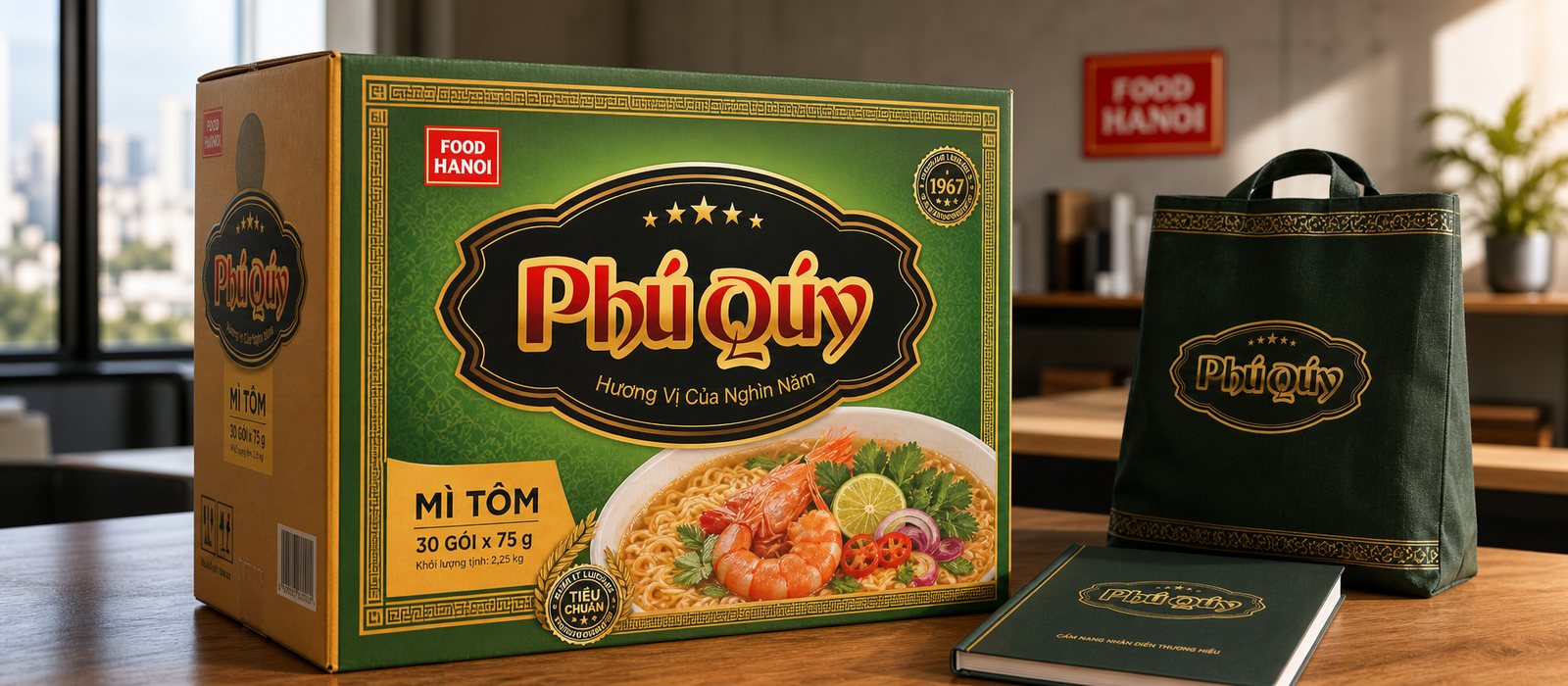
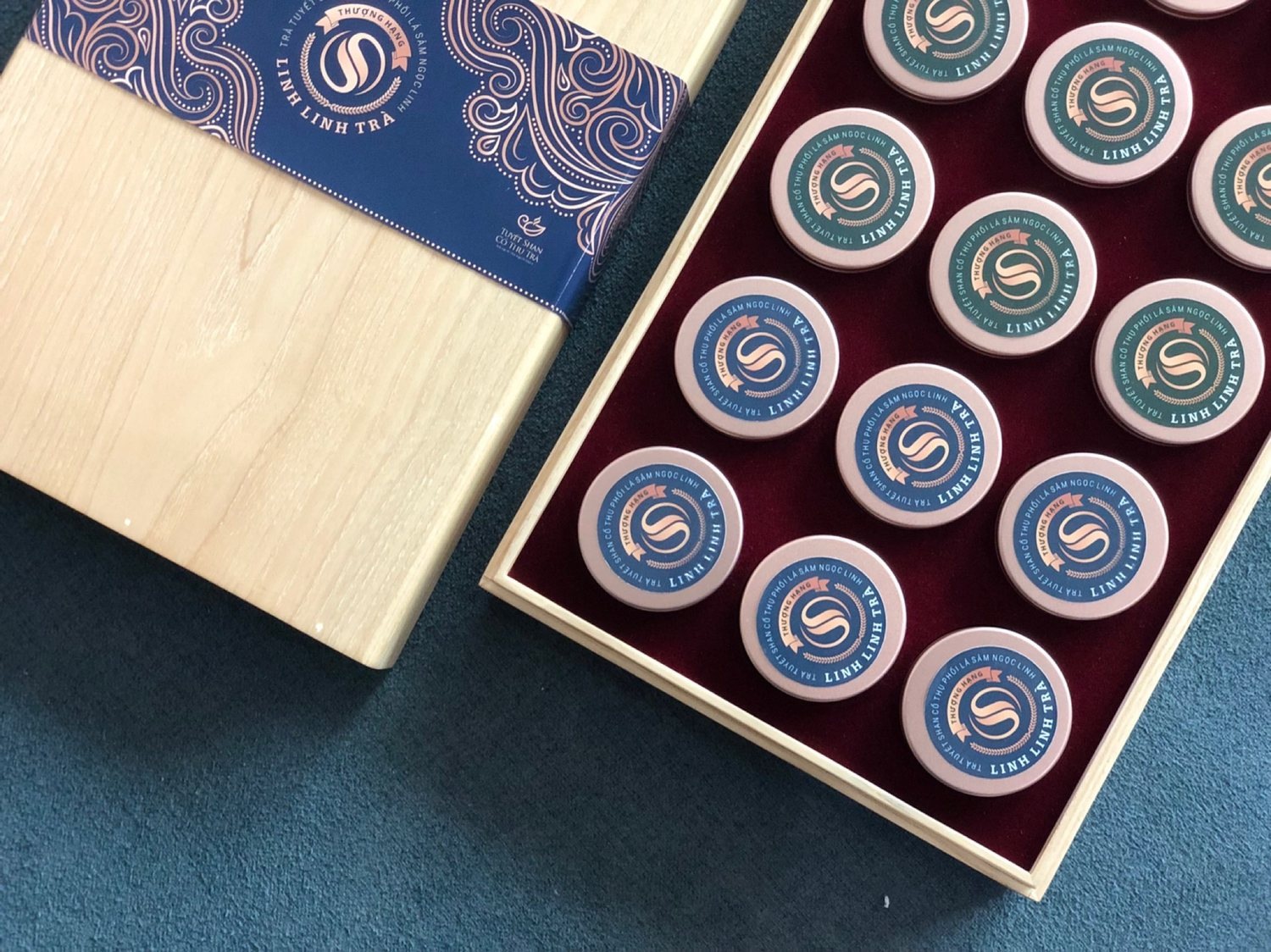
Sinh Vũ has not published a seafood project. The two projects below are the closest: a packaging system for several processed food lines, and a set of labels and a catalog for goods that need to be trusted.

Further reading08

More on seafood

Free toolTouchpoint map for this business modelSee the five stages customers pass through, where they drop off most, then rate the five touchpoints to fix first.Open the tool Free toolMandatory label check (Vietnam)Choose a product type, paste the label text or drop a photo of the label, and see which mandatory items under Vietnamese law are not found.Open the tool
FAQ09

Frequently asked questions

Product name, size and form of processing go first, the brand sits in a fixed position, and market-specific label content has its own zone. The packaging needs to read clearly even inside a freezer.

Yes, because the carton is what warehouses and distributors see most. A carton that clearly reads the company name, lot code and product line helps the goods get recognized and remembered.

Facilities and raw material regions, process, current certification, traceability capability, flagship products and how to get in touch. Include a bilingual version for foreign buyers.

The label content changes by market, while the brand and the look stay the same. For the mandatory content, check with the importer or a regulatory adviser; the design leaves room ready for the change.

A booth with one idea recognizable at a glance, samples, a bilingual company profile and a way to get in touch. The goal is for buyers to remember the company and get back in touch after the fair.

Tell Sinh Vũ about your seafood

A few lines about the product, the place it is made and what is holding you back are enough. Sinh Vũ reads it and replies within one working day.