Dozens of codes without a system
New lines are named on impulse, and customers and dealers can't tell which line replaces which.
One shared naming and coding rule, with room for new lines without starting over.
Start from this problem
Durable equipment is only half the job. The other half is buyers seeing it.
Many lines, many codes, passing through many dealers. Sinh Vũ helps electrical equipment, components, and motors share one face, from packaging to the point of sale.
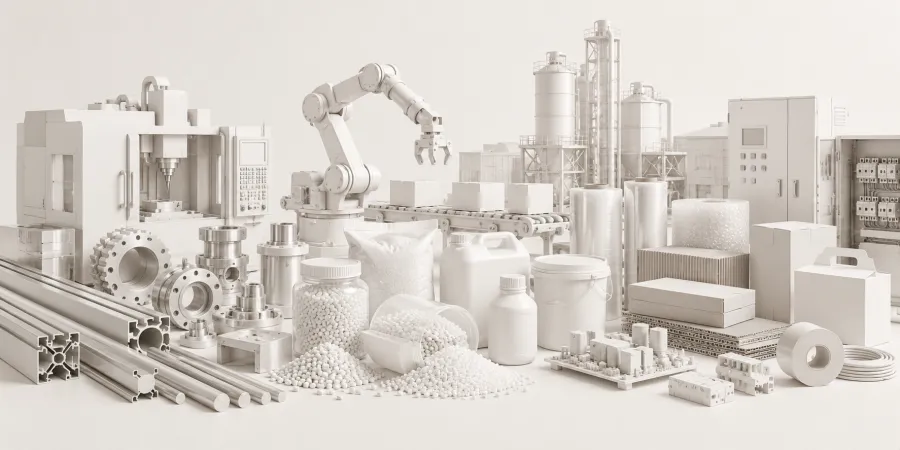
Three things: one code and identity system for the whole range, packaging and manuals that speak in one voice, and a display standard for dealers. Buyers of electrical equipment choose the brand they feel safe with when something goes wrong.
Naming and line-coding rules, so a customer can read a code and know which line it belongs to.
Boxes, specification labels, and instruction sheets on one frame, easy to read and easy to look up.
A set of display standards and sales materials so every point of sale says the same thing.
All of them make equipment that runs on electricity, but the buyers and the sales channels differ, so what the brand has to say differs too.
Their customersElectrical contractors, supply stores, and end users buy through dealers and choose a brand they already know.
Brand challengeKeep the brand consistent across many lines and dealers, and clear when customers look up the warranty.
Their customersAssembly plants and purchasing departments order by component code and specification sheet.
Brand challengeShow technical reliability and quick-reference documentation instead of competing on price alone.
Their customersInstallers, contractors, and factories buy to build into their own systems.
Brand challengeShow that many lines and models belong to one manufacturer, with support on hand when something fails.
These are the places where equipment manufacturers lose customers even though the equipment runs reliably.
New lines are named on impulse, and customers and dealers can't tell which line replaces which.
One shared naming and coding rule, with room for new lines without starting over.
Start from this problemThe same brand appears on different cabinets, signs, and flyers at every shop, so customers can't recognize the genuine product.
A compact point-of-sale standard dealers can follow without asking for a redesign.
Start from this problemSpecifications, warnings, and product codes crowd each other on the box, and buyers hunt for what they need.
A label frame with fixed zones for name, code, main specifications, and warnings; the technical content is supplied by the manufacturer.
Start from this problemThe sheet is printed small and stitched together from several sources, and customers call to ask things it already answers.
Rework the document around what the user needs to do, with clear drawings, short text, and one frame for every line.
Start from this problemAt the long-term partnership. The equipment is sold, but customers meet the brand through dealers and instruction sheets where nothing matches; the next time they order, they may pick another brand.
Touchpoints are the places where customers and dealers see the brand. For electrical equipment, these five decide whether customers order again.
It's the first thing customers see on the dealer's shelf, and the place where specifications have to be readable.
Contractors and installers use it to choose a code.
The place where the brand drifts most easily, because many different people set it up.
It's what customers open when the equipment isn't running.
Where people look up codes, download documents, and find the nearest dealer.
Listed in the order to do them. A manufacturer with few lines can stop after the first three steps; one with many lines and many dealers goes through all five.
Name, mark, color, and type: the base for every product line.
A guide covering the code system, label rules, and dealer usage.
A shared packaging and specification label system for all lines.
Catalogs, manuals, and sales materials for dealers.
Display units, signage, and point-of-sale items.
Sinh Vũ has not yet published a project for electrical equipment or electronic components in the strict sense. The three projects below cover motors and electromechanical equipment for roller doors, the closest match for many lines, many models, and many points of sale.
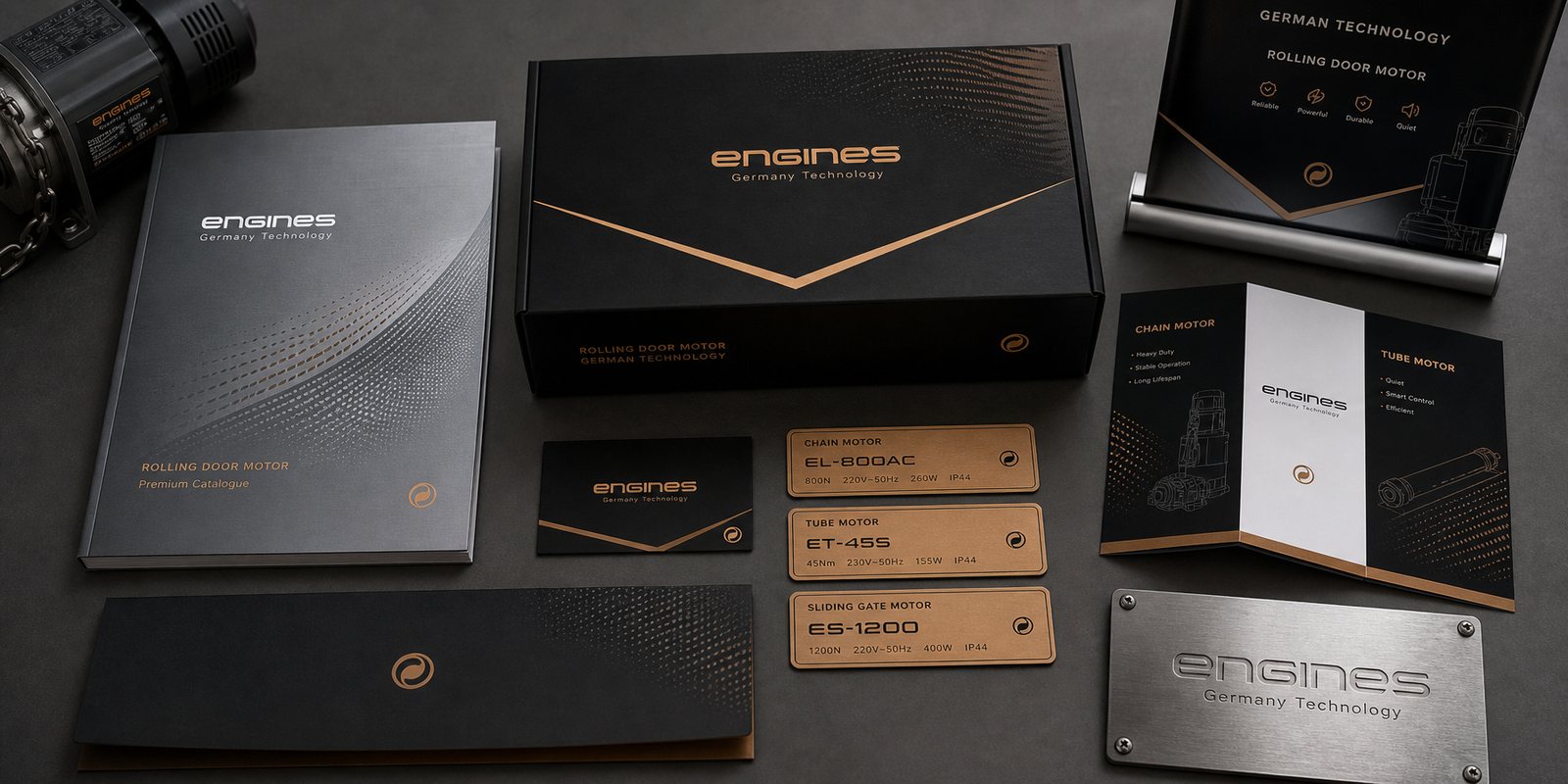
Engines, by Tân Phong, is a line of roller shutter motors built to German technical standards. Sinh Vũ built the logo, brand standards and a unified packaging system…
Eight machine lines brought into one identity, with packaging and POSM: close to the problem of many lines under one brand.
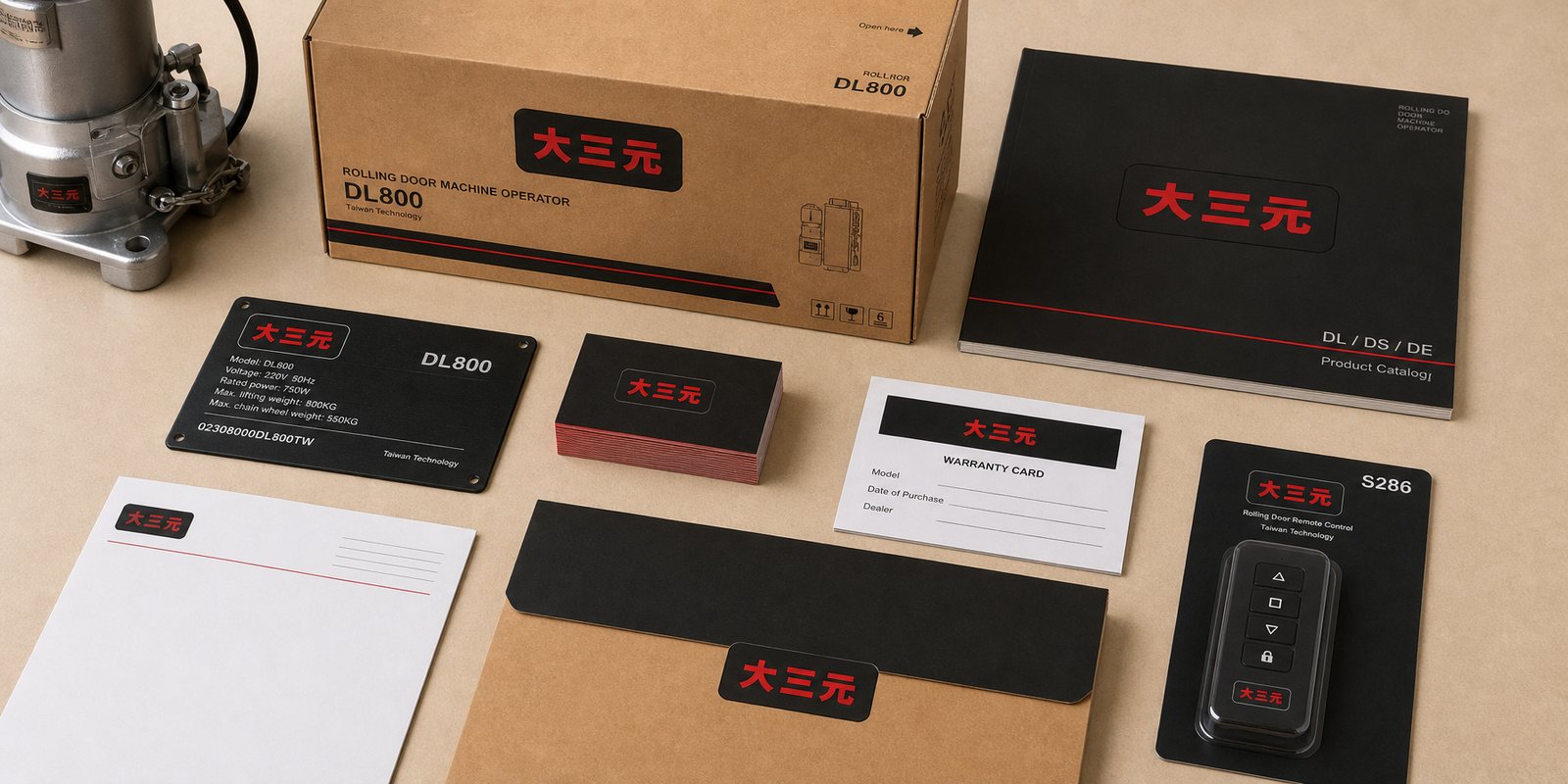
The red 大三元 seal keeps the entire Dasanyuan roller door motor range, three lines and dozens of models, recognised and trusted at once among a shelf full of look-alike brands.
A product code system for three lines and dozens of models, with packaging and documents: the closest match for a code-system problem.
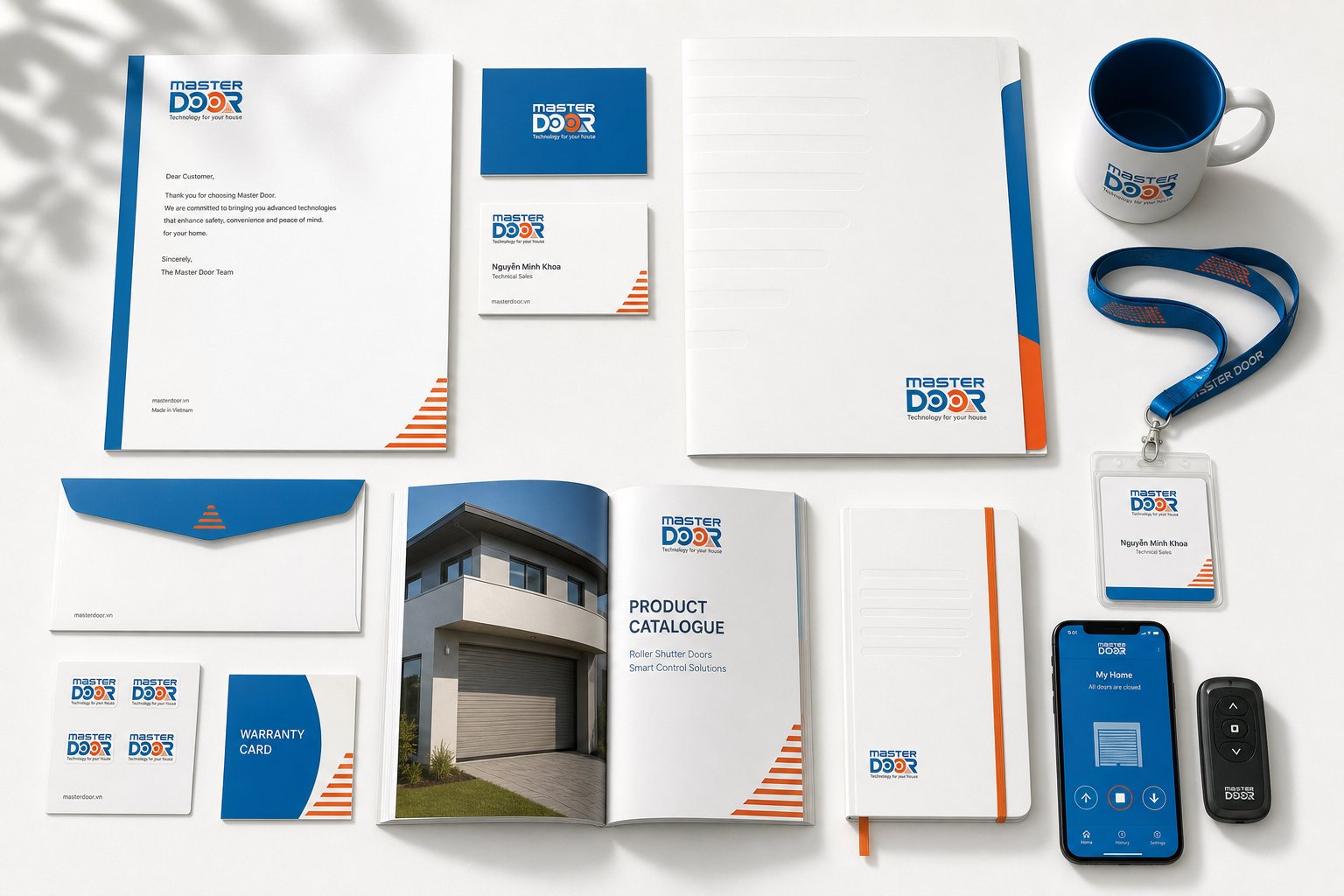
From a blank page in 2009, Sinh Vũ built MASTER DOOR into a rolling shutter technology brand that homeowners trust before they even ask the price.
Standards, a control interface, packaging, documents, and POSM for a roller door brand: close to the problem of staying consistent from equipment to point of sale.
The principles behind it
Divide by line, then by the main specification, and leave room for new lines. Write the rules on one page every department shares. Technical codes are decided by the manufacturer; Sinh Vũ handles the presentation.
It isn't required, since many electrical brands already use one. Sinh Vũ looks for a mark drawn from the company's name or story, then tests it at small sizes on the specification label.
Name and code, main specifications, warnings, and manufacturer details. The mandatory content for each type of equipment is confirmed by the manufacturer; Sinh Vũ only arranges it to read quickly.
Give dealers a short standard with sample photos and ready-to-use files. Dealers follow that far more easily than spoken instructions.
Around what the user needs to do: install, switch on, and fix common faults. Clear drawings, short text, and one frame for every product line.
Usually one main brand, with lines named as a system. Separate brands only make sense when the customers and sales channels of the lines are completely different.
A few lines about your equipment lines, your buyers, and what is holding you back are enough. Sinh Vũ reads them closely and replies.