
Logistics and transportation

Brand design for passenger transport and bus operators

When passengers board, they hand a bus operator their time and their family's peace of mind.

Passengers choose an operator on trust in its safety and punctuality, while many operators look alike on booking apps. Sinh Vũ makes the vehicle, ticket counter, ticket and uniform carry one promise.

Sample collateral for a bus operator and passenger transport company: coach livery, tickets, ticket counter and driver uniform
Quick answer01

What does a bus operator or passenger transport brand need?

Three things first: a mark recognizable at once on the vehicle, a promise of safety and punctuality shown in what passengers see with their own eyes, and a booking and pickup experience that matches the vehicle. Those three decide whether passengers choose you again.

  1. Name and mark on the vehicle

    Readable from far away at the station and at small size on the booking screen.

  2. A promise passengers can see

    A few specific, consistent things: clean vehicles, neat drivers, clear departure times.

  3. Booking and pickup that match

    The booking page, ticket, counter and pickup point wear the same face as the vehicle.

Business types02

Three kinds of passenger transport, three problems

All of them carry people, but the passengers differ, so what the brand has to say differs too.

Fixed-route coaches

Their customersRegular commuters between two places, people going home, students; they book through an aggregator app or call the operator directly.

Brand challengeStand out in a list of many operators on the same route, through the vehicle, the ticket counter and the reviews passengers leave.

Ride-hailing apps

Their customersPeople who need to travel right now in the city and compare a few apps on one screen.

Brand challengeEarn trust from the first ride: a recognizable vehicle, a driver as described, an app and vehicle with one face.

Chartered and tour vehicles

Their customersCompanies, schools and tour groups hiring a vehicle for a whole group; the person booking isn't the person riding.

Brand challengeGive the person booking a compact profile and photos that match the real vehicle, so they dare entrust a whole group.

Pain points03

Four pain points specific to passenger transport

These are the places where operators lose passengers that good driving can't save.

01

One incident can silence a brand

When something happens, news spreads faster than explanations; even returning passengers hesitate.

Have a shared voice ready and an easy-to-find information page on vehicles, drivers and procedures, so passengers know where to read official information.

Start from this problem

Customer journey04

At which stage do bus operators lose the most passengers?

At the See stage. Passengers choose an operator on the booking screen or at the station, in a few seconds. If the name and the vehicle photo don't suggest peace of mind, they tap over to another.

Where customers are most often lostSee
Do this now
  1. Use real photos of the vehicle and seats, in the same light and angle, at the top of the operator's page.
  2. State what passengers care about: departure times, pickup points, vehicle type, onboard amenities.
  3. Invite passengers who have traveled to leave reviews, and answer them in a polite, consistent voice.
Touchpoints05

Five touchpoints to do first

Touchpoints are where passengers see, touch or hear your operator. These five go first because passengers meet them before they step on board.

  1. Vehicle livery

    Passengers recognize the vehicle at the station, and passers-by remember the operator's name from here.

  2. Photos and profile on booking channels

    This is where passengers choose an operator, often within seconds.

  3. Tickets and booking app

    They reassure passengers that they booked the right trip.

  4. Waiting rooms and ticket counters

    Where passengers wait longest and look hardest before the trip.

  5. Driver and assistant uniforms

    They are the people passengers meet directly and use to judge the whole operator.

Roadmap06

Where Sinh Vũ suggests you start

In the order Sinh Vũ would do them. A small operator can stop at step two or three; a company with many routes goes all the way.

  1. Logo and Brand Identity Design

    Name, mark, color, type and ticket template: the base for everything after.

  2. Product and brand photography

    A set of real photos of vehicles, seats and stations for use on every booking channel.

  3. Brand website design

    A page introducing the operator, its routes and booking.

  4. POSM and event booth design

    Vehicle livery, ticket counters, timetables and uniforms.

  5. Brand guidelines handbook

    When you add vehicles and routes: a guide so every site does it the same way.

Projects07

The projects closest to passenger transport

Sinh Vũ hasn't published a bus operator or passenger transport project. The two below are the closest: a hospitality standard, and a tour boat fleet speaking in one voice.

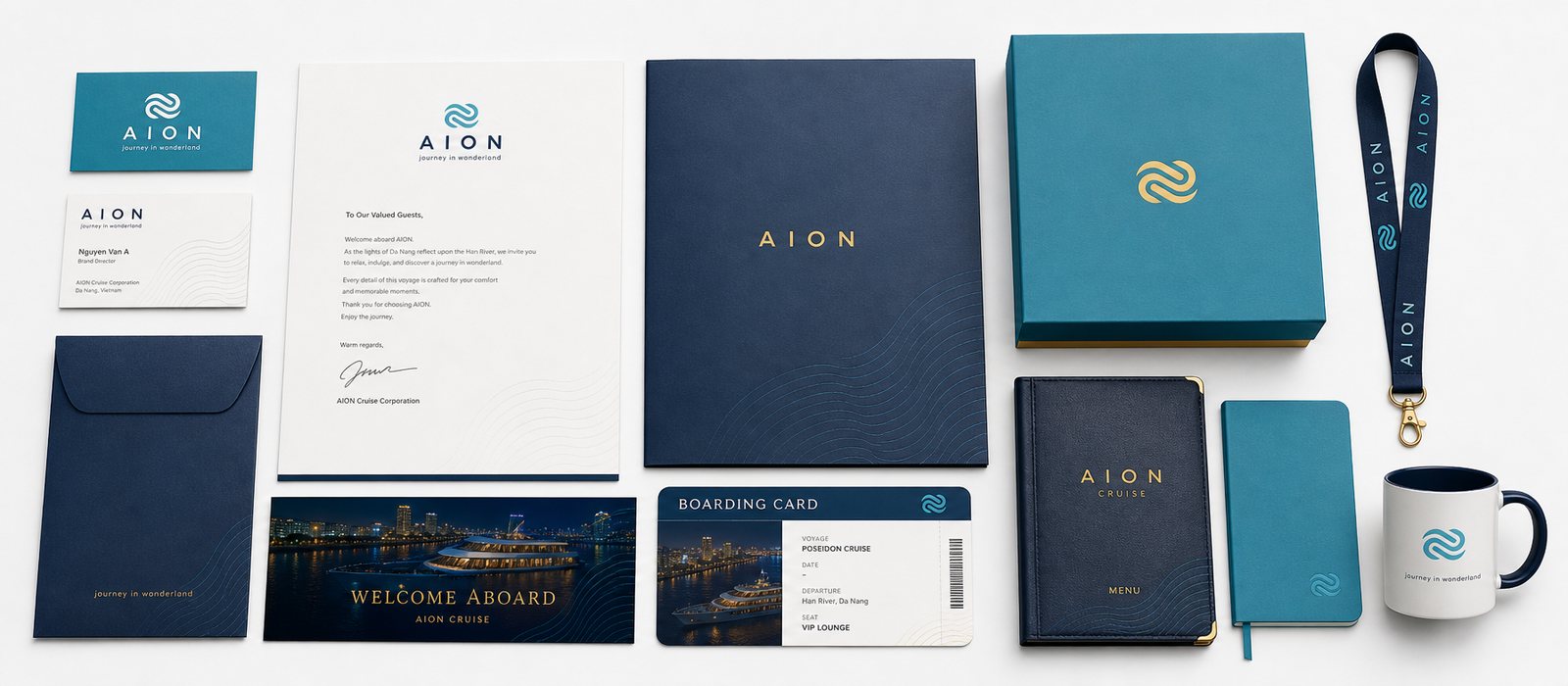
AION, one continuous flow
Cruise tourism

AION, one continuous flow

A refined identity system for the parent company of the Hàn River cruise fleet in Đà Nẵng, with Poseidon leading as the five-star flagship…

View case

A tour boat fleet in one voice, with the parent name stepping back so the sub-brand shines: close to an operator with many vehicles and routes.

Further reading08

More on passenger transport

Free toolTouchpoint map for this business modelSee the five stages customers pass through, where they drop off most, then rate the five touchpoints to fix first.Open the tool Free toolTest designs at real sizePackaging in a marketplace grid and on a shelf two meters away; a logo at avatar size and as a browser tab icon.Open the tool
FAQ09

Frequently asked questions

It must be readable from far away on the vehicle and at small size in the booking app. Avoid wheels, maps or arrows, since everyone uses them; look for a detail of its own in the name or the route.

Follow the passengers on that route: a business route suits a neat, refined look, a tourist route suits a relaxed one. Most important is consistency from the exterior to the interior and the ticket.

Use real vehicle and seat photos in one style, a memorable name, and replies to passenger reviews. The app decides display order, so what an operator can do is make passengers remember the name and find it again.

Do it when new vehicles come in or a repaint is due. Build the template once, have new vehicles follow it right away, and change older ones gradually.

A name and contact number readable from far away, colors that separate from the vehicle's paint, and space left for the license plate. Check traffic law and the Advertising Law on where and how much advertising is allowed on a vehicle before printing.

Tell Sinh Vũ about your bus company

A few lines about your routes, your vehicle types and what's holding you back are enough. Sinh Vũ reads and replies within one working day.