

Education and training

Brand design for vocational and skills training centers

Learners choose a vocational school because they believe they will get hired.

Learners study to change careers or earn more, and employers hire because they trust the program. Sinh Vũ helps a center make both of those visible without overpromising.

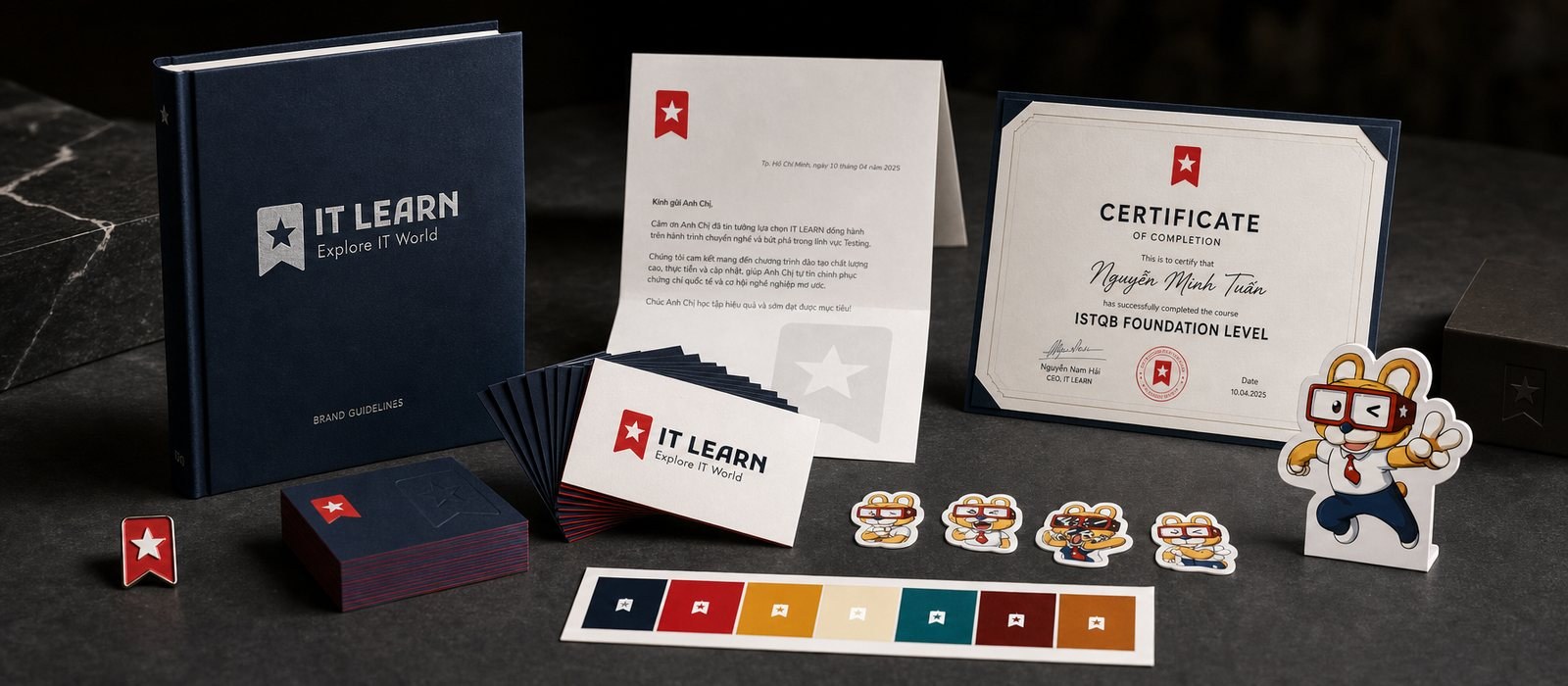
A set of sample materials for a vocational training provider: course page, student card, certificate and an employer introduction file
Quick answer01

What does a vocational training brand need?

Three things first: a course page that says what is taught and what graduates can do, real learner stories, and a profile for employers. Learners look at those three to believe they will be able to do the job after they finish.

  1. A clear course page

    What is taught, how long, who teaches, what you can do afterwards: written specifically, with no overpromising.

  2. Real learner stories

    A few journeys with a name, a trade and a starting point, in place of generic praise.

  3. A profile for employers

    A document that lets recruiters see what the program teaches and what graduates can do.

Business types02

Three kinds of training, three problems

They all teach a trade, but the learners and the places that hire them differ.

Programming and software testing

Their customersYoung people or career changers who want to enter tech; they read a lot and compare carefully before signing up.

Brand challengeShow a program of real hands-on practice and a path into the field, without borrowing a job promise.

Design and digital skills

Their customersLearners who freelance or work on the side; they look at learners' work before they trust the teacher.

Brand challengeMake learners' work the main proof, presented well and consistently.

Trades and hands-on skills

Their customersLearners who want a trade they can carry in their hands, like hairdressing, cooking or repair; the family often takes part in the decision.

Brand challengeShow the family that this trade has a place in the world and that the school teaches seriously.

Pain points03

Four pain points specific to vocational training

These are the places where training centers lose learners even when the program is good.

01

Every course looks like every other course

Every course page has a subject list, great instructors and a job after graduation, so learners see no difference.

Point out what is distinctive about the center: how learners study, who the learners are, the kind of final project, and say it with examples.

Start from this problem

Customer journey04

At which stage do vocational centers lose the most learners?

At the Research stage. Learners read many pages, ask people who have studied there and compare roadmaps before filling in a form. A page that is vague or overpromises is ruled out at once.

Where customers are most often lostResearch
Do this now
  1. One page per course, saying what is taught, how, and what you can do afterwards.
  2. Publish learners' work with their names and starting points, when they agree.
  3. State the conditions that come with any claim about jobs, and avoid claims the center cannot control.
Touchpoints05

Five touchpoints to do first

Touchpoints are where learners and employers see the center. These five build most of the trust before sign-up.

  1. Course page

    The page learners read most closely, and where it is easy to see whether the center speaks honestly or overstates.

  2. Learner stories

    Evidence more credible than anything the center says about itself.

  3. Employer profile

    Helps recruiters understand what graduates have been taught.

  4. Certificate

    What learners carry away and show to others.

  5. Trial class and job fair day

    Where learners and employers see for themselves how the center works.

Roadmap06

Where Sinh Vũ suggests you start

Listed in the order to do them. A new center can stop at step two or three; a center with many courses goes all the way.

  1. Logo and Brand Identity Design

    Name, mark, colors and type, including the certificate template.

  2. Building brand voice

    How the center talks about the program and about jobs: honest enough to stand behind.

  3. Brand website design

    Course pages and learner story pages.

  4. Corporate capability profile design

    An introduction file for recruiting employers.

  5. Brand video and animation production

    A short film explaining the course, once the center has many learners.

Projects07

The projects closest to vocational training

Sinh Vũ has published one software testing training project, exactly the programming type. The second project is a foreign languages training faculty at university level.

Further reading08

More on vocational and skills training

Free toolTouchpoint map for this business modelSee the five stages customers pass through, where they drop off most, then rate the five touchpoints to fix first.Open the tool Free toolBrand name checkType a brand name to see whether it is easily misspelled over the phone, its version without accents, the domain and initials, with trademark search links ready.Open the tool
FAQ09

Frequently asked questions

Only when the center can control it and states the conditions that come with it, since one learner without a job becomes the opposite story. Many centers choose to talk about the path into the trade and evidence from learners. For the specific wording, ask someone who knows the law to review it first.

Avoid curly braces, circuit lines, clouds and binary digits, which are too familiar. Look for a shape of its own from how the center teaches or its spirit, and test it at small avatar size.

What is learned week by week, who teaches, how long it takes, what you can do afterwards, the final project and how to sign up for a trial. A few short sentences per section, with no vague wording.

It should have the learner's name, the content studied, the duration, who issued it, a lookup code and a clear signature. A polished look also helps learners feel proud to post it online.

Show employers what the program has taught, what the practical work looks like and real samples. A short document with a clear point of contact is often more useful than many words of introduction.

Tell Sinh Vũ about your center

A few lines about the center, your learners and what is holding you back is enough. Sinh Vũ reads it and replies within one working day.