Vague imagery, read as a lack of expertise
All lotus photos, sunlight and quotes; no sign of who teaches or what is taught.
Keep the gentleness but bring the guide, the method and the program up front.
Start from this problem
People who come need to feel safe before they feel calm.
People who come to meditation and counseling are often tired and still hesitant. Sinh Vũ helps your center say exactly what it does: gentle, yet clear about who teaches and what is taught.

Three things: a voice that is light but clear, transparent professional information, and discretion at every touchpoint. People who come are often tired, so everything has to be easy to understand and free of pressure.
No promises of healing, no hard-to-follow words.
Who the guide is, what they studied, which method they follow.
From messages and receipts to how a client is addressed at the front desk.
All care for mental wellbeing, but how people arrive and what they need to feel at ease about differ.
Their customersWorking people looking for a quiet place after work, joining classes or courses.
Brand challengeLook professional without a religious or superstitious tone.
Their customersUsers try quickly and leave quickly if it doesn't suit them.
Brand challengeBuild trust through a screen, within the first few minutes.
Their customersPeople who come are shy and worry about others finding out.
Brand challengeBe warm and discreet, and at the same time clear about the therapist's qualifications.
These are the places mental wellness businesses tend to lose the people who come to them, even when their expertise is excellent.
All lotus photos, sunlight and quotes; no sign of who teaches or what is taught.
Keep the gentleness but bring the guide, the method and the program up front.
Start from this problemPosts that promise healing, an end to anxiety, a changed life.
A sincere brand voice that says what the center can do and promises no results. For a center that offers therapy, promising a cure is riskier still than in the beauty industry.
Start from this problemClients ask around and then go quiet, not daring to book.
Discretion at every touchpoint: naming, messages, the way clients are received, paperwork.
Start from this problemSomeone already tired has to read a lot and fill in a lot just to book a first session.
A booking page with few steps, a light voice, and a clear account of how the first session goes.
Start from this problemAt the Asking stage. People who come are often reluctant to speak up. One hurried, cold or too salesy reply is enough to make them stop.
Touchpoints are the places where clients see, touch or hear about the center. You don't need to do everything at once. These five touchpoints decide whether people dare to begin.
Everything said has to be light but clear.
Where people decide whether to try.
Quiet and private from the moment they walk in.
The first words the center says to someone who comes.
Introduce the center and the guide, for people to take home and read.
Listed in the order to do them. In this segment, words go before imagery.
Choose the right people to serve and what the center can truly promise.
A voice that is light but clear, message templates.
Imagery that is still and yet professional.
Introduce the guide, booking in few steps.
Materials introducing the center and the guide.
Sinh Vũ has not published a mental wellness project. The closest is a medical complex, where attentiveness was built into an experience.
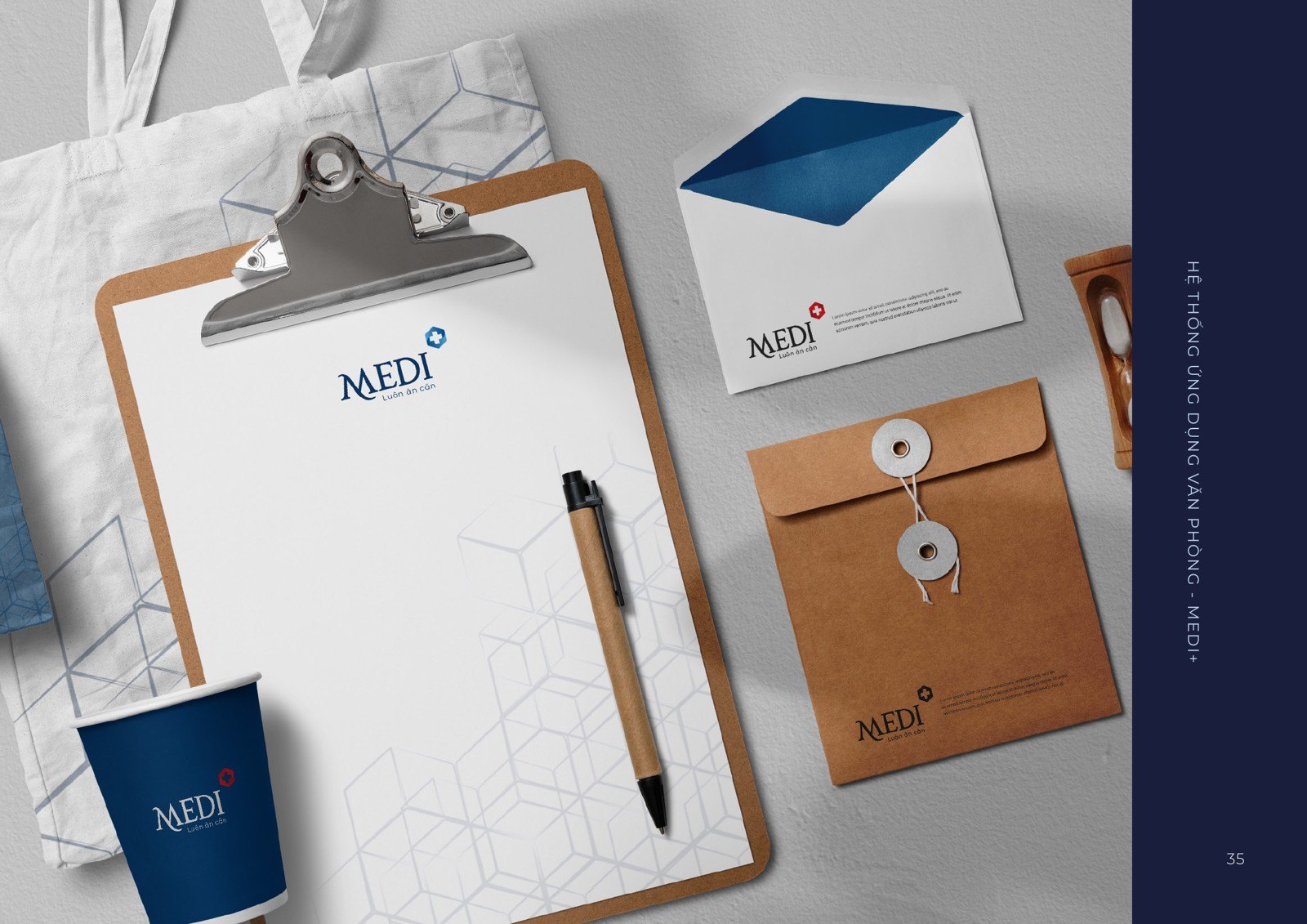
MEDI Plus is a new kind of medical complex, where patients are cared for gently from the very first moment. Sinh Vũ built the face and the digital nervous system for the clinic…
Attentiveness built into an experience, from the mark to the visit.
The principles behind it
You can, but these two images easily make a center read as religious, and they are very hard to make distinct. Sinh Vũ usually looks for an image of its own from the center's method or space.
Talk about what the center does (the method, the guide, the rhythm of a session), not about results such as no more anxiety or healing. A sincere voice earns more trust than a promise.
An app has to build trust on a screen within the first few minutes, so voice, sound and motion matter more than a sign. For a center, the space and the guide are what matter.
Be discreet at every touchpoint: don't call a client's name aloud, keep message content from revealing the appointment, and store only the information that is needed. For how receipts are written, ask the center's accountant.
It can share a name, but the names of meditation classes and counseling sessions should be separated clearly in the service menu and posts, so clients and regulators don't misread them. Whether the counseling counts as medical examination and treatment is something you should ask the Department of Health or a lawyer.
If the practice's activity counts as medical examination and treatment, advertising must state the name, address, operating license number, operating hours and stay within the approved scope of practice (Article 9, Decree 342/2025/ND-CP). For practice licenses and facility requirements, you should ask the Department of Health or a lawyer; guided meditation and ordinary counseling may differ.
A few lines about the center, the people who come and what is holding you back is enough. Sinh Vũ reads and replies within one working day.