F&B, food and beverages

Brand design for specialty roasted coffee

Customers who pay extra for the beans want to know where they come from.

Specialty coffee sells on the growing region, the roaster and the brewing method, but origin stories tend to sound alike. Sinh Vũ makes your bag tell what only your roastery has.

A sample print set for specialty roasted coffee: coffee bags, a bean information card, drip bags and a gift box
Quick answer01

What does a specialty coffee brand need?

Three things: a story that belongs to the roaster, an easy-to-read bean information card, and a bag you recognize on the shelf and in the hand. Specialty coffee gets chosen because customers understand what they are paying for.

  1. A story that belongs to the roaster

    Not just the growing region but the roaster and the reason for roasting this way.

  2. An easy-to-read bean information card

    Region, processing, flavor and brewing method in order, readable in a few seconds.

  3. A bag you recognize on the shelf

    You can tell whose bag it is at a glance, even once it is in the basket.

Business types02

Three kinds of specialty coffee, three problems

Roasteries, specialty beans and drip bags are chosen by different buyers.

Roasteries

Their customersCustomers who buy at the roastery or follow the roaster online, following the style and the people.

Brand challengeA face of the roastery's own, so people remember the roastery's name and not just the name of one bean.

Specialty whole beans

Their customersDiscerning drinkers who read the information about region, processing and flavor.

Brand challengeTell the region and the flavor clearly while keeping the bag clean, without a clutter of text.

Drip bags and filter bags

Their customersBuyers who want convenience, a gift or something for the office.

Brand challengeBring specialty coffee to people who don't brew, in a box attractive enough to give.

Pain points03

Four pain points specific to specialty coffee

These are the places specialty coffee loses customers that the quality of the beans can't rescue.

03

The bean information card is cluttered

Region, processing, roast level and flavor are all crammed into one block of tiny text.

Lay it out as a short ordered table, prioritizing what helps customers choose.

Start from this problem
Customer journey04

At which stage does specialty coffee lose the most customers?

At the Choose stage. Customers pick up the bag, read the information card and decide whether to pay extra.

Where customers are most often lostChoose
Do this now
  1. Put the region, flavor and brewing method where they are easiest to read on the bag.
  2. Tell what is special about the roaster in one or two sentences, without repeating generic lines.
  3. Try reading the bag in a few seconds, and if it isn't clear yet, cut some text.
Touchpoints05

Five touchpoints to do first

Touchpoints are the places where customers see, touch or hear about the coffee. These five decide whether customers come back to buy.

  1. Coffee bags

    What customers pick up and keep in the kitchen every week.

  2. Bean information cards

    They give customers a reason to pay extra.

  3. Brewing counter

    Where customers see the craft and taste before buying.

  4. Gift boxes

    Coffee is often given as a gift, so the box sets the first impression.

  5. Online shop page

    Customers who order remotely have only photos and words to trust.

Roadmap06

Where Sinh Vũ suggests you start

In the order Sinh Vũ suggests doing them. A new roastery can stop at step three and be ready for the shelf.

  1. Brand strategy and positioning consulting

    Choose what only your roastery has, before drawing anything.

  2. Logo and Brand Identity Design

    Name, mark, colors and type: the foundation for bags and the counter.

  3. Product packaging design

    Bags, bean information cards, drip bags and gift boxes.

  4. Product and brand photography

    Photos of the growing region, the roastery and the beans for bags and sales pages.

  5. Brand guidelines handbook

    Once you launch many beans: guidelines so every bean follows the frame.

Projects07

Related work for specialty roasted coffee

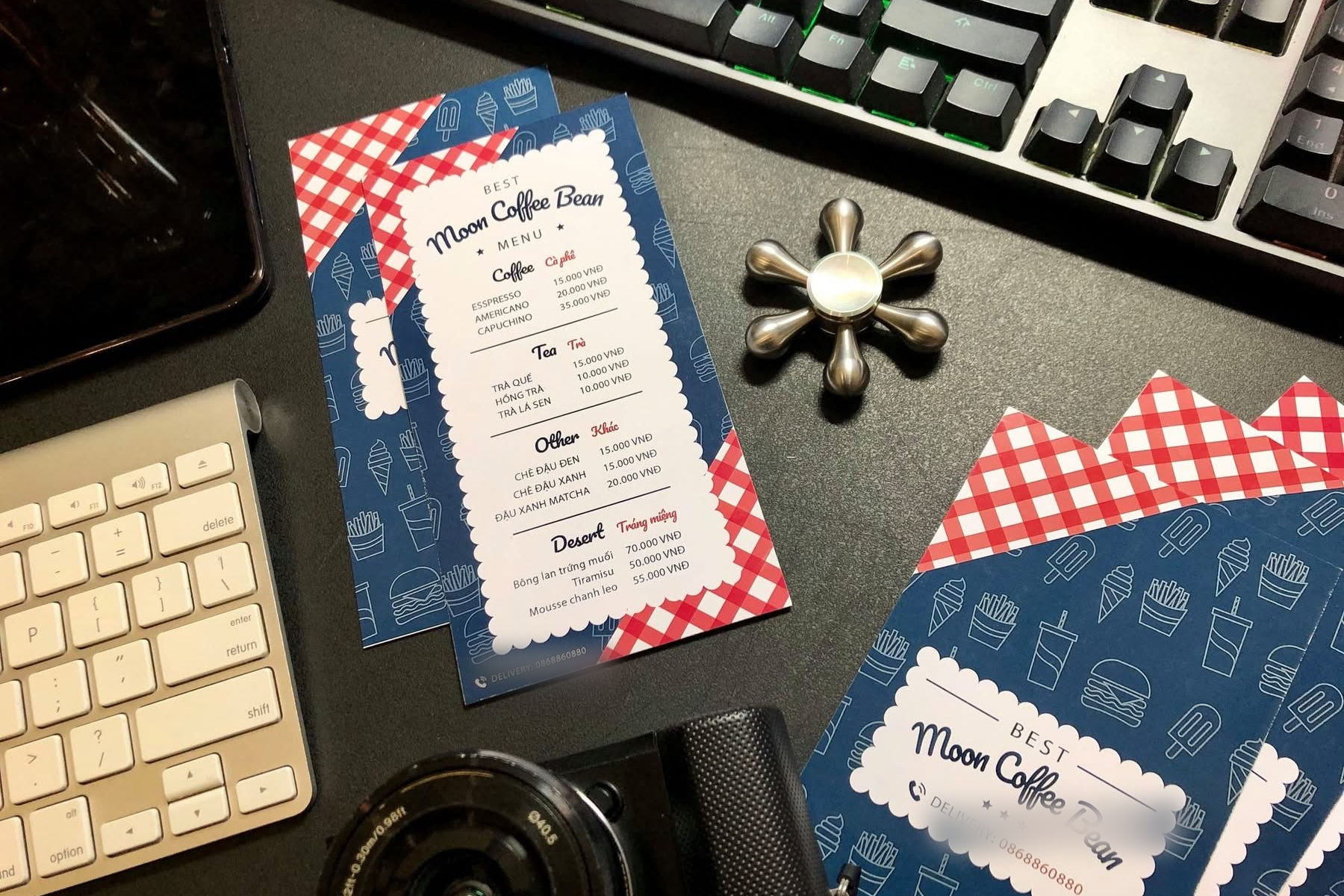
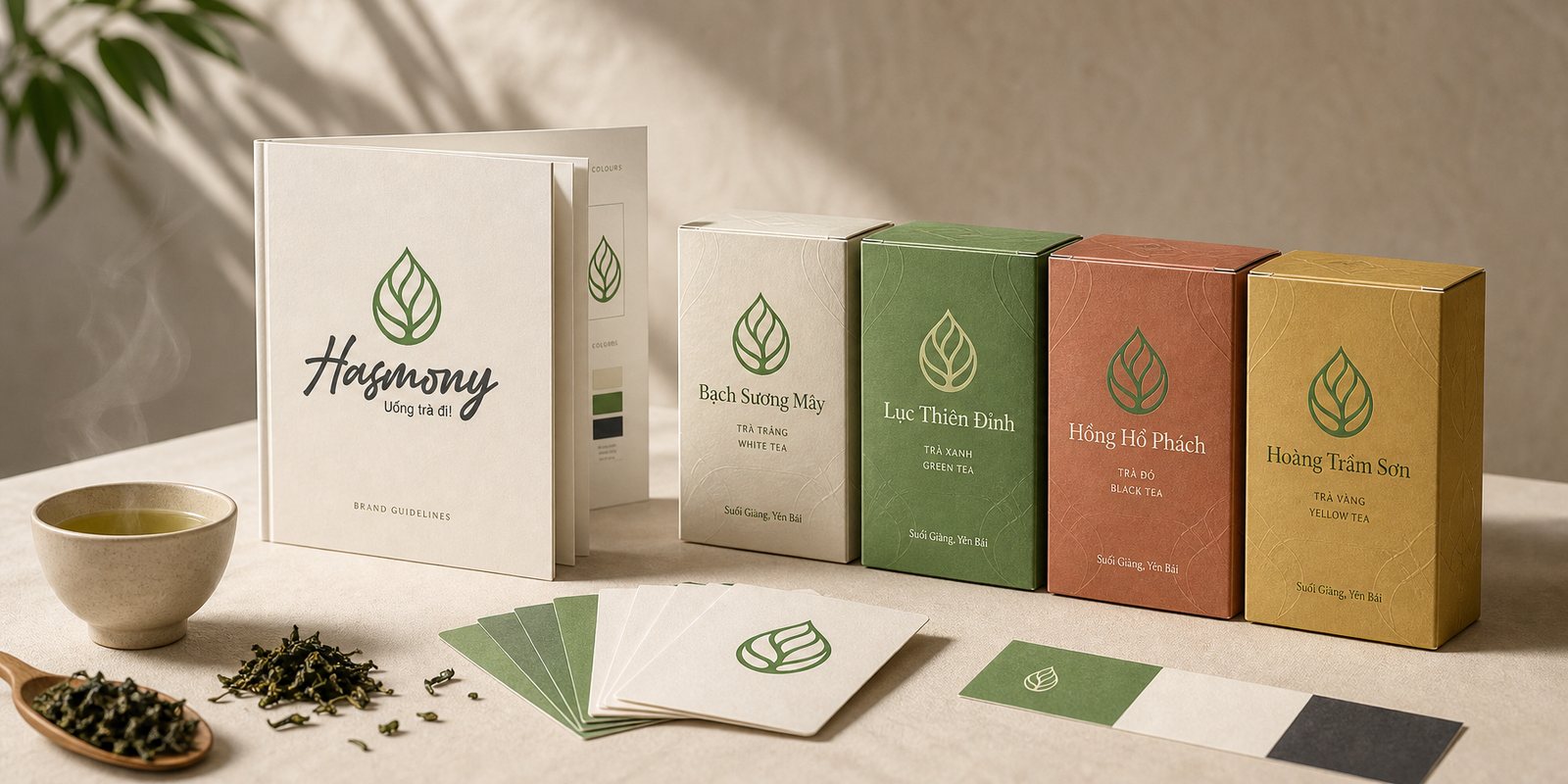
Sinh Vũ has not published a roastery or specialty whole-bean project. The two below are the closest: a delivery-focused café, and tea told from where it grows.

Further reading08

More on specialty roasted coffee

Free toolTouchpoint map for this business modelSee the five stages customers pass through, where they drop off most, then rate the five touchpoints to fix first.Open the tool Free toolBranded QR codeBuild a QR code in your brand colors and logo; it is scanned back to make sure phones can read it, then download PNG or SVG for print.Open the tool
FAQ09

Frequently asked questions

It should state the region, the processing, the flavor and the brewing method, in order so shoppers can choose quickly. The mandatory text on a goods label needs space planned from the start.

Goods sold on the domestic market must carry, in Vietnamese, the product name, the name and address of the responsible organization and the origin, plus mandatory content specific to each product group (Article 10 of Decree 43/2017/ND-CP, as amended by Decree 111/2021/ND-CP). The design should leave room for this from the start.

Tell it through real detail: the growers, the picking season, how the beans are selected, why the roaster chose them. Real detail is hard for another roastery to repeat.

Not yet. The minimum is a name, a mark, colors, a bag and a bean information card. Do the rest when the roastery expands.

Polished, compact, with a short story inside the box. A gift box is where people who don't know the roastery meet the brand for the first time.

Tell Sinh Vũ about your product

A few lines about the product, where you sell it and what is holding you back is enough. Sinh Vũ reads it and replies within one working day.