Energy and environment

Design for biodegradable packaging and green consumer products

Green packaging has to look well made and tell the truth about its material.

Buyers increasingly ask what the material is and where it goes after use. Sinh Vũ helps your packaging, labels and catalog answer that question and still look good on the shelf.

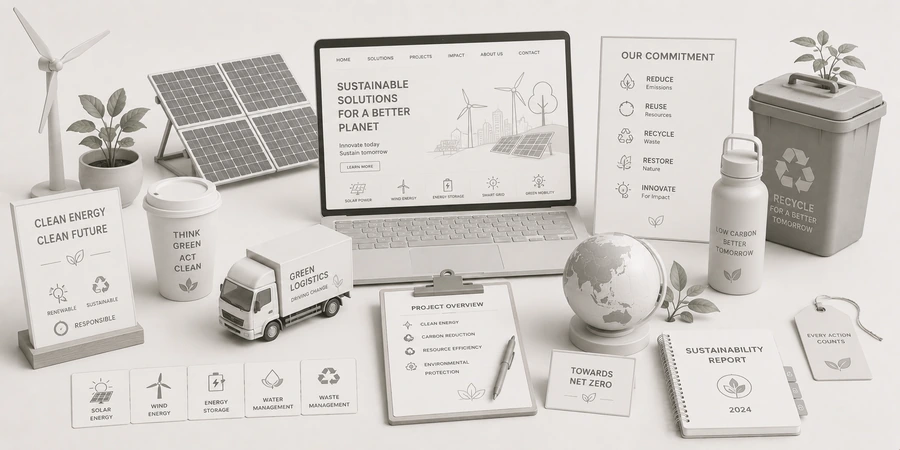
A sample print set for green packaging and products: kraft paper packaging with a material label, a life-cycle explainer card and a catalog for businesses
Quick answer01

What does biodegradable packaging need designed?

Three things first: material information stated plainly, a look for green materials so they don't read as cheap, and a document set for business buyers. Those three decide whether clients trust a green claim or doubt it.

  1. Clear material information

    What it is made from, how to dispose of it after use, and real certifications where they exist, with no vague adjectives.

  2. A look for green materials

    Kraft, recycled paper and bioplastic each need color, type and layout worked out for them so the result looks intentional.

  3. A catalog for business buyers

    Material specs, formats and certifications laid out so a purchasing team can compare them.

Business types02

Three kinds of green packaging business, three problems

All of them say green, but the buyers and their doubts differ, so the brand has to answer differently.

Biodegradable packaging

Their customersFood companies, retailers, e-commerce and exporters that need packaging to replace single-use plastic.

Brand challengeWholesale buyers need to believe the material is what the ad says. The brand has to make material information and certifications easier to check than any promise.

Green consumer products

Their customersRetail buyers choosing personal and household goods by values and image.

Brand challengeMany products carry a green label, so buyers can't tell them apart. The brand has to say why this one is trustworthy, right on the packaging.

Recycled materials

Their customersManufacturers, brands and contractors looking for recycled raw material or finished material.

Brand challengeBuyers fear uneven quality. The brand has to show the source, the process and how consistent each batch is.

Pain points03

Four pain points specific to green packaging and products

These are the places green packaging makers lose orders that material quality can't save.

01

Lots of green talk, little evidence

The packaging says only eco-friendly, never why, and neither wholesale nor retail buyers believe it yet.

A short run of lines that say only what is true: what it is made from, what happens after use, which certification, and nothing beyond that.

Start from this problem
03

Wholesale buyers can't compare

The catalog mixes beautiful photos with specs, and the purchasing team has to call about each material one by one.

A catalog that separates material specs, formats and certifications into a comparable table, with the good photos kept apart.

Start from this problem
Customer journey04

At which stage does green packaging lose the most clients?

At the Research stage. Clients ask what the material is made from and whether it is certified. With no clear answer, they pick the familiar supplier who is easier to explain.

Where customers are most often lostResearch
Do this now
  1. Make one material page per product: what it is made from, how to dispose of it after use, which certifications you hold.
  2. State only certifications that are still valid, and name the issuing body so clients can check for themselves.
  3. Send a real sample when clients ask, because holding the packaging convinces more than any description.
Touchpoints05

Five touchpoints to do first

Touchpoints are the places where clients see, touch or read about the product. You don't need to do everything at once. These five decide whether clients believe the green claim.

  1. Packaging and labels

    What clients hold in their hands and read first.

  2. Material information and certifications

    Where clients check what the green claim rests on.

  3. Catalog for businesses

    Lets the purchasing team compare specs without calling.

  4. A website with a life-cycle page

    Answers where the product goes after use with simple visuals.

  5. Samples sent to clients

    Wholesale buyers often decide after holding a sample, so the sample kit is part of the brand.

Roadmap06

Where Sinh Vũ suggests starting

Listed in the order to do them. A company launching its first product can stop after the first three steps; one with many lines goes all the way.

  1. Building brand voice

    Settle how you talk about the material: what to say and what not to say, so every product speaks in one voice.

  2. Product packaging design

    Packaging and labels designed for the green material.

  3. Sales and marketing collateral design

    A catalog and sample kit for business buyers.

  4. Brand website design

    Product pages with material and life-cycle information.

  5. Logo and Brand Identity Design

    When you expand into many lines: a mark and color system so the lines recognize one another.

Projects07

Projects closest to green packaging and products

Sinh Vũ has not published a biodegradable packaging or green product project. The two below solve the two nearest problems: one packaging template across many lines, and one voice across many points of sale.

Further reading08

More on eco-friendly packaging and products

Free toolTouchpoint map for this business modelSee the five stages customers pass through, where they drop off most, then rate the five touchpoints to fix first.Open the tool Free toolBox dieline makerEnter the inside length, width and height to draw a reverse tuck end or two-piece box dieline with cut and fold lines, ready to download as SVG and PDF for a mock-up.Open the tool
FAQ09

Frequently asked questions

Design for the material instead of borrowing the look of glossy packaging. Use the natural color of the paper, large clean type and a single accent. Sinh Vũ tests on the actual material before settling.

State what is true and checkable: the specific material, how to dispose of it after use, and certifications with the issuing body. Avoid broad words like eco-friendly that don't say why.

A bioplastic bag needs simple type and flat color areas so it prints and reads easily. Kraft has a natural color that suits minimal layouts with few printed colors. Sinh Vũ chooses by the product's buyer and sales channel.

Material specs, formats, certifications and storage conditions in one easy-to-compare table, with real photos and clear contact details. Keep the company introduction short.

At least one page that answers what the product is made from and what happens after use. Buyers research before they buy, so that page is often where they decide.

Sinh Vũ has not published a biodegradable packaging project. The closest are a multi-line packaging set built on one template and technical-materials projects, listed under the closest projects.

Tell Sinh Vũ about your product

A few lines about the material, who buys it and what buyers doubt is enough. Sinh Vũ will read it and reply within one working day.