Manufacturing and B2B

Brand design for industrial packaging manufacturers

You make packaging for others. Remember to make it for yourself.

This page is about the packaging plant's own brand, not about designing packaging for clients. Sinh Vũ helps the plant be seen as a partner that protects goods, not just a contract workshop.

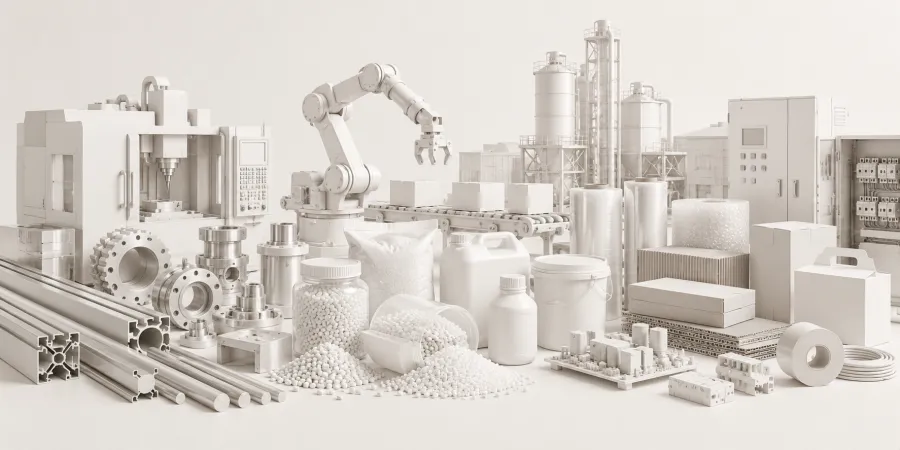
A sample set for an industrial packaging plant: a sample carton box, a roll of film, a specification card, and a capability profile
Quick answer01

What does an industrial packaging plant's brand need?

Three things: a sample kit buyers can hold, a profile that explains why clients' goods arrive intact after long journeys, and a recognizable mark among dozens of similar workshops. Packaging buyers trust what they can touch.

  1. A sample kit buyers can hold

    A few representative cartons, films, and bags, packed compactly in one box with a card stating each specification.

  2. A profile about the clients' goods

    Told through transport and storage: what goods, where they go, and how they are protected.

  3. A mark of your own

    A sign buyers recognize on samples, the profile, shipping documents, and delivery trucks.

Business types02

Three kinds of packaging plant, three problems

All of them make packaging, but the goods to be protected differ, so what the plant has to prove differs too.

Cartons and paper

Their customersFactories and distributors order cartons to specification, and often compare many plants at once.

Brand challengeShow the plant has not only machines but understands how clients' goods need protecting.

Plastic packaging and film

Their customersFood, consumer goods, and agricultural producers order film and bags to specification, in large lots.

Brand challengeShow stable specifications between batches and an understanding of which products the packaging touches.

Pallets and jumbo bags

Their customersImport-export, agriculture, and materials companies need to pack and ship heavy and bulk goods.

Brand challengeShow real strength and how it is tested, in a trade where everyone claims to be strong.

Pain points03

Four pain points specific to packaging plants

These are the places where packaging plants get ranked down to contract workshops even though they do excellent work.

Customer journey04

At which stage do packaging plants lose the most orders?

At the factory visit. Buyers come to see real machines and real products; a plant that does good work but has a bare meeting room, a thin sample kit, and a weak introduction is still rated low.

Where customers are most often lostFactory visit
Do this now
  1. Build a short visitor route, from the sample room through the main machine area to the inspection area, with signs to guide it.
  2. Prepare a presentation that tells how the plant helps clients' goods travel far and arrive intact.
  3. Let buyers take home a sample kit with specification cards and the name of a contact person.
Touchpoints05

Five touchpoints to do first

Touchpoints are the places where buyers see the plant. For a packaging plant, these five decide whether the buyer treats the plant as a partner.

  1. Sample kit

    Buyers hold it and test it right on the desk.

  2. Capability profile

    Where the plant says it is a partner and not just a workshop.

  3. Catalog

    Helps buyers choose the right specification without calling to ask.

  4. Trade show booth

    Where buyers meet many packaging plants at once, so you must be recognizable from afar.

  5. Pallet labels and shipping documents

    The client's warehouse sees them every time a delivery arrives.

Roadmap06

Where Sinh Vũ suggests starting

Listed in the order to do them. A small workshop can stop after the first three steps; a plant with many lines goes through all five.

  1. Brand strategy and positioning consulting

    Decide the positioning: specification partner or contract workshop.

  2. Brand Identity Design

    Name, mark, color, and type: the base for the sample kit and profile.

  3. Sales and marketing collateral design

    A boxed sample kit, specification cards, and catalogs by product type.

  4. Corporate capability profile design

    A capability profile told through results for clients' goods.

  5. Product and brand photography

    Photos of the lines, the inspection area, and packed goods.

Projects07

Projects closest to a packaging plant

Sinh Vũ has not yet published a project for an industrial packaging manufacturer. The two projects below are close in dealing with packaging and with a manufacturer of many lines.

Further reading08

More on industrial packaging

FAQ09

Frequently asked questions

Yes, because buyers still choose the plant before sending drawings. The brand gets the plant invited to quote and consulted on specifications, rather than just asked for a unit price.

Results for clients' goods: the types of goods packed, protection in transit, and the ability to hold specifications between batches. Machines and lines are supporting evidence, not the opening.

Pack it in a compact box, with a specification card and the plant's mark on each sample. Choose a few representative samples by product type rather than sending the whole catalog.

This page is about the packaging plant's own brand: identity, profile, and sample kit. Designing packaging for clients' products is a separate Sinh Vũ service.

With the name, the mark, and a compact sample kit. Do the profile and catalog afterward, once it is clear which kind of client the plant wants to be seen as a partner to.

Tell Sinh Vũ about your plant

A few lines about your plant, your buyers, and what is holding you back are enough. Sinh Vũ reads them closely and replies.