
Lê Minh Sơn and Phong Huyền
Composer Lê Minh Sơn had never set a poem to music. Poet Phong Huyền had never written poetry before this. It took them more than two years to bring the eight songs of Tình into being, and then they handed Sinh Vũ what was left: making something you could only hear into something you could see, hold, and take home.
The problem
The album began from a difficult place. Lê Minh Sơn had never set a poem to music, Phong Huyền had not written poetry before, and what held the two of them together for more than two years was not a contract but respect. They printed that on the sleeve themselves: Lê Minh Sơn understands that if Phong Huyền writes at all, every word written is loved.
The design problem sat elsewhere. By 2022 people listened on their phones, so making a physical disc was no longer about distribution, it was about giving and keeping. A disc only earns its price when you pick it up and feel that somebody cared for it. Sinh Vũ's work therefore did not stop at the sleeve. It was the whole form of a meeting between poetry and music, from the disc face to the ticket that got you through the door.
Six bodies of work
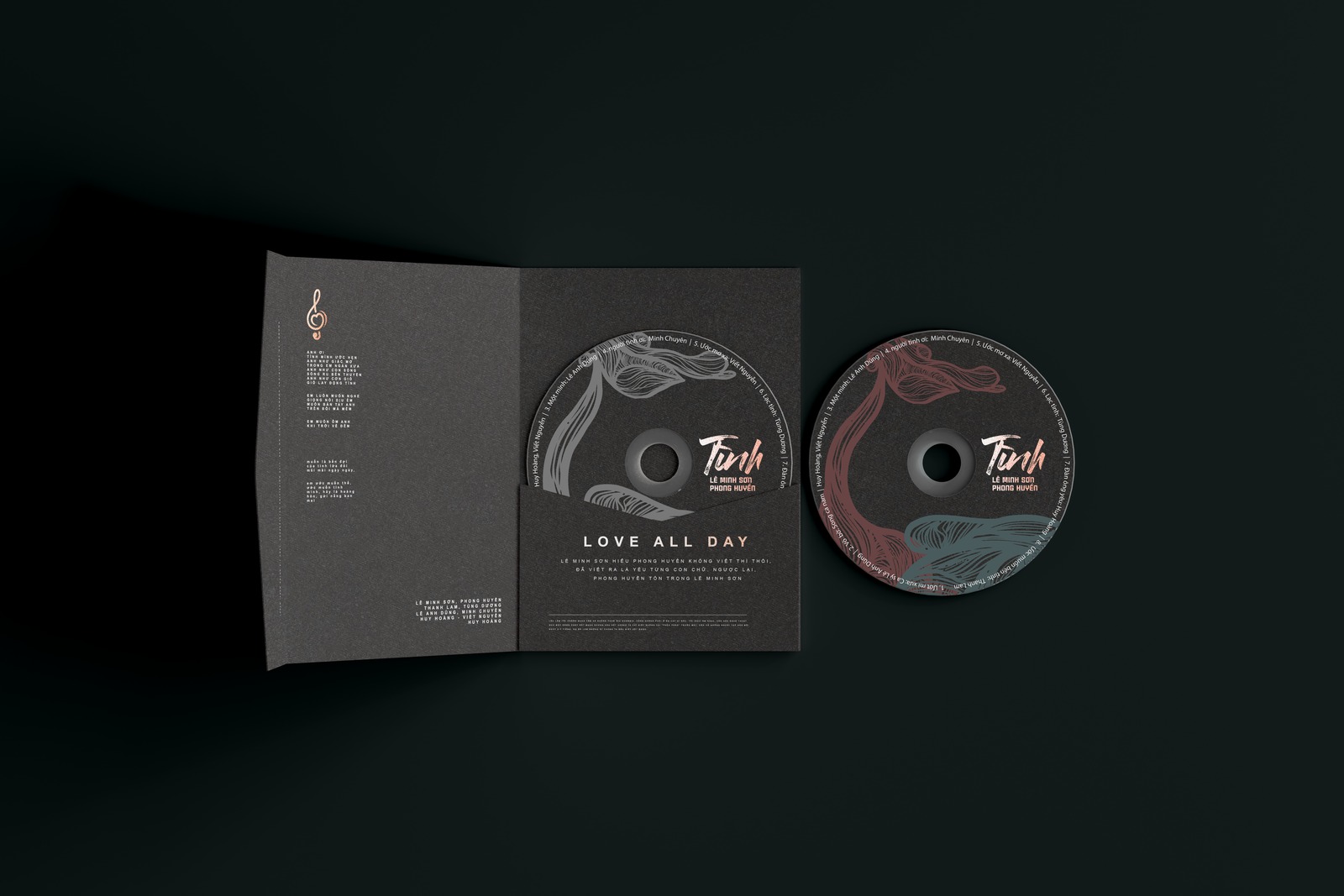
Poetry has no image, and neither does music. To let people see the meeting of the two, you have to find a form for the meeting itself. Sinh Vũ built an engraved motif: two ribbons curling around each other, one oxblood and one teal, with neither placed above the other. Look long enough and it becomes hair, a wave, a leaf, a held breath, depending on which line of the poem you happen to be thinking of.
The palette keeps exactly four voices: charcoal for night, oxblood for love, teal for longing, cream for stage light. The album name is handwritten, because handwriting is the closest thing to a person that a printing press can still carry. Those four things are enough for every later piece to recognise its own family without printing the name large.
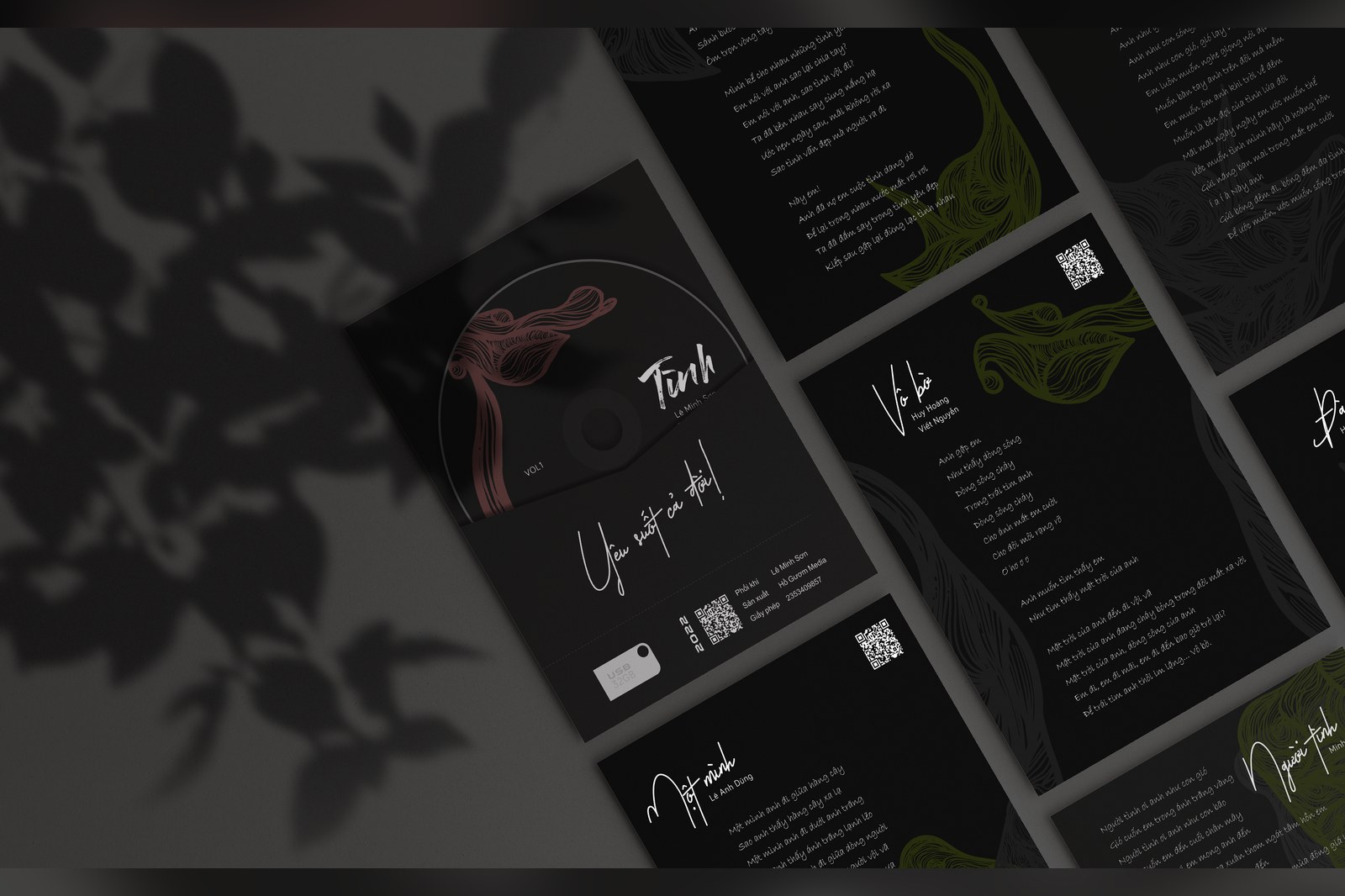
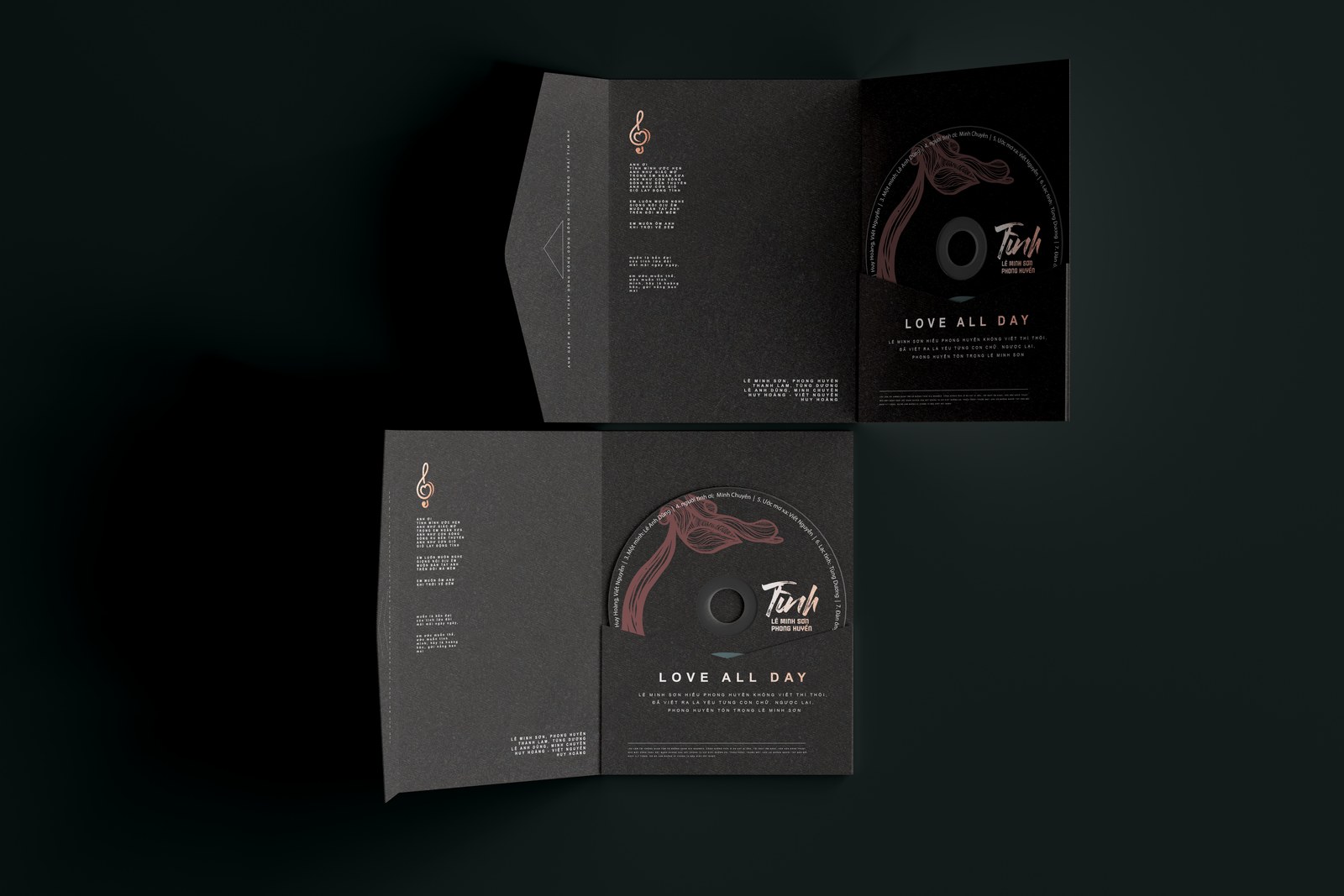
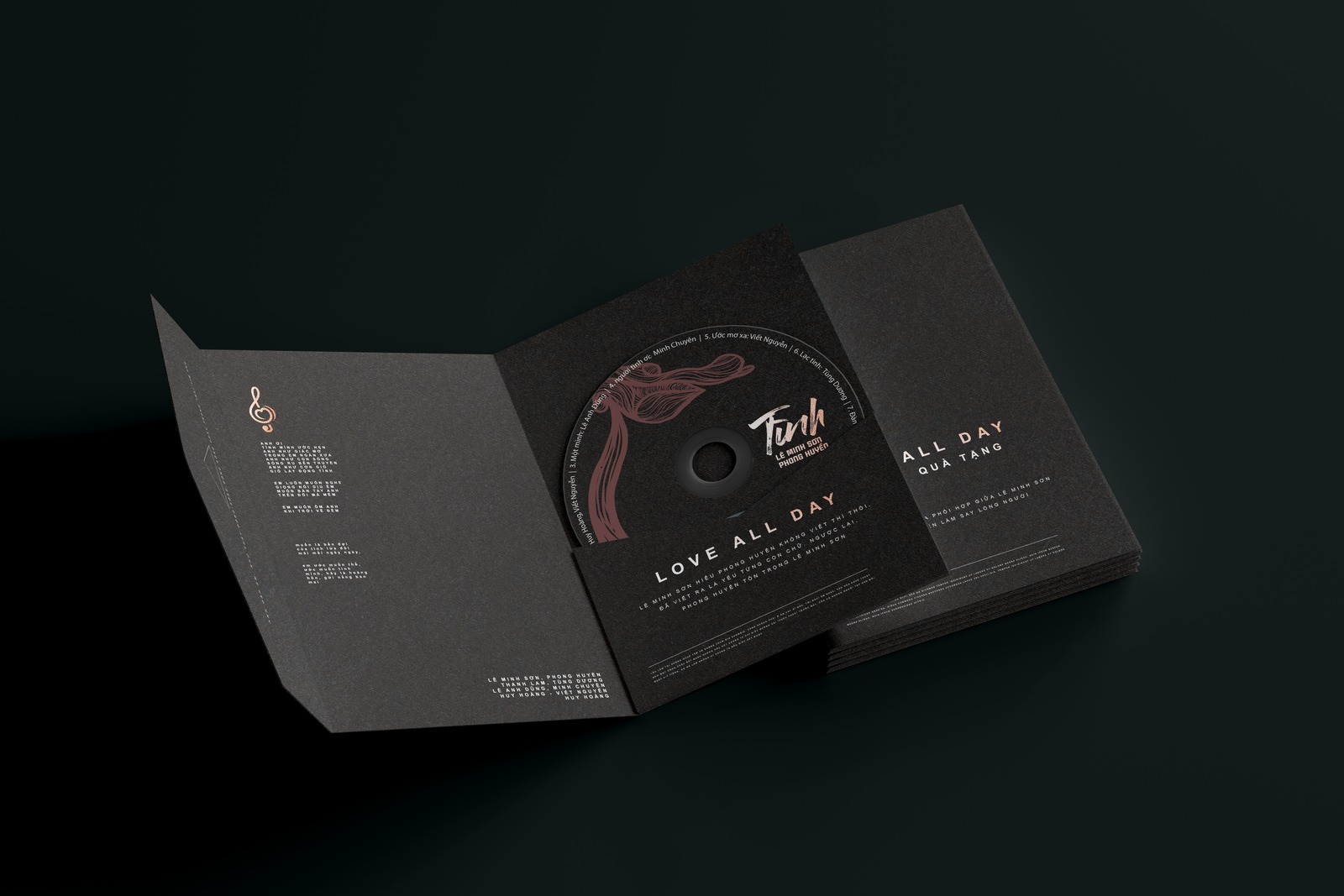
The sleeve is a gatefold, opening like a book rather than snapping open like a plastic case. Lyrics on the left, the disc on the right, and between them the line the two authors wrote about each other. On the disc face the two ribbons hold the centre and the eight titles run around the rim, so when the disc spins, the titles spin with it.
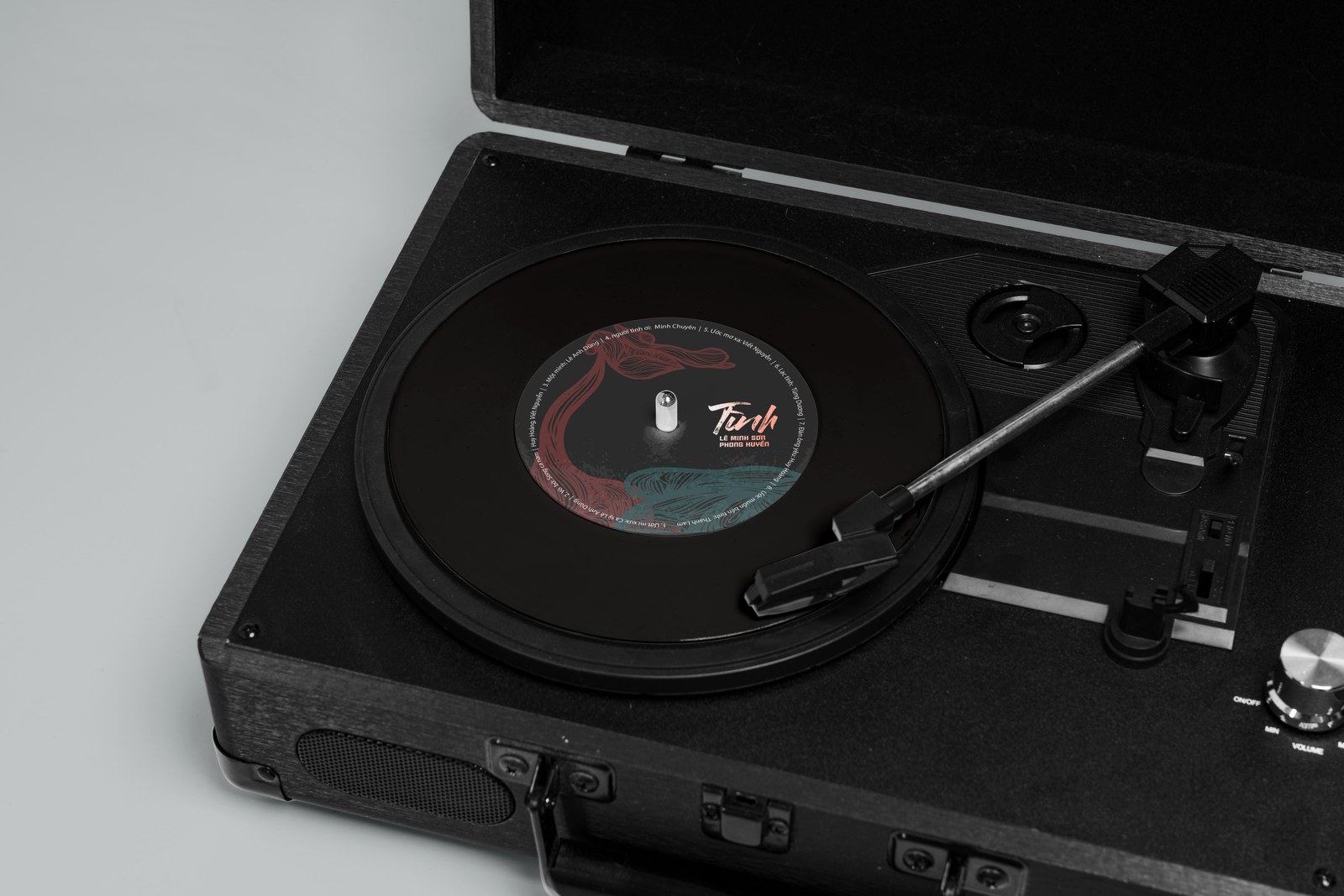
The vinyl edition was built on the same system, for people who still keep a turntable and the habit of sitting through a whole side. That detail was not there to sell more. It was a way of saying this album was made for people who listen closely.
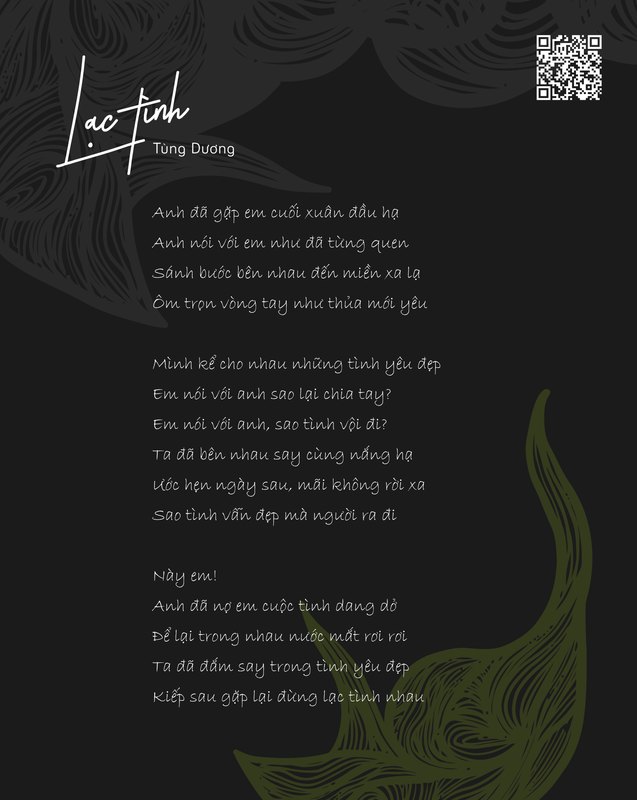
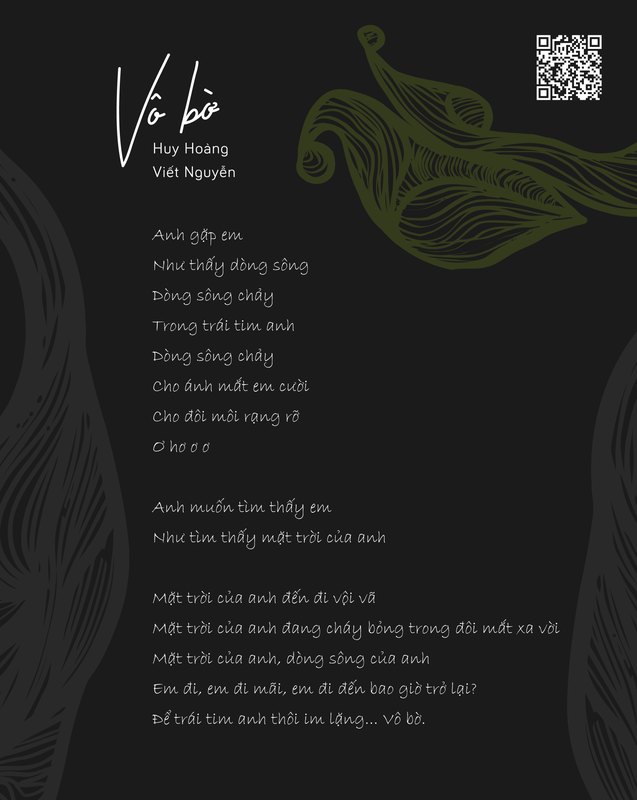
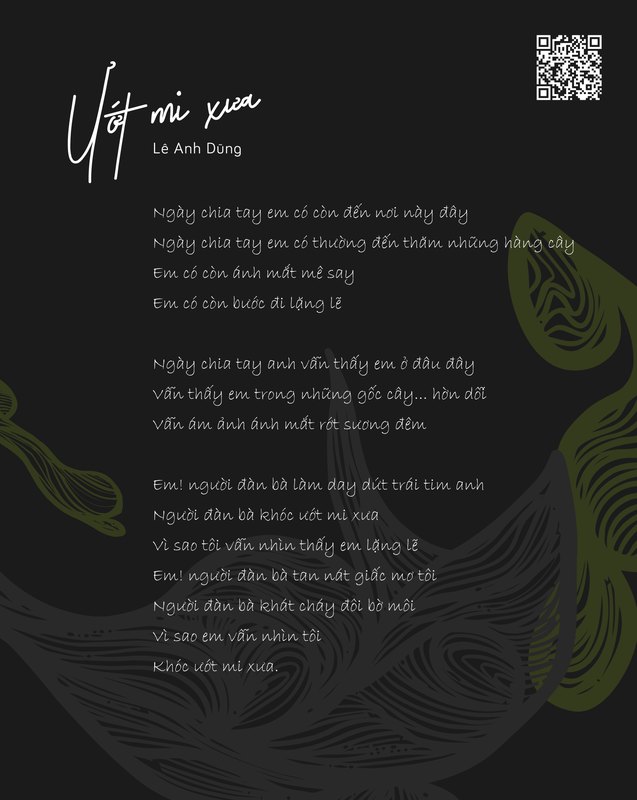
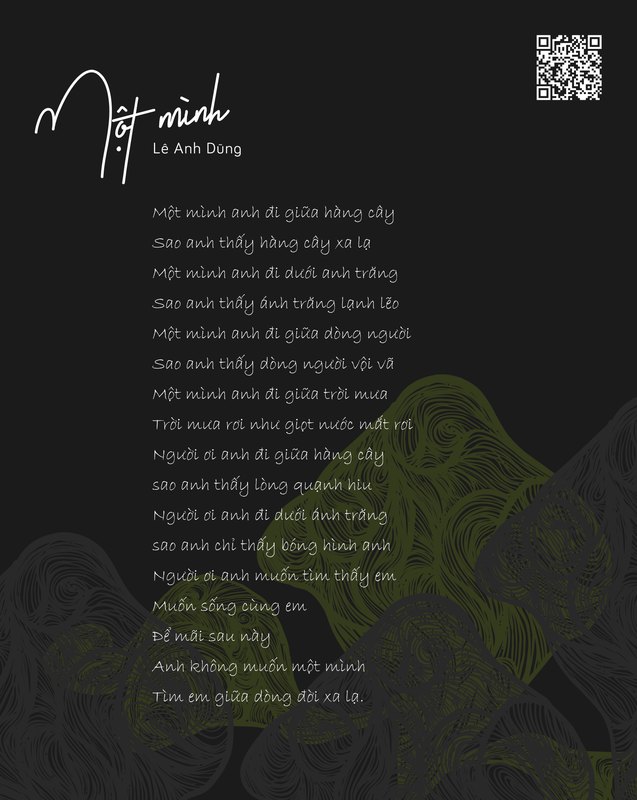
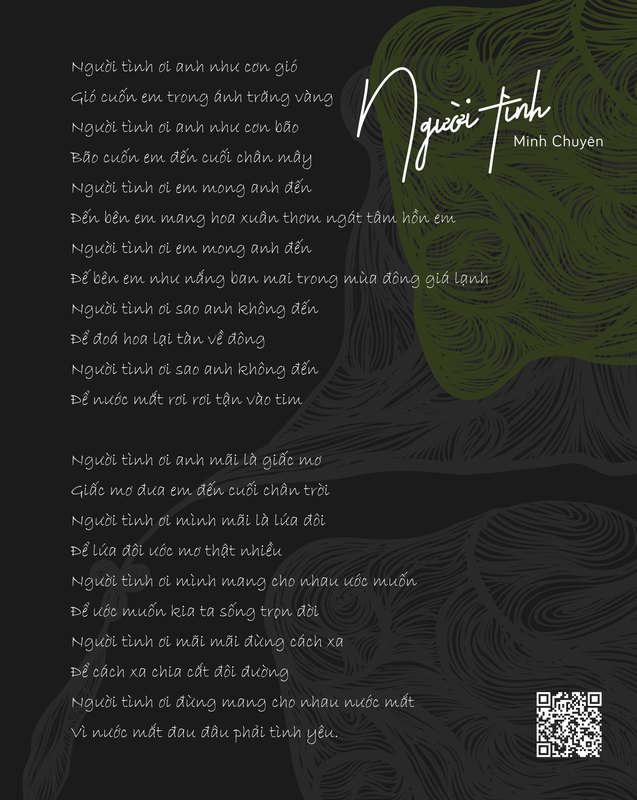
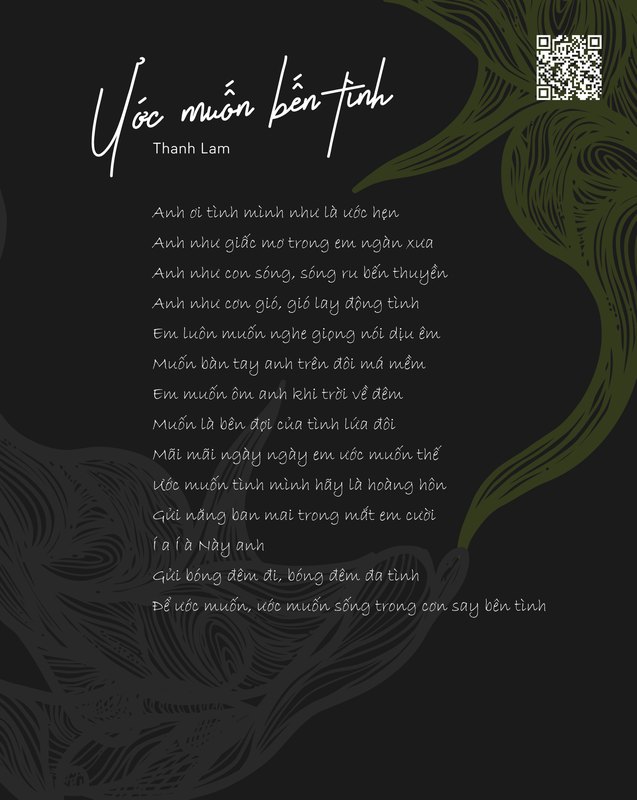
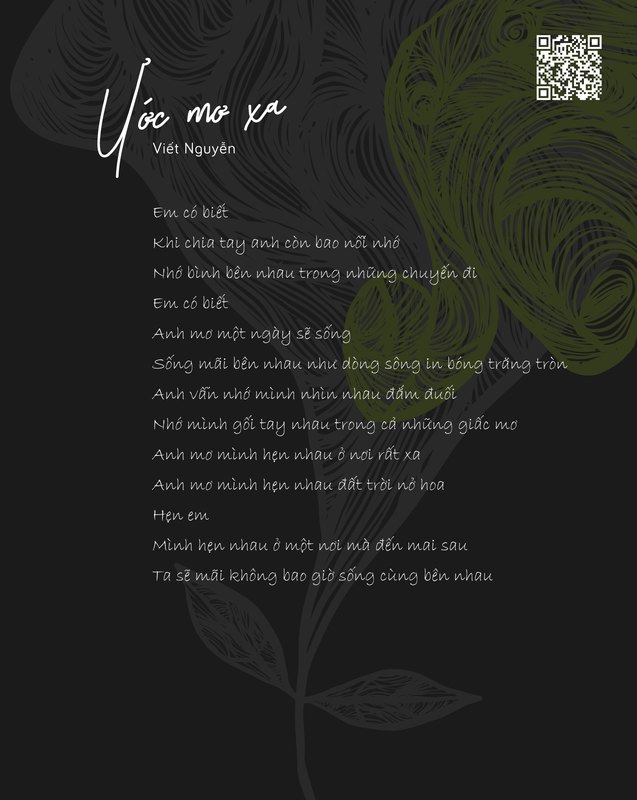
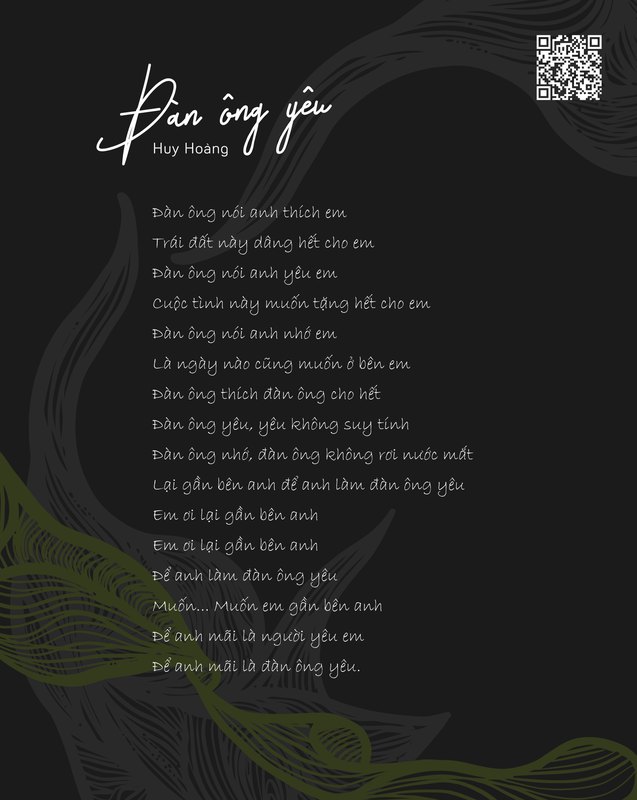
When poems become songs, the words are the most precious part, and also the part most easily forgotten once the song is good. So Sinh Vũ made a proper songbook rather than tucking the lyrics inside the sleeve: charcoal ground, the motif sunk back into the background, the handwritten title leading the page, the singer's name directly beneath, and a scan code in the corner so anyone holding the page can hear that exact song straight away.
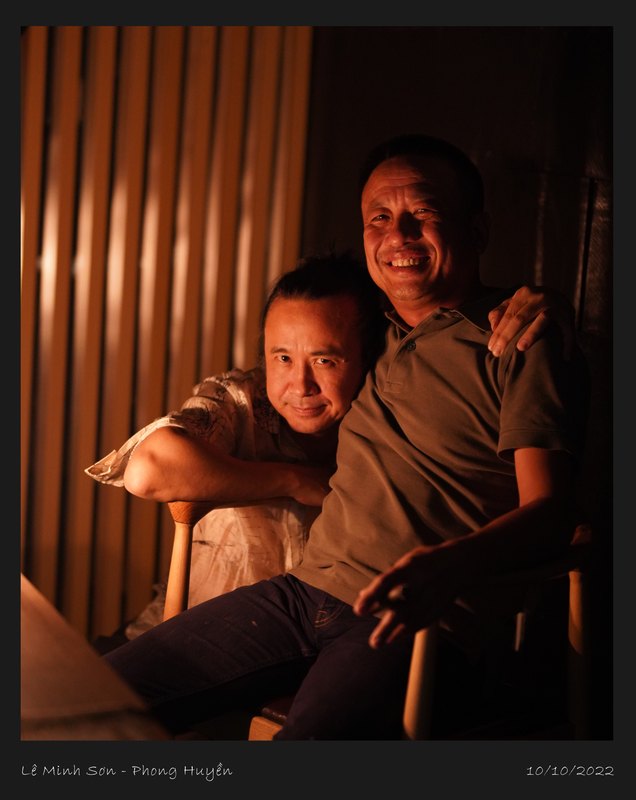
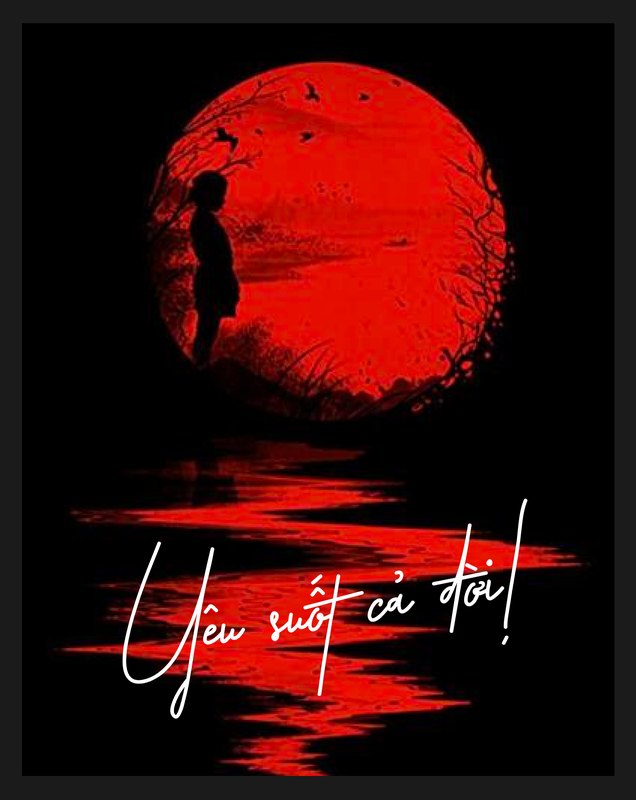
The book opens with a portrait of the two authors and the date they sat down together, and closes with a red moon and the handwritten line Yêu suốt cả đời. Between those two pages sit eight songs, each keeping a page of its own. All ten pages are laid out at the end of this piece, one page at a time.
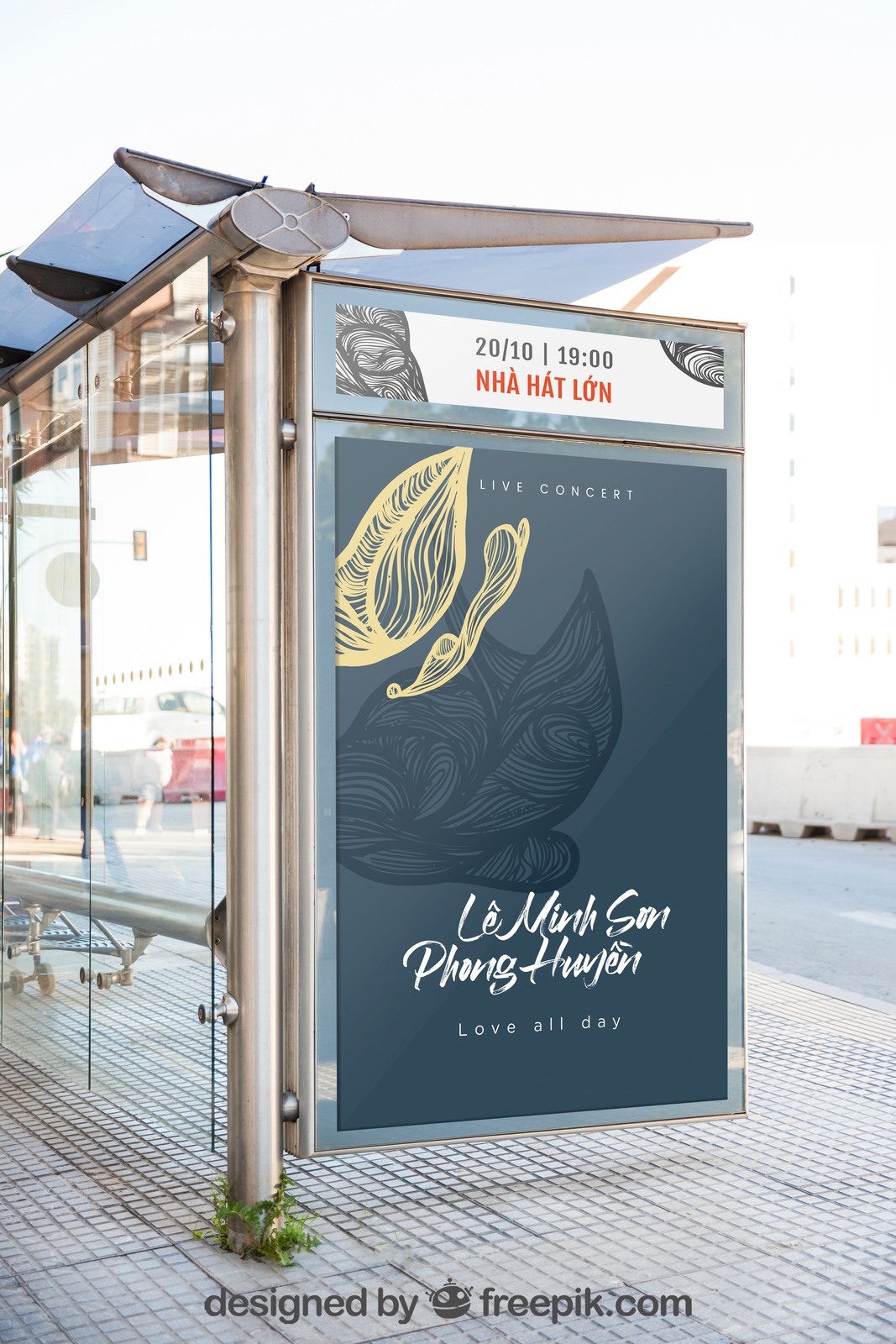
Out on the street the same system changes role. The bus shelter panel strips down to date, time, the opera house and two names, so a passer by can read it in seconds. The motif is reduced here to a single cream mass on teal, just enough to be recognised from across the road.
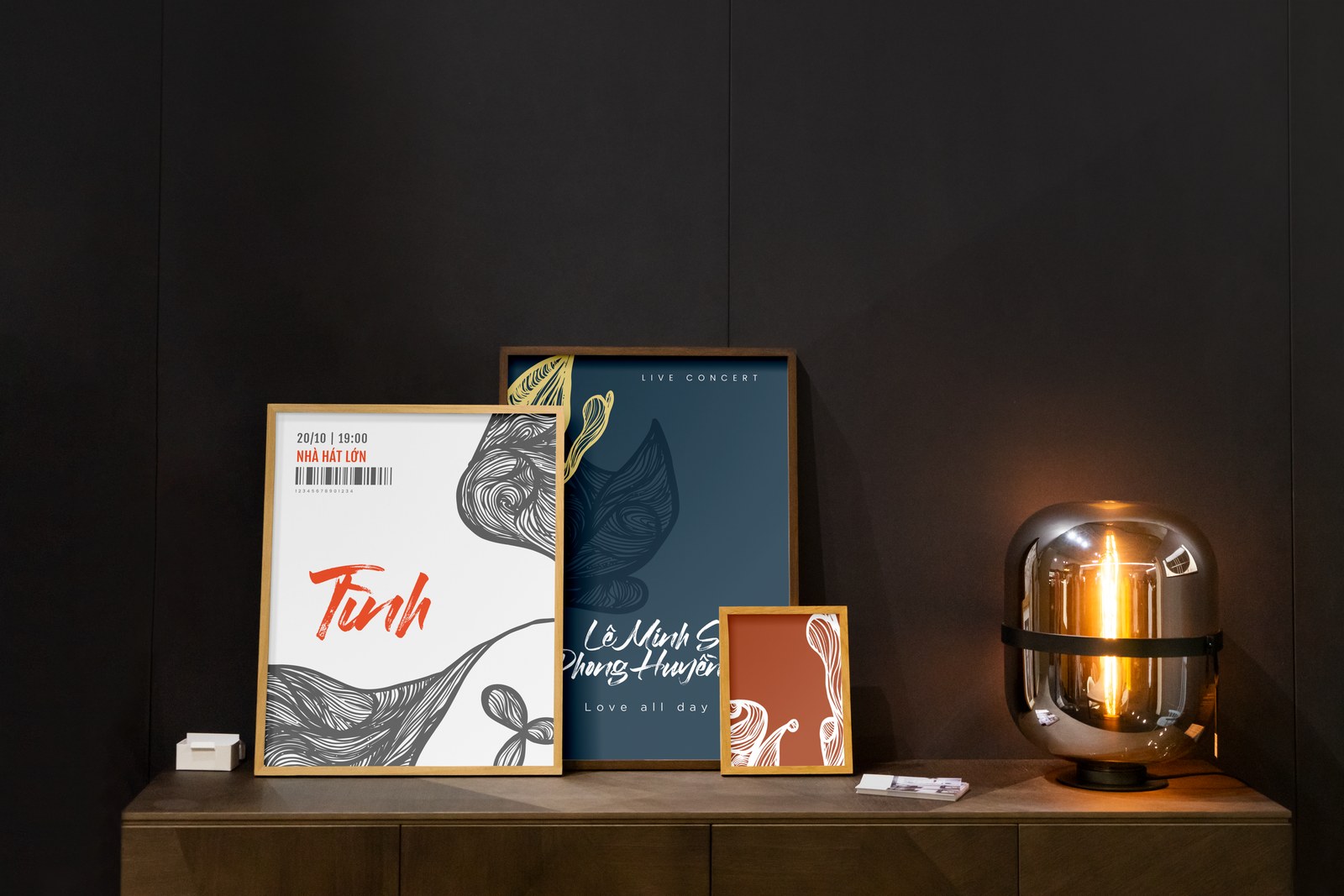
The poster set goes the other way. Hung indoors, where a viewer has time to stop, it drops information and keeps the material instead: the engraving, the handwriting, the darkness around them. Same palette, same voice, speaking to two kinds of viewer at two different speeds.
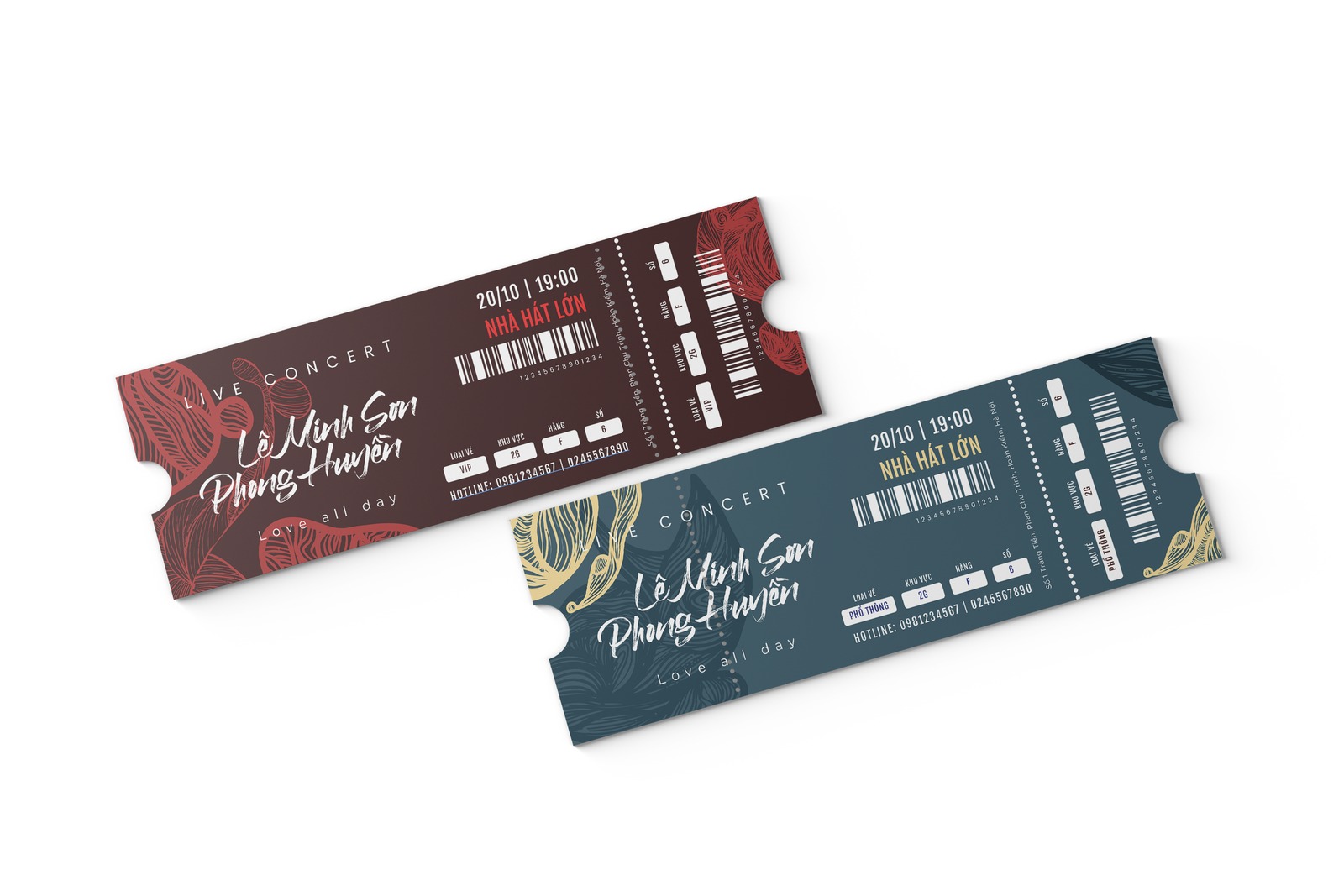
Tickets separate the two tiers by colour rather than by large type: oxblood for the higher tier, teal for standard, with the engraved motif running down the body of each. The tear off stub carries its own serial, one half to check and one half for the audience to keep, because a ticket usually does not get thrown away after the night.
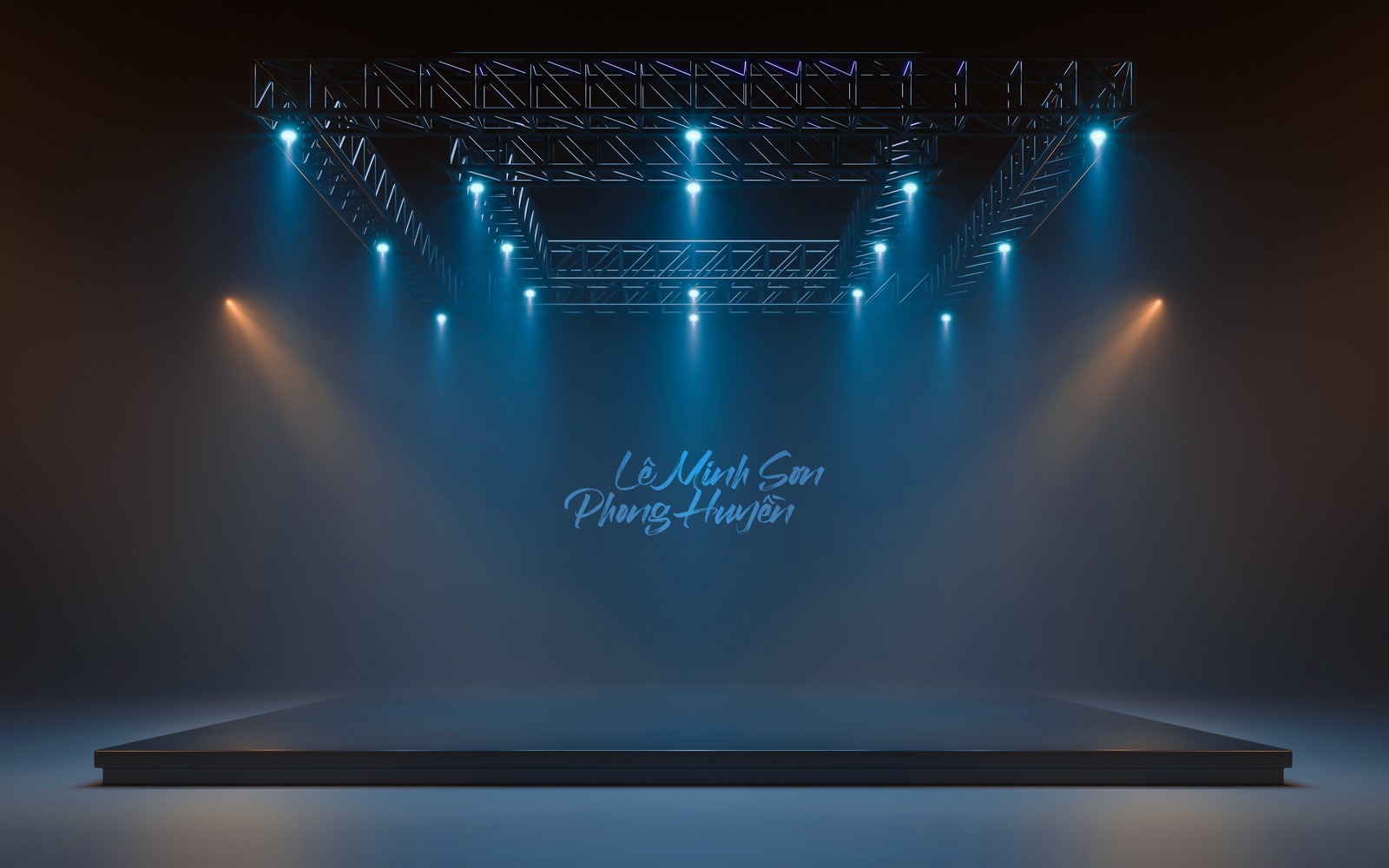
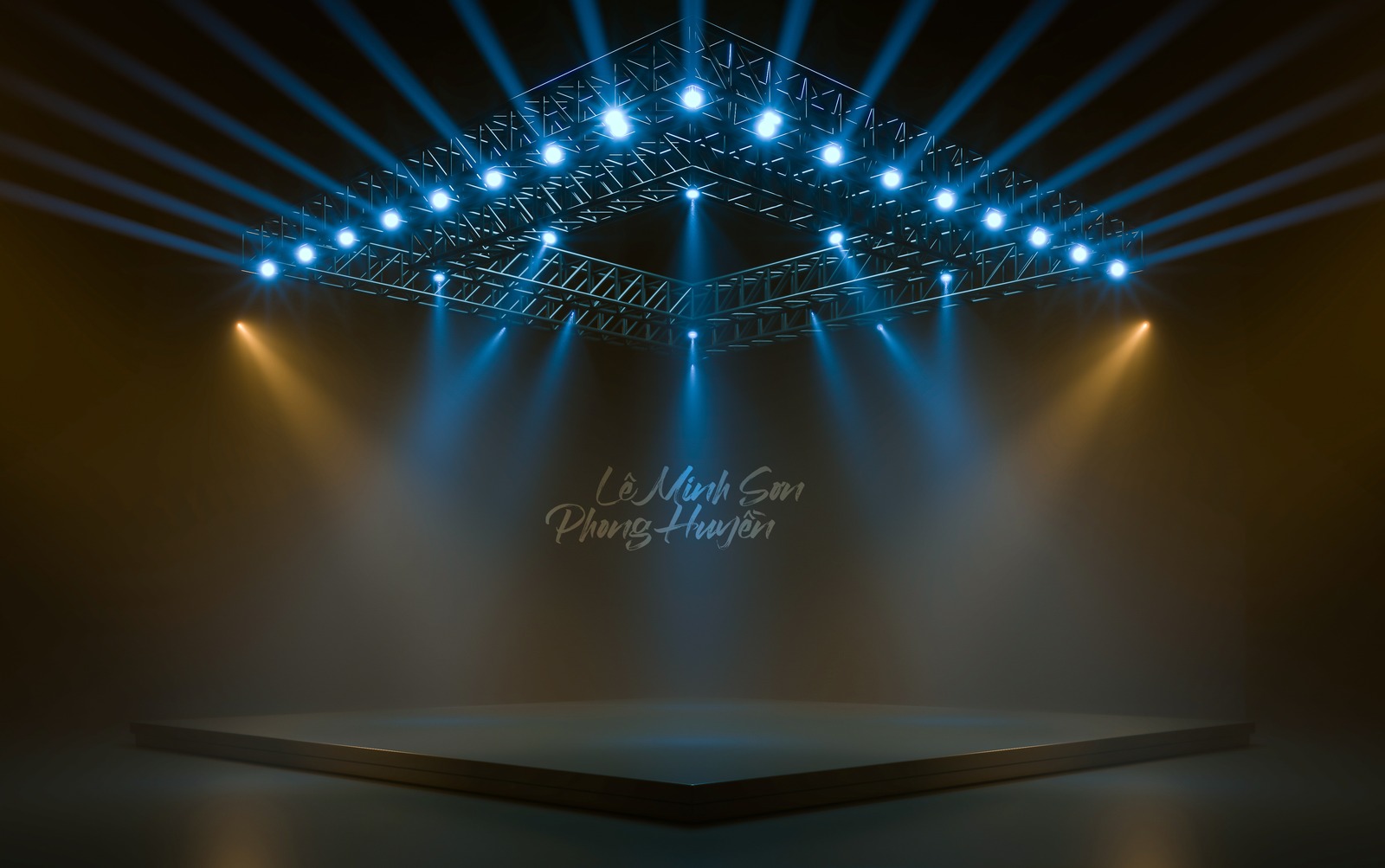
On stage the identity drops the motif entirely and keeps only the two handwritten names beneath the lighting rig. That was the hardest decision of the whole project: once the audience is seated and the music has started, everything visible has to take a step back.
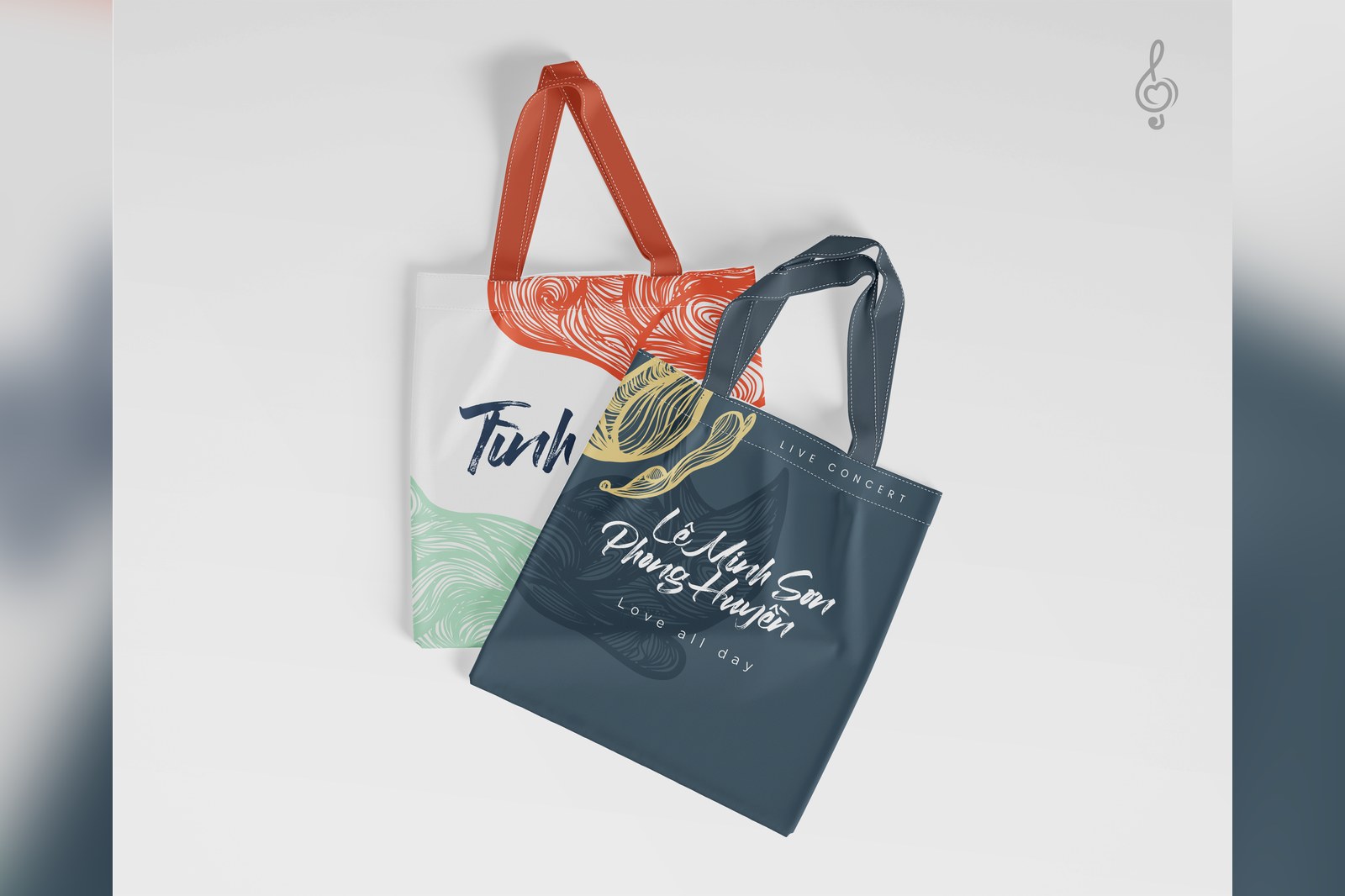
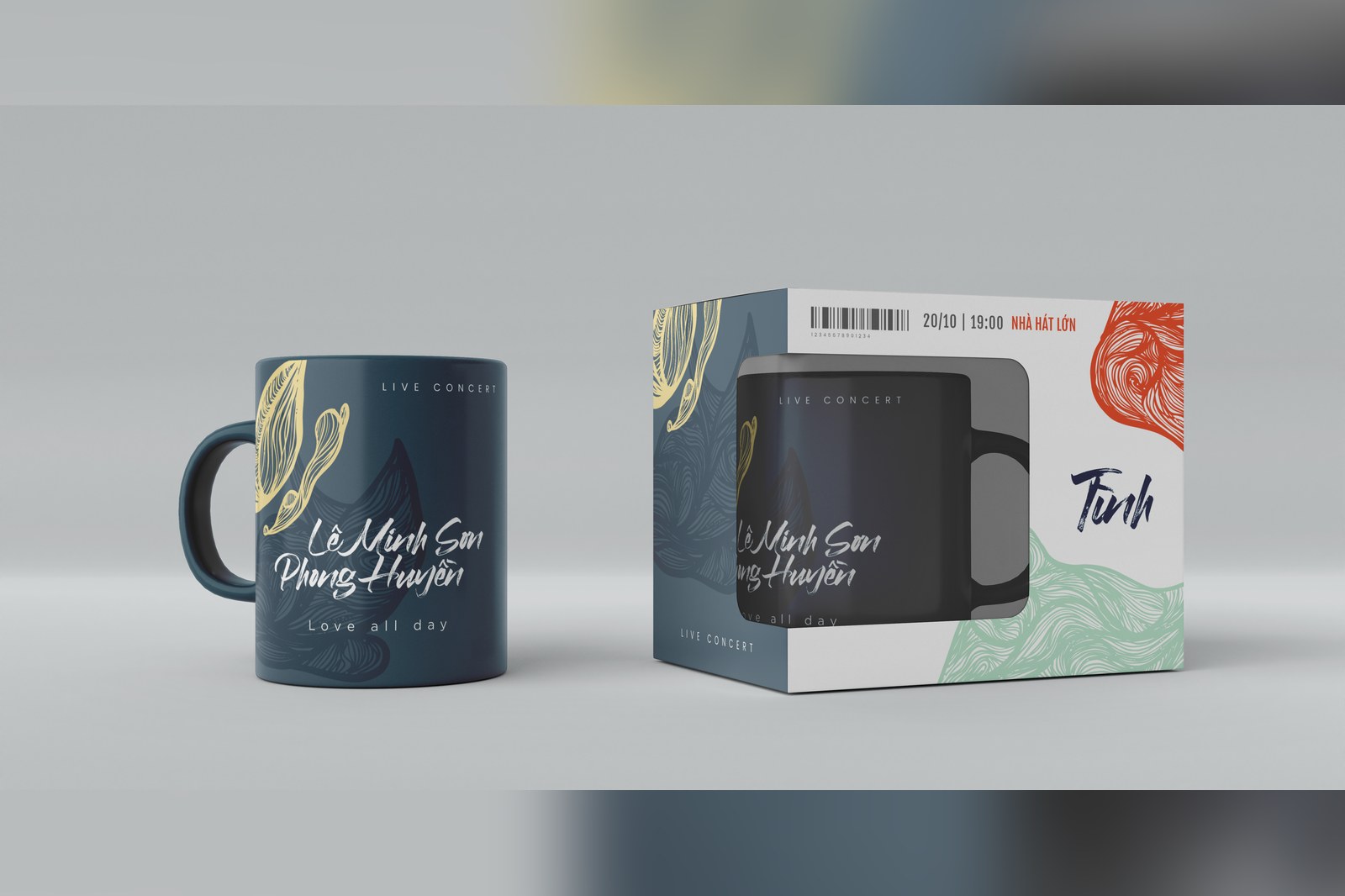
Every live night ends, so the last body of work was making it stay. A gift set of a tote bag and a ceramic mug carries the motif out of the auditorium, so that what the audience takes home is not only a keepsake but something they will actually use each morning.
On the bag and on the mug the motif is reduced to a single engraved branch and the two names. Enough for the owner to know what they are holding, without turning an everyday object into a walking poster.
Process
Listen before drawing
Listen through all eight recordings and read the full set of lyrics, marking the images that recur in Phong Huyền's poetry.
Find the core motif
Test several engraving directions, then settle on the pair of curling ribbons because it states the meeting without a caption.
Build the system and roll it out
Lock the palette and the handwriting, then carry them across sleeve, songbook, posters, outdoor panel, tickets and stage.
Prepare for print and hand over
Prepare files per material: gatefold board, disc face, vinyl, fabric and ceramic, with source files kept for reprints.
Outcome
Tình, subtitled Yêu suốt cả đời, launched in Hanoi on 1 December 2022 with eight songs voiced by Thanh Lam, Tùng Dương, Minh Chuyên and Lê Anh Dũng, alongside two new male voices introduced by Lê Minh Sơn, Huy Hoàng and Viết Nguyễn. The disc was produced by Hồ Gươm Media and then went out across fifty two streaming platforms worldwide.
Placed side by side, no single piece in the set has to print the album name larger than the others to be recognised. The two ribbons are enough. What Lê Minh Sơn and Phong Huyền got back was therefore not a handsome shell, but a way for a private meeting between two people to walk out into a crowded room while staying exactly as private.
Eight songs, ten pages
The book opens with a portrait of the two authors and closes with a red moon. Between them sit eight songs, each keeping a page of its own.
Same frame, different tempo: the motif sinks into the ground, the handwritten title leads the page, the singer's name sits directly beneath, and a scan code in the corner plays the song you are reading.
Is your product best at the part nobody can see?
Tell Sinh Vũ what you want to put into someone's hands.