
Hung Van, all of Muong Lo to carry home
Hung Van's Black Thai delicacies leave the smoky kitchens of Nghia Lo for the shelf and the gift table. Sinh Vũ built a packaging system that keeps the woodsmoke, the brocade and the name of Muong Lo on every pouch and every jar.
The problem
In Nghia Lo, a delicacy is not born in a factory. Buffalo meat hangs over a kitchen fire until the woodsmoke settles into it, shrimp paste ferments by the season, rice sticks are shaped from Tu Le glutinous rice. All of it carries the hands of the Black Thai people of the Muong Lo valley. Hung Van wanted to lift that off the restaurant table and turn it into something a guest could carry home without losing where it came from.
Highland specialties tend to collapse into one look: glossy bags, crowded type, every product a copy of the next. With many products side by side, the real task was not a single pretty label, but making the whole line read as one house while each product kept its own character. And one line could not be crossed: Muong Lo is Black Thai land, yet highland Yen Bai is also home to the Hmong, whose visual language is entirely different. Blending the two on one label is something a local reads instantly.
How we did it
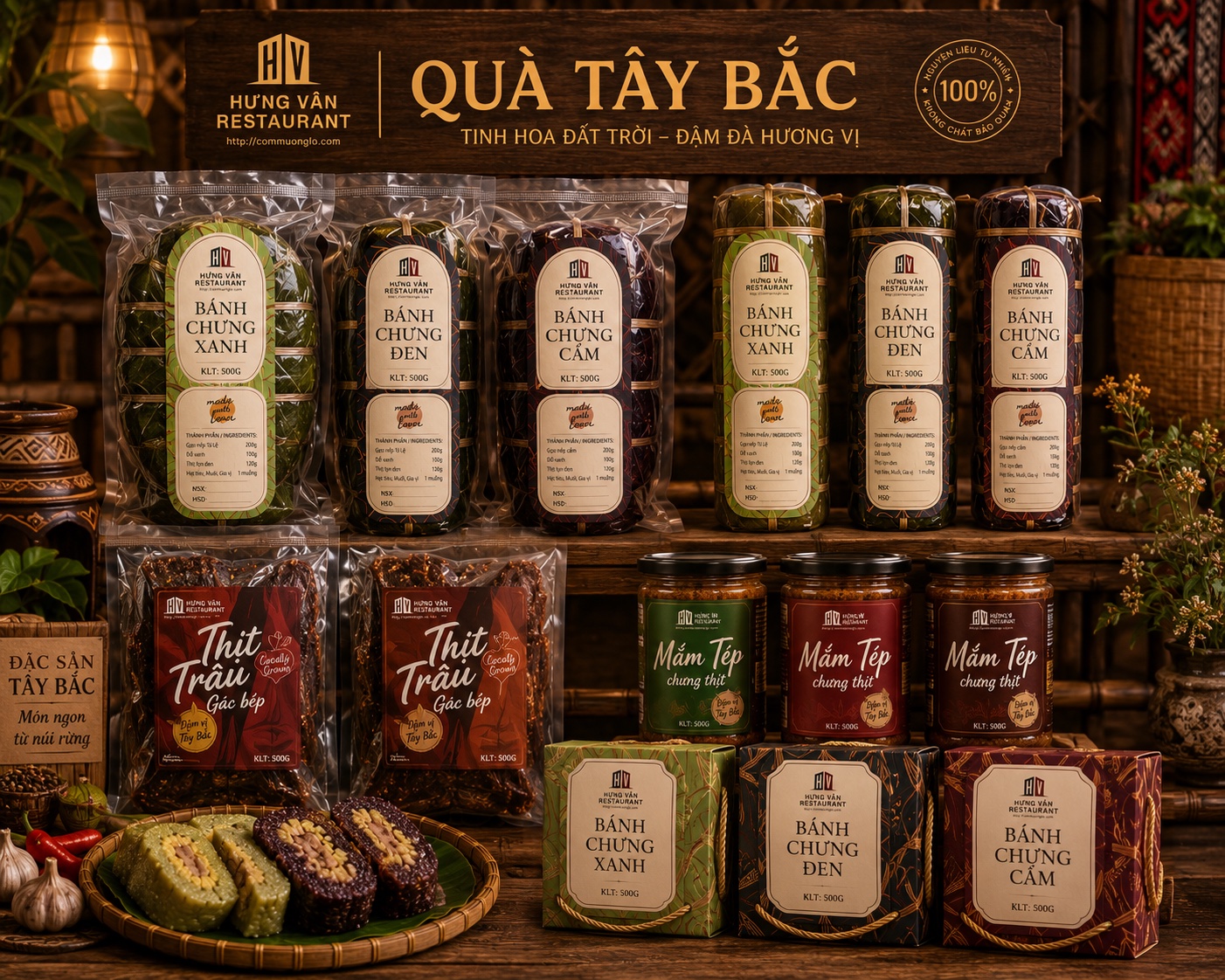
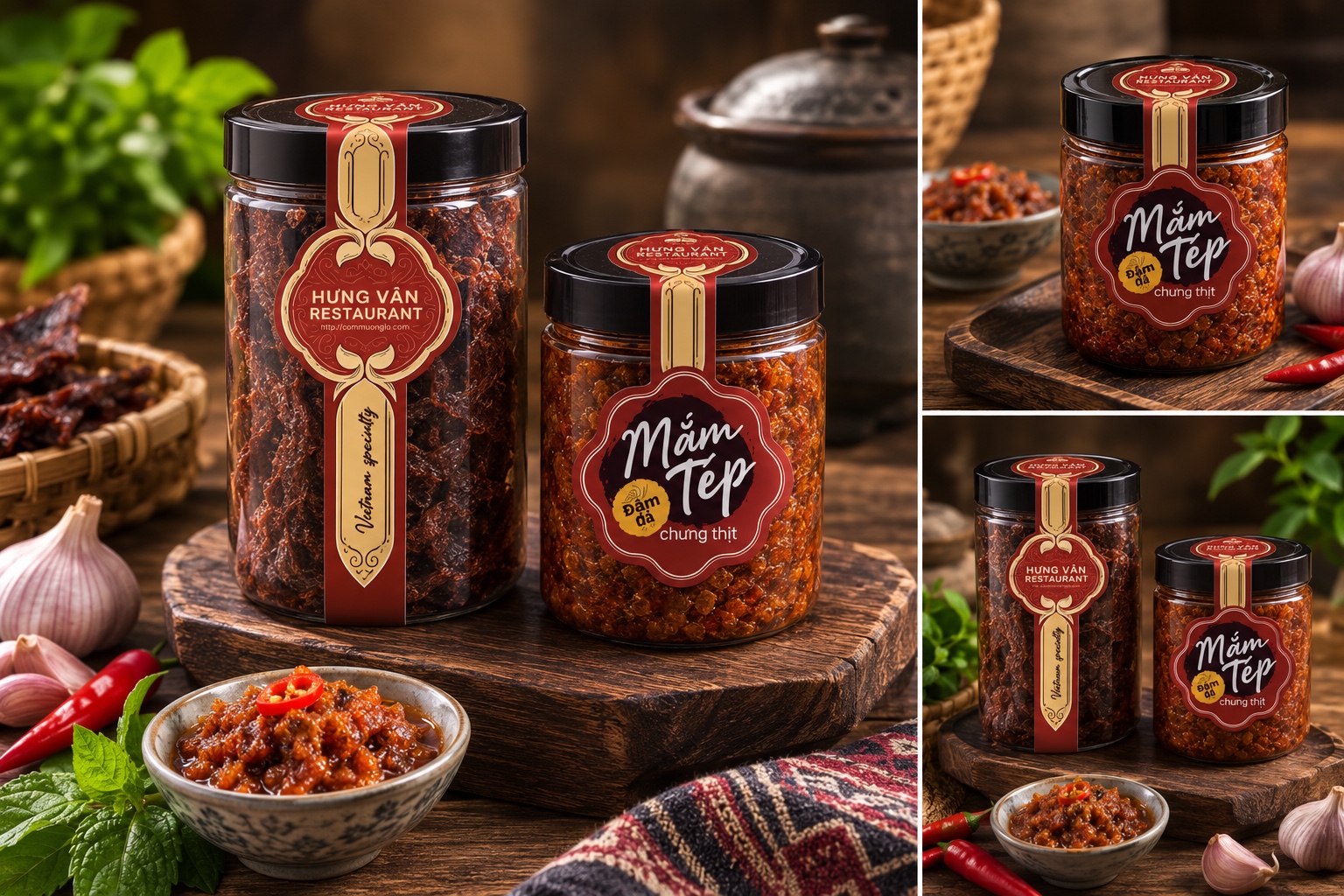
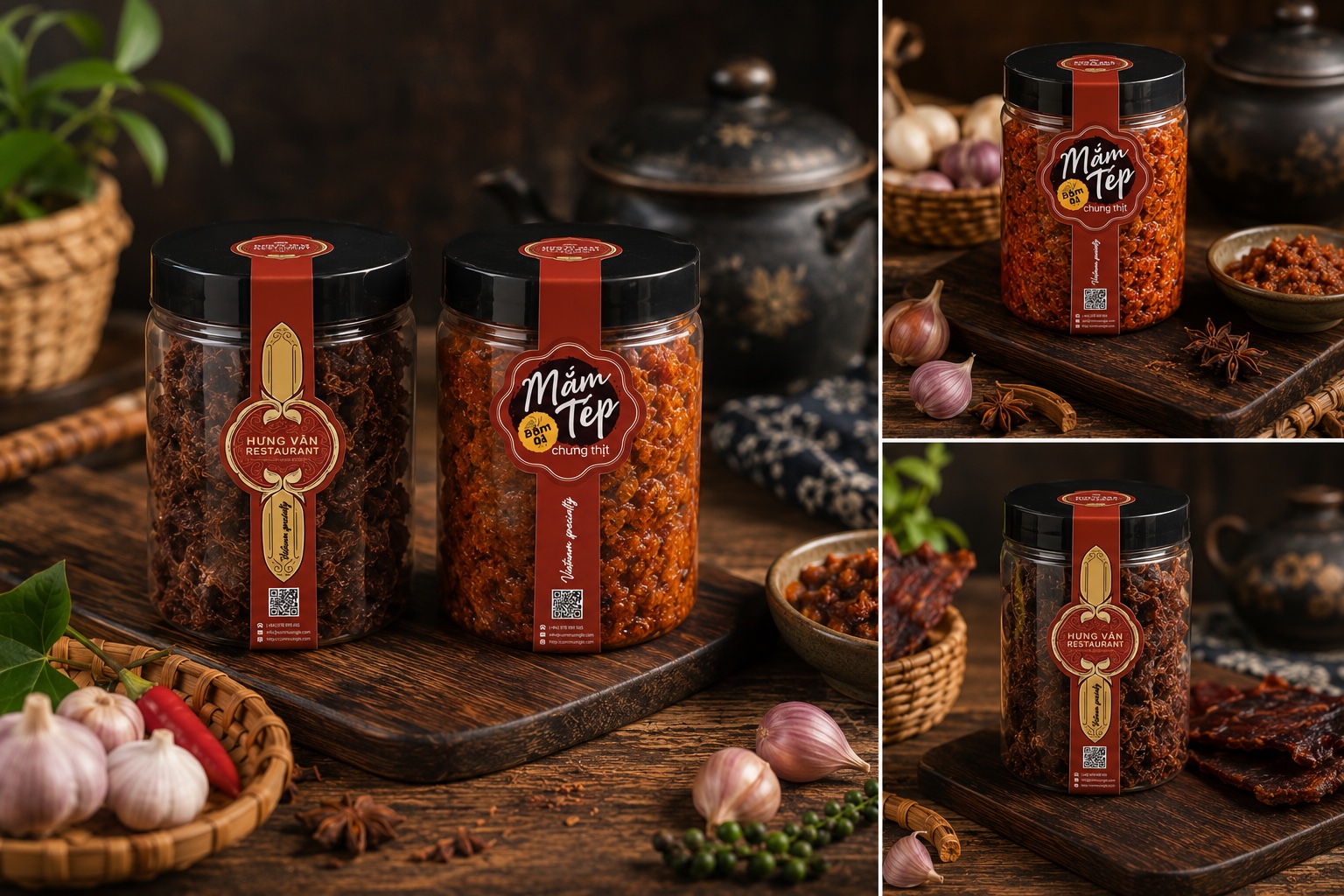
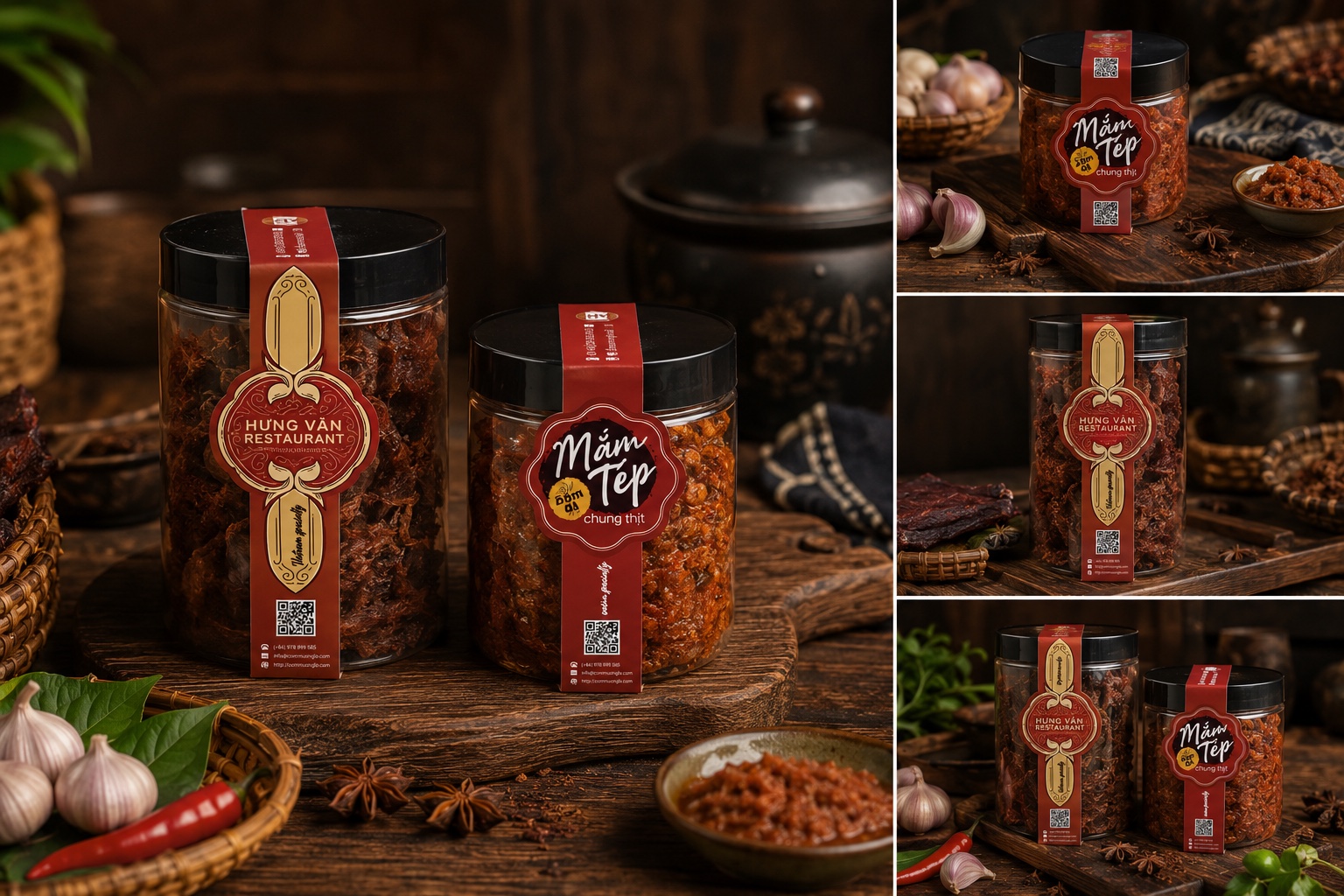
Sinh Vũ built a shared label language for the whole line: the same brocade band down the edge, the same handwritten product names, the same trust bar at the foot. Change the product and the colour and imagery change, but the skeleton holds.
Line the buffalo meat, the sausage, the rice sticks and the shrimp-paste jar up on a shelf, and a customer needs three seconds to see they belong to one house, before reading a single name. What makes the identity is not a repeated logo, but a repeated visual rhythm. However many products the line adds, they need only step into the same frame.
The identity thread of the whole line is Black Thai brocade: eight-pointed stars, rhombus figures, the embroidered edge of the Pieu scarf, woven into a vertical band along the label. This is where craft has to be exact.
Sinh Vũ kept the true band layout and the indigo-with-red palette of the Thai, and deliberately borrowed nothing from Hmong beeswax batik, though both share Yen Bai. A line born on Thai soil speaks Thai, fully. That respect is legible at once to a highland customer, and felt by a lowland one as something to trust.
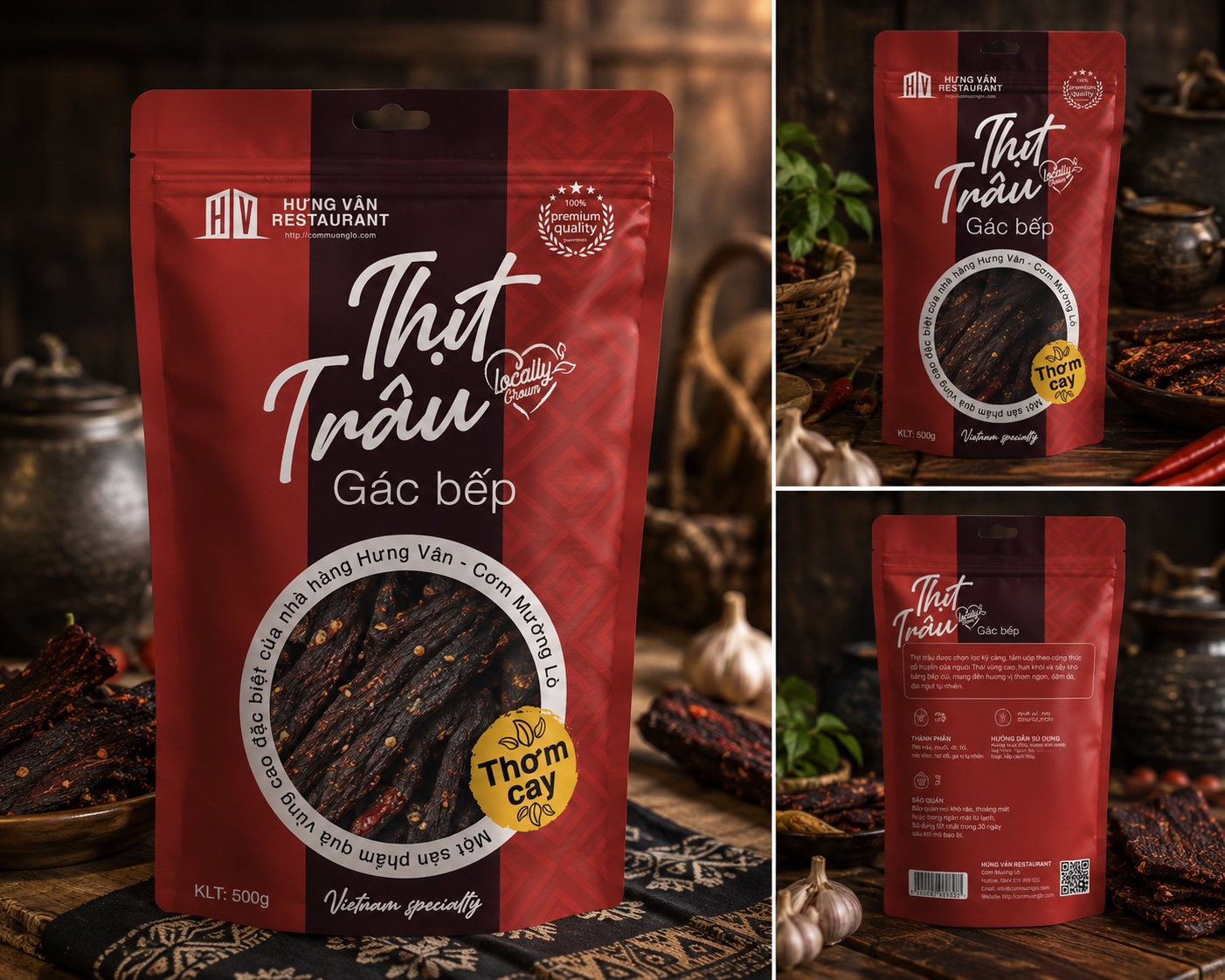
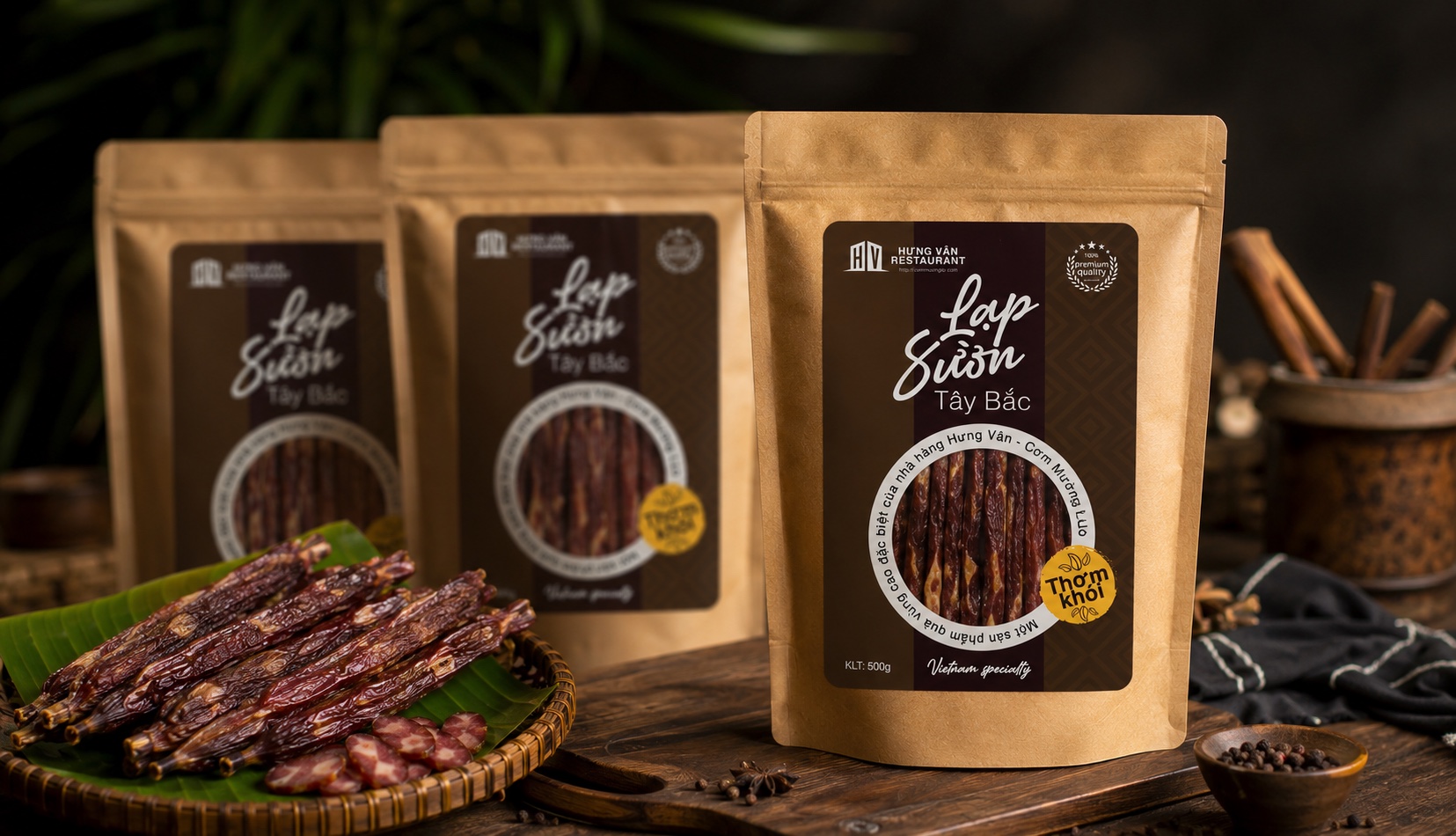
On the buffalo-meat and sausage pouches, the label carries a die-cut round hole. Through it the customer looks straight at the smoky strands of buffalo meat, the deep-red sausage inside, before the bag is even opened.
For a delicacy, trust lives in having nothing to hide. That small window turns packaging from a cover into an invitation: this is real, see for yourself.
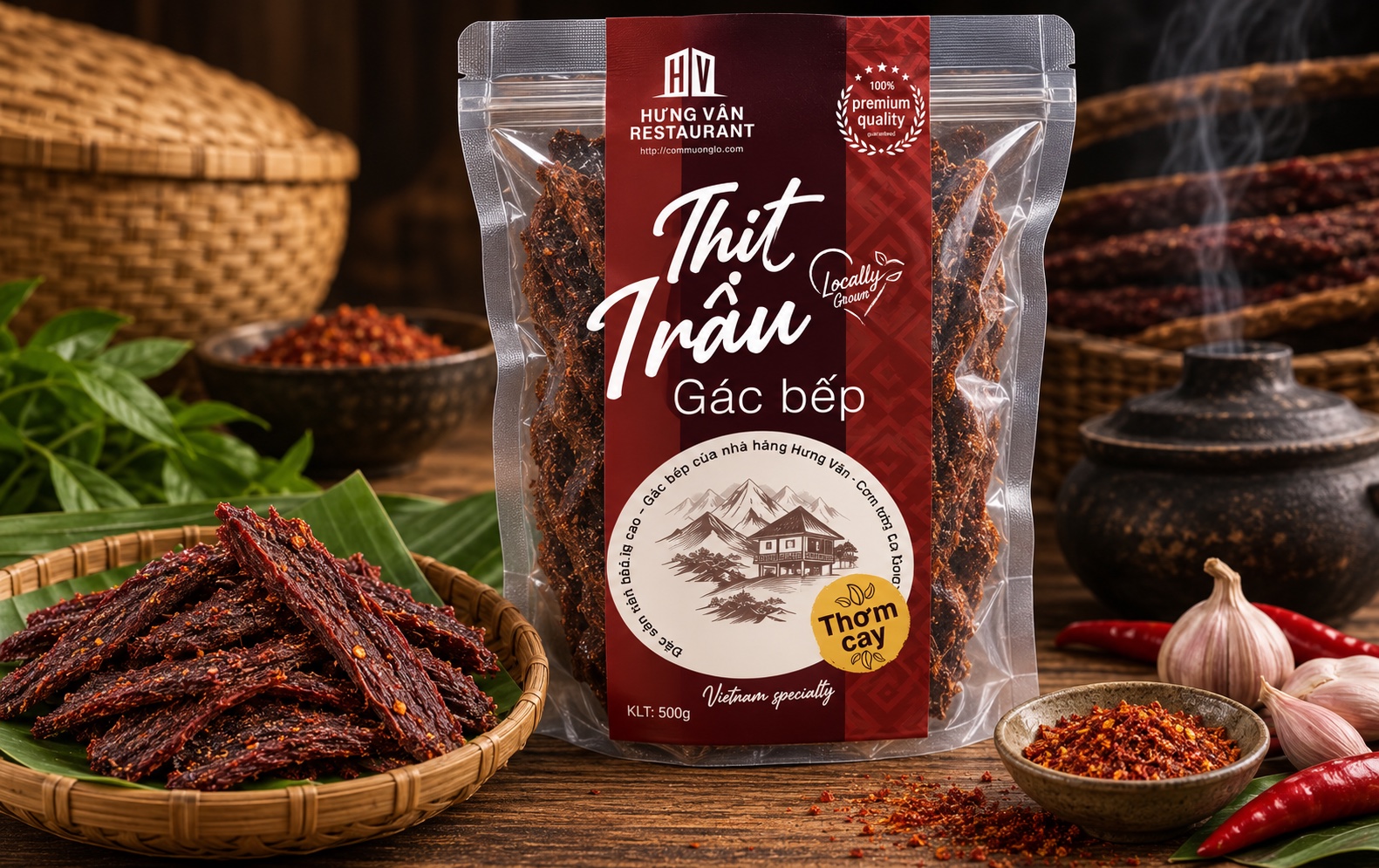
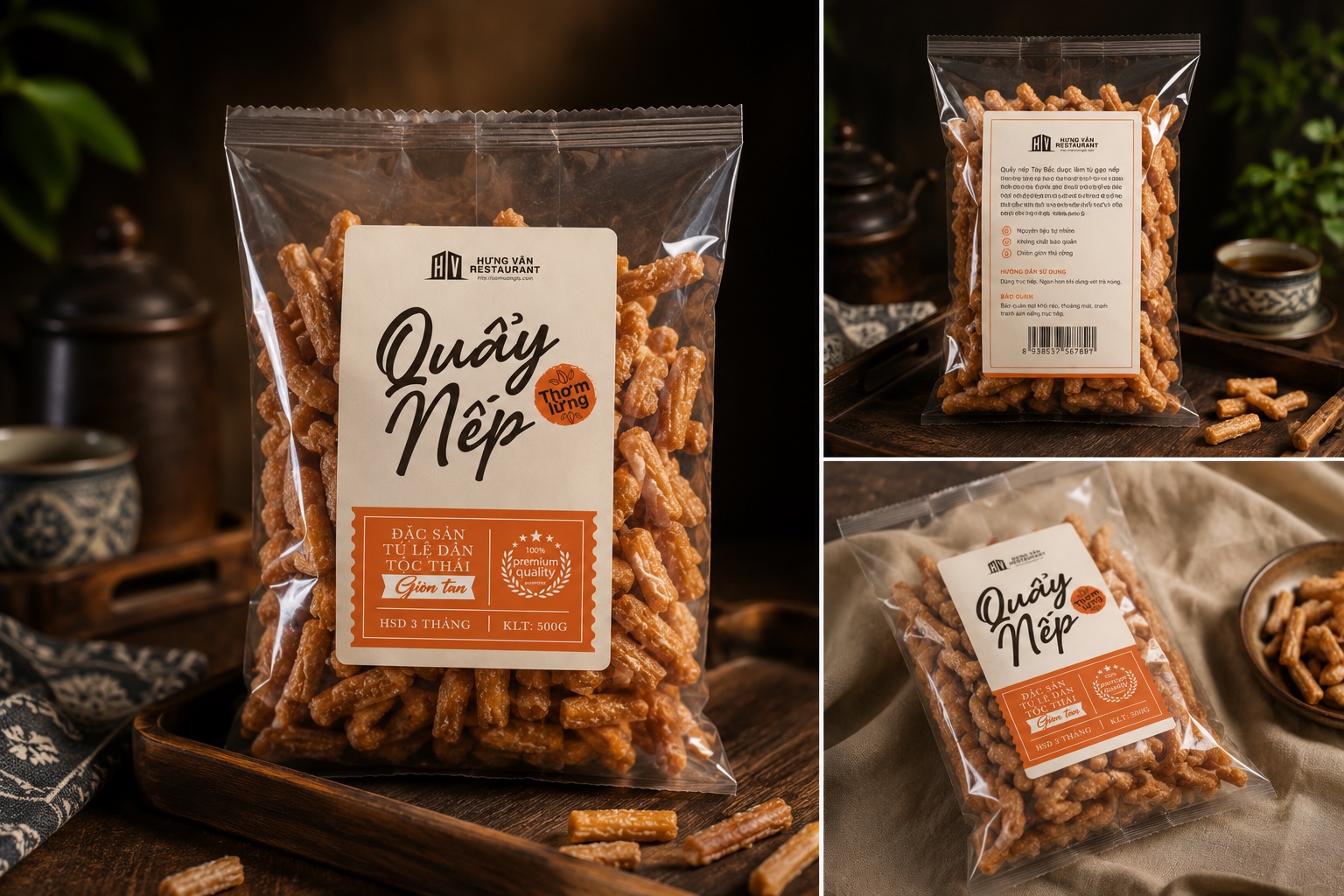
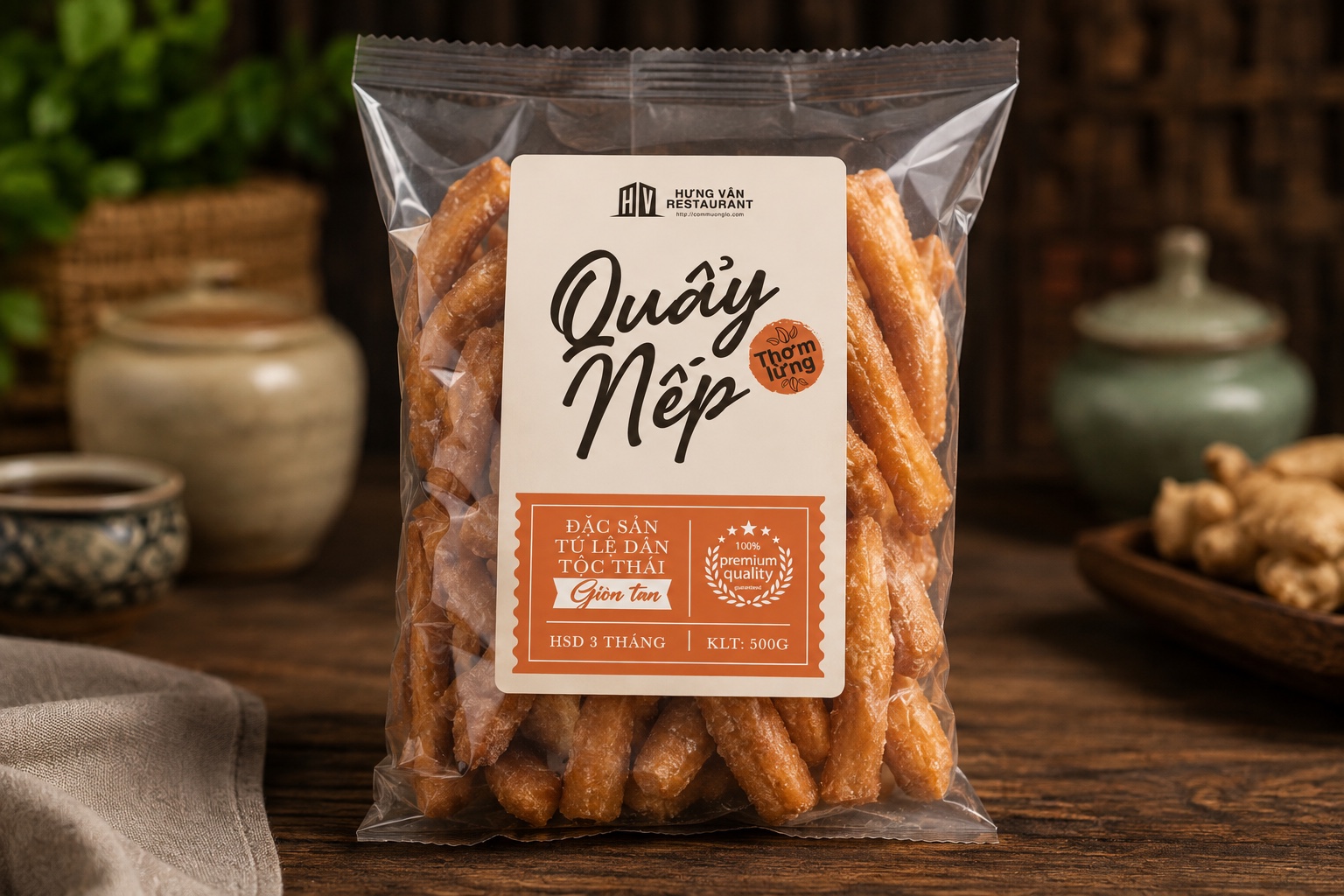
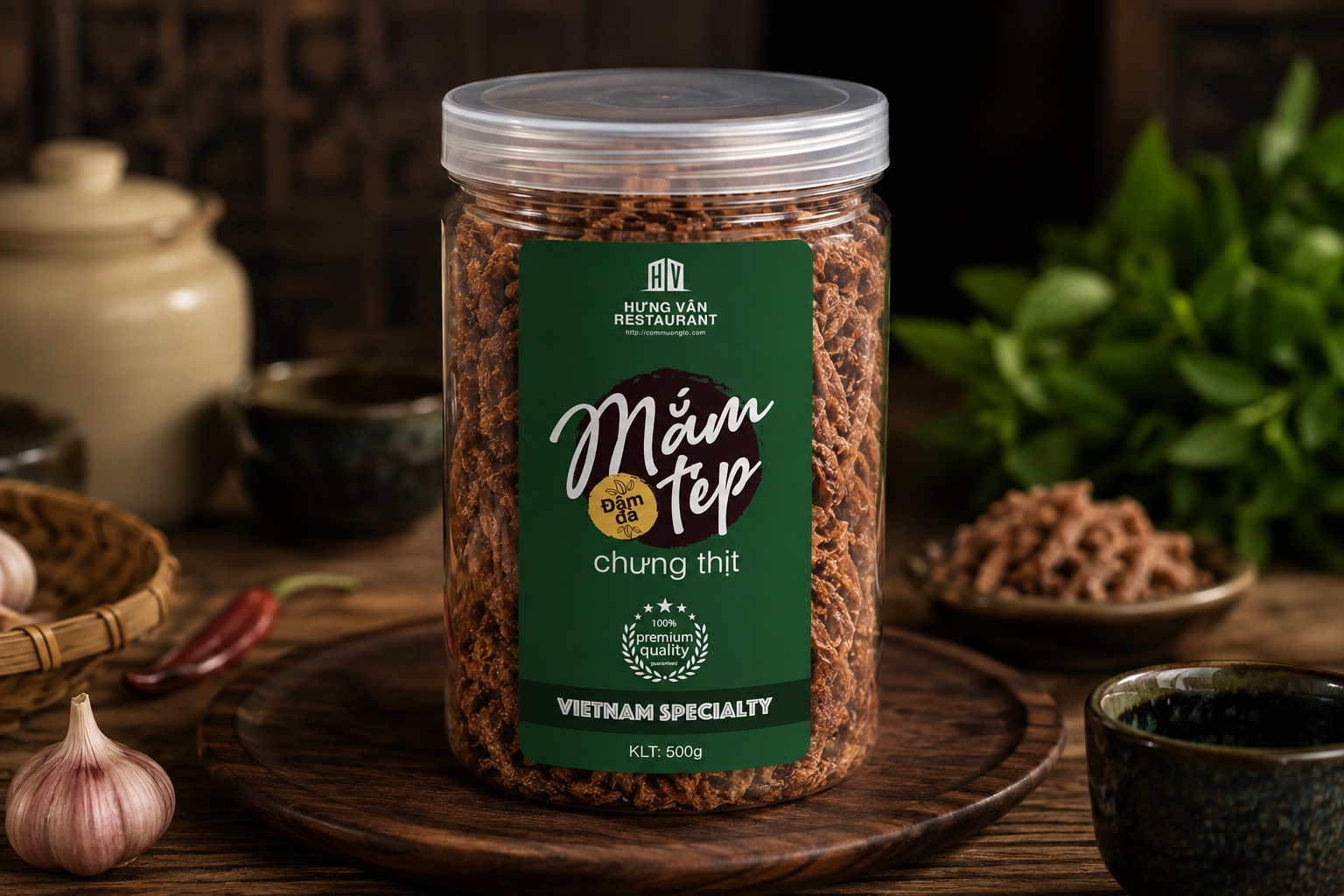
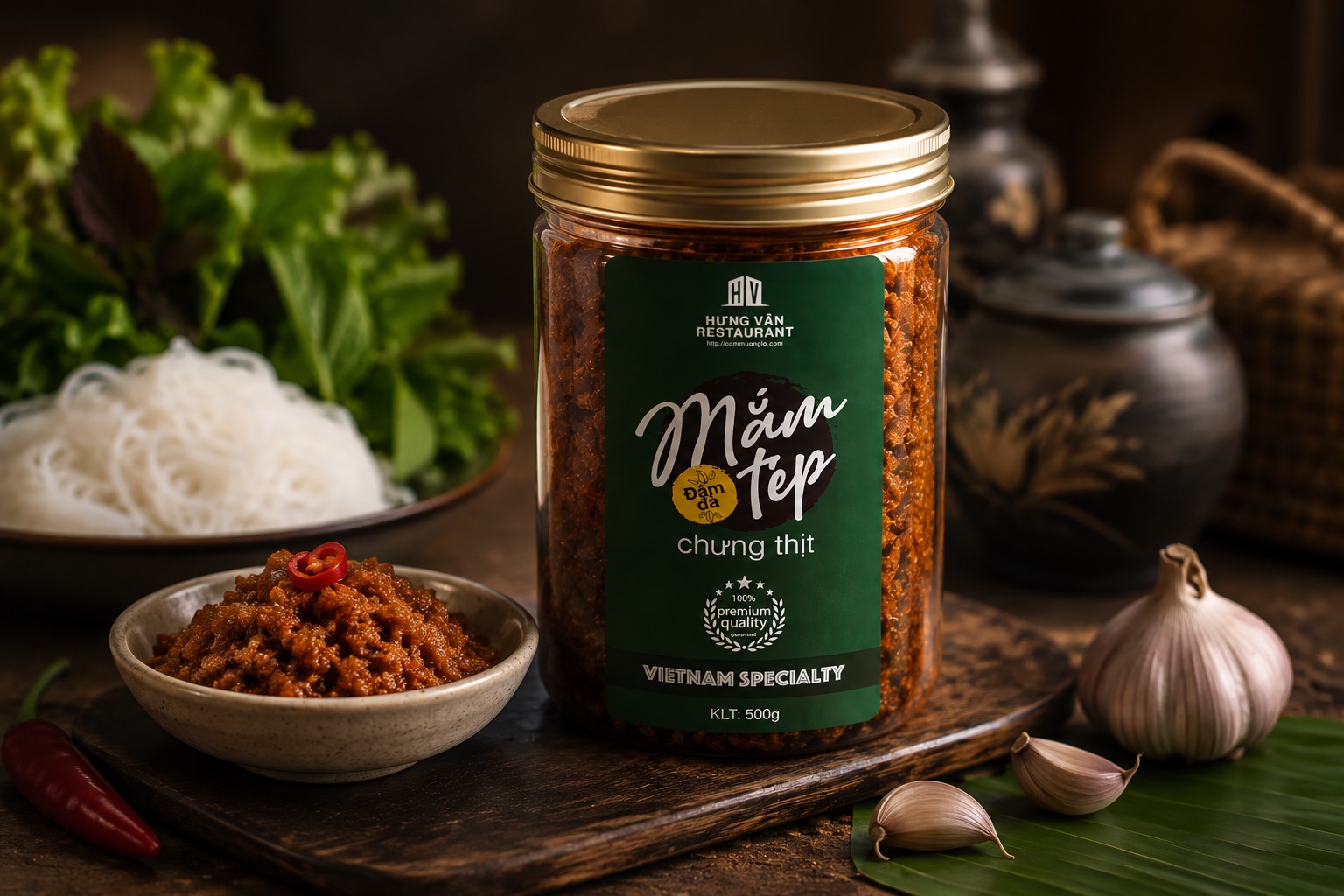
Packaging follows the nature of the food, never one forced mould. Dry goods such as buffalo meat, sausage and rice sticks go into standing kraft zip pouches that reseal. The soft shrimp paste goes into a glass jar with a metal lid, letting its red-brown colour speak through the glass.
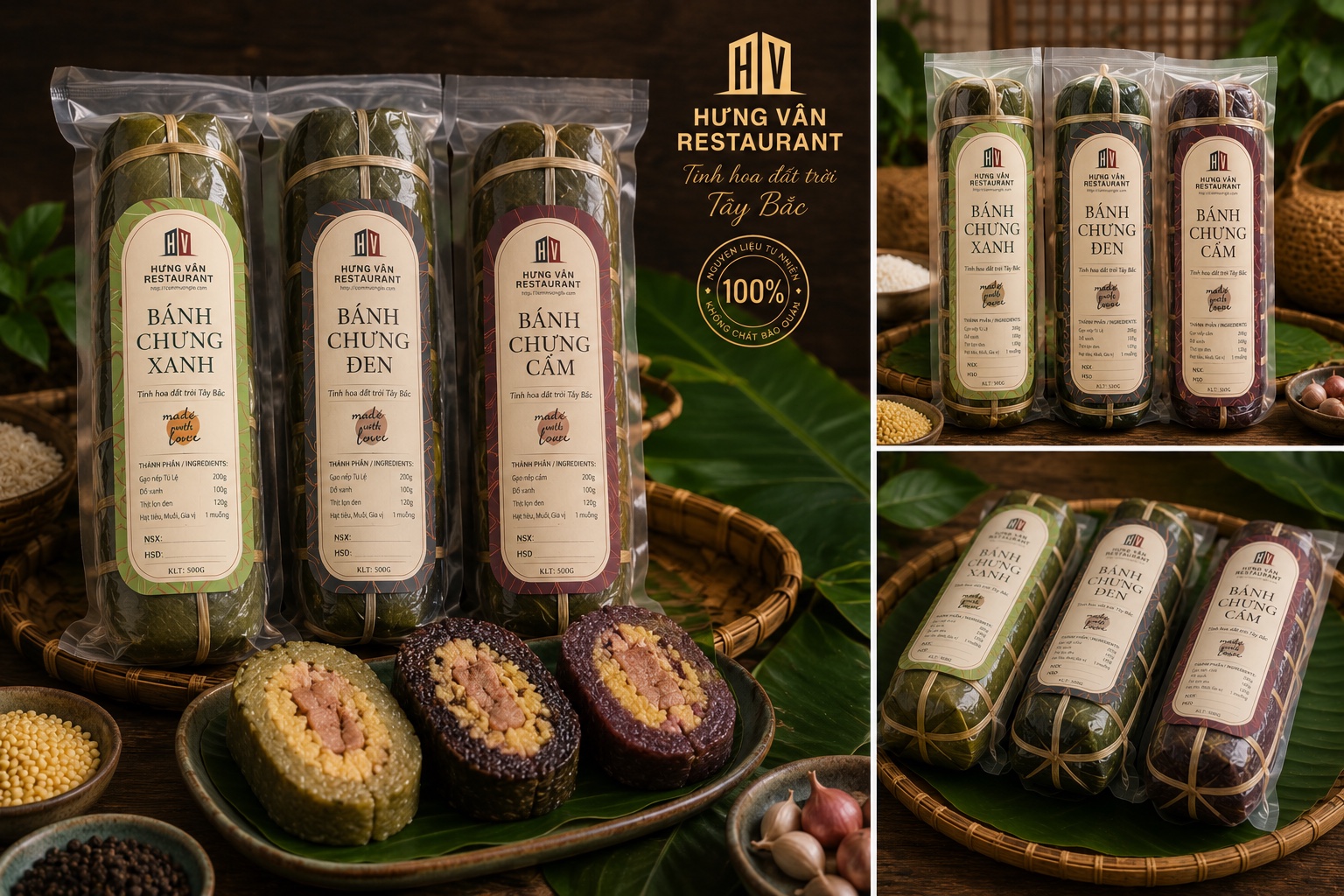
The green, black and purple sticky-rice cakes are wrapped in dong leaves and tied, marked by three colour-coded oval labels. One identity, many forms, each true to what it holds: zip pouches for dry goods, a glass jar for the shrimp paste, dong leaves for the cake.
The process
One shared skeleton
Together with Hung Van, we drew out one shared label language: the brocade band, the handwriting, the trust bar, a frame for every product to step into.
Keeping it truly Thai
Black Thai brocade was woven into each label following the true local layout and palette, never mixing in the visual language of the Hmong.
The right form per product
Dry goods into zip pouches with a window to the product, shrimp paste into a glass jar, sticky-rice cakes wrapped in leaves with three colour-coded oval labels.
A system to keep growing
The whole label system and product photography were folded into one shared frame, so the line can add new products and still be one house.
The result
What Hung Van gained is not a few handsome labels, but a way for Muong Lo to travel. Every gift a customer carries downriver is now a piece of the valley kept whole: the woodsmoke of the kitchen fire, the Thai brocade, the name of Nghia Lo.
Here packaging is at once packaging and a statement of origin. However many products the line adds, they need only step into the same frame, and it stays one house. That is what an identity system can do and a single label never can.
Does your challenge look like Hung Van?
Tell Sinh Vũ what is on your mind about packaging or identity. Sinh Vũ will point you to the right direction straight away.